Navaris Cast Iron Burger Press Review
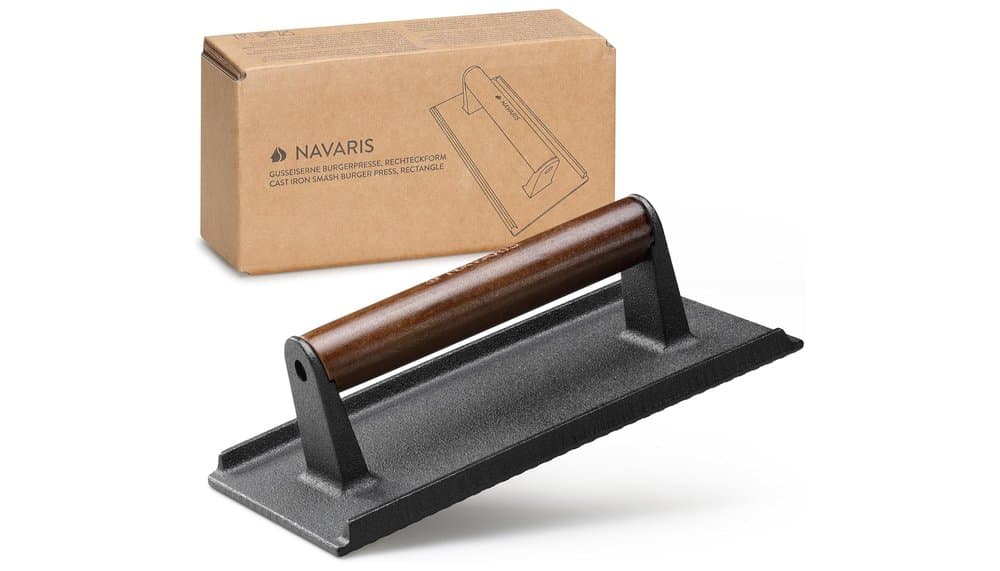
Navaris Cast Iron Burger Press
Introduction
In our universe dedicated to culinary precision – from sous-vide circulators to finishing torches – some tools step outside the electronic realm to become the physical pillars of perfect execution. The Navaris Rectangular Burger Press Cast Iron Mince Steak Mould falls into this category: a finishing and shaping tool designed to transform ground meat into steaks with controlled geometric and textural characteristics. While our devices control the protein's core with half-degree accuracy, this type of press intervenes at the crucial moment of searing, the creation of the famous Maillard reaction, and fat management.
We are not talking about programmed temperature or 72-hour stability here, but a different principle: mechanical and thermal precision. A burger press, especially in cast iron, is a heat and pressure transfer tool. Analyzing it through our demanding lens concerns its ability to create reproducible conditions for crust formation, to evacuate fat efficiently, and to integrate into a workflow combining low-temperature sous-vide cooking and high-heat finishing. Let's scrutinize this product against these requirements.
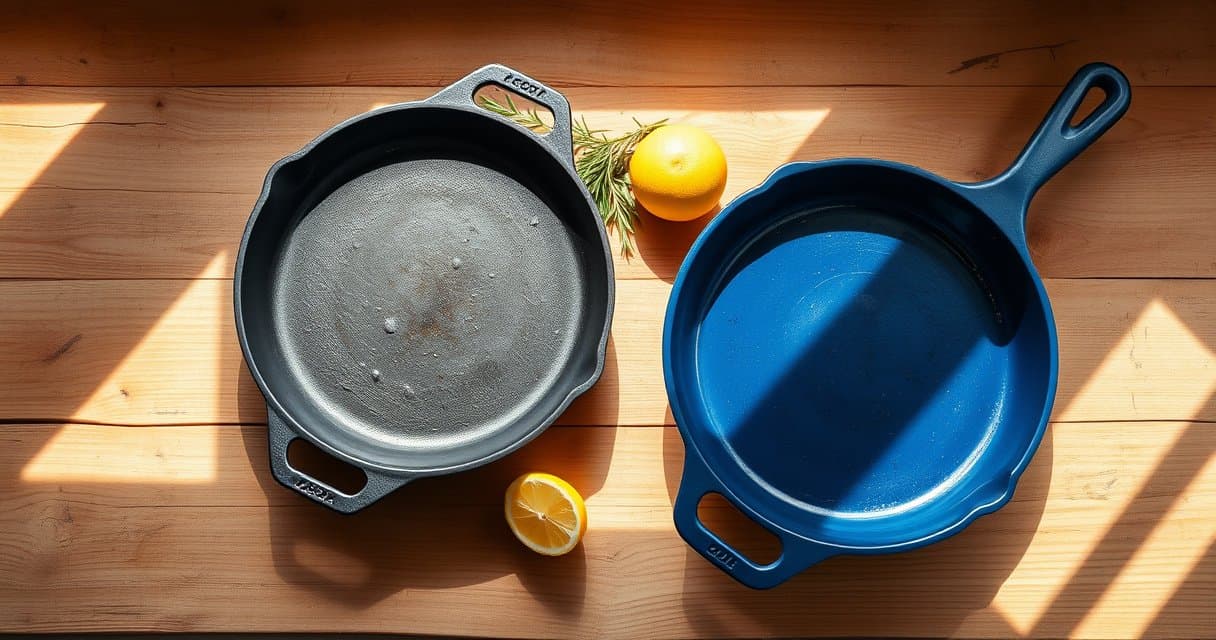
See also: Cast Iron Pan Buying Guide · BBQ-Toro Cast Iron Hamburger Press Review · Salter Chester Enameled Cast Iron Dutch Oven Review
Key Strengths
- Superior Heat Transfer and Thermal Inertia: The cast iron mass (1 kg) is the major asset. It stores and releases heat uniformly, avoiding cold spots and ensuring complete searing across the entire burger surface. It's the solid equivalent of a water bath's stability.
- Controlled Geometry and Reproducibility: The rectangular shape and manual pressure allow for producing minced steaks with identical thickness and shape every time. This is essential for even cooking, whether on a grill, griddle, or in a cast iron pan.
- Active Fat Management: The grooves on the pressure face are not just aesthetic. According to user feedback, they serve as evacuation channels for excess melted fat, contributing to crispier, less soggy burgers.
- Durable Construction and Easy Maintenance: Cast iron is a nearly indestructible material for this use. Maintenance – hand washing, drying, and oiling – is the same as for a quality cast iron skillet, a familiar routine for enthusiasts of robust kitchen equipment.
Weaknesses
- Lack of Thickness Adjustment: Unlike some models with adjustable stops, the Navaris is a manual pressure tool. The final thickness depends solely on the force applied by the user. This can hinder absolute reproducibility without some practice.
- Weight and Maneuverability: At 1 kg, it is a heavy tool. While this is a thermal advantage, it can make it less agile for some, especially for the "smash burger" technique which requires quick, decisive pressure.
- Learning Curve and Sticking Risk: Like any non-stick cast iron surface, insufficient preheating or a lack of proper seasoning (protective oiling) can lead to meat sticking. This requires knowledge of the material.
- Demanding Maintenance: It is dishwasher prohibited. The user must be prepared to maintain it manually and dry it thoroughly to prevent rust, which may deter those seeking absolute simplicity.
Detailed Analysis
Construction and Mechanical Precision
The Navaris Rectangular Burger Press is, on paper, a block of solid cast iron. Its dimensions (21 x 11 cm) make it a tool suited for most bun sizes and pans. The precision here does not come from a digital dial, but from the mold's rigidity and the flatness of its compression surface. Testers emphasize that this flatness is crucial for obtaining a steak of uniform thickness, ensuring the edges and center finish cooking simultaneously on a hot surface. The wooden handle, a natural thermal insulator, is a judicious choice for user safety, although its mechanical attachment should be monitored over time according to some feedback.
See today's priceThermal Performance and Searing
This is the core of our analysis. The performance of a cast iron press is measured by its ability to create and maintain a high surface temperature upon contact with the meat. The 1 kg mass ensures the press will not cool down sharply upon contact with a cold steak, thus preserving searing power. The grooves play a dual role: they increase the contact surface for better heat transmission, and channel melted fat. For the precision cooking enthusiast, this means increased control over the final result. A pre-cooked sous-vide minced steak, then finished with a torch and this press on a blazing hot griddle, will achieve a maximal level of crispiness and Maillard reaction, without the risk of overcooking the interior.
Integration into a Precision Cooking Workflow
For our community, this tool is not isolated. It is the final step in a chain. Imagine: seasoned beef burgers sealed sous-vide, cooked in a water bath at 55°C (for a perfect medium-rare) for 1 to 2 hours for tenderness. Follow the temperature and time tables of a recognized food-safety source. When ready to serve, they are cooled, dried, then vigorously smashed with this press onto a surface over 250°C. The cast iron, preheated with the griddle, allows for an instant thermal shock that generates a crust in seconds, locking in the juices inside that are already perfectly tempered. It is in this demanding scenario that the Navaris finds its full utility, far from a basic burger mold.
Ease of Use and Maintenance
Ease of use is mixed. On one hand, the concept is simple: press. On the other, mastering the technique to avoid sticking and achieve the desired thickness requires a few tries. Maintenance is the point that separates lovers of durable tools from seekers of convenience. The necessity to dry thoroughly and oil regularly the press is imperative for its longevity. This is a constraint users of cast iron skillets will understand immediately, but it may be an unpleasant surprise for others.
Technical Specifications
| Feature | Detail |
|---|---|
| Main Material | Food-grade cast iron |
| Weight | 1 kg |
| Dimensions (L x W x H) | 21 x 11 x 6.5 cm |
| Pressure Surface | Grooved (fat evacuation channels) |
| Handle | Wood (ergonomic, insulating) |
| Compatibility with Cooktops | All (to be used on the meat, not directly on the flame) |
| Maintenance | Manual cleaning only. Drying imperative. Protective oiling recommended. |
| Primary Function | Shaping and compressing minced steaks for optimal searing. |
What Users Say
A synthesis of customer feedback and available analyses reveals clear trends.
The recurring positive points revolve around the quality of results. Users are unanimous about the perfect crust and crispiness achieved thanks to the press's weight and its grooved surface that evacuates fat well. Many praise its sturdiness and professional, durable feel. Its value for money is also often commended. Enthusiasts of "smash burgers" find it an ideal tool for flattening meat finely and evenly.
The negatives and criticisms mainly concern ergonomics and maintenance. The weight (1 kg) is considered excessive by some, making it tiring to use for several burgers in a row or difficult to handle for less strong individuals. The attachment of the wooden handle is sometimes pointed out as a potential long-term weakness, with mentions of screws that may loosen. Finally, several reviews mention a learning curve to prevent the meat from sticking, requiring proper preheating of the press and a correctly oiled/seasoned surface.
The community of more advanced cooks notes that it is an excellent finishing tool, perfect for those who already master the basics of meat cooking and cast iron maintenance.
Conclusion
The Navaris Rectangular Burger Press Cast Iron Mince Steak Mould is not a gadget. It is a specialized finishing tool that excels in its role: creating a flavorful, geometrically perfect, and reproducible crust on minced steaks. Its analysis from a culinary precision standpoint is positive: it brings mechanical and thermal precision thanks to its cast iron mass and grooved design, allowing for increased control over the searing process and fat management.
It is perfectly suited for the experienced enthusiast who complements their sous-vide arsenal and seeks total mastery, from internal temperature to surface texture. It will also find its place with the passionate griller looking to elevate their burgers. Conversely, the absolute beginner, put off by the manual maintenance of cast iron and simply looking to shape modest patties, might find the tool too demanding.
Its true potential is revealed when integrated into a thoughtful cooking chain: low-temperature preparation for a perfect core, then violent and precise finishing with this press for an irresistible crust. If you are willing to accept its weight and demanding maintenance, it will become a reliable and durable pillar for benchmark burgers.
100% free and independent — All our articles are written independently, without any sponsorship. We may earn a commission on purchases made through our links, at no extra cost to you.
Articles you might like
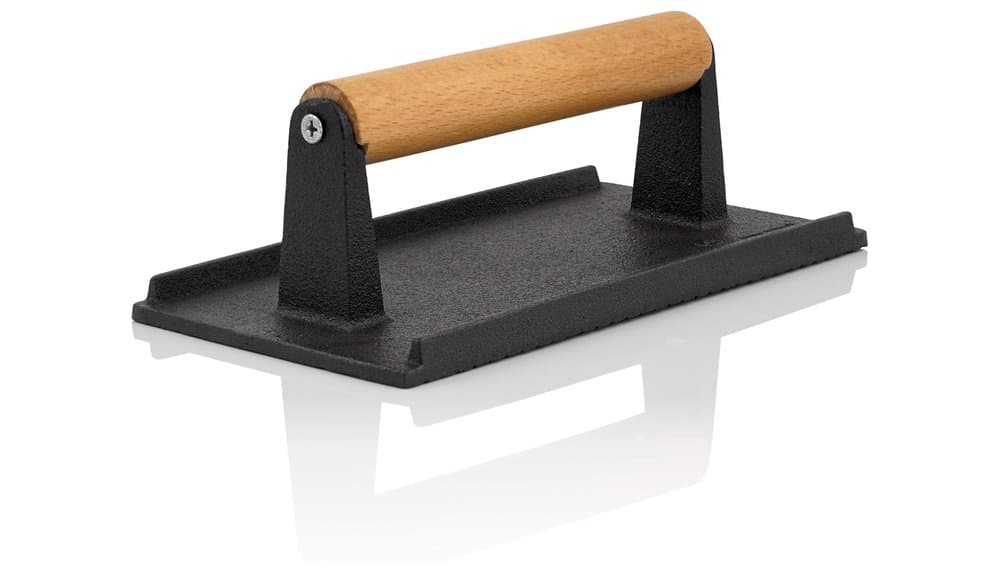
BBQ-Toro Cast Iron Hamburger Press Review
Perfect finishing touch for sous vide burgers. This cast iron press ensures ideal sear & Maillard reaction with uniform, constant pressure.
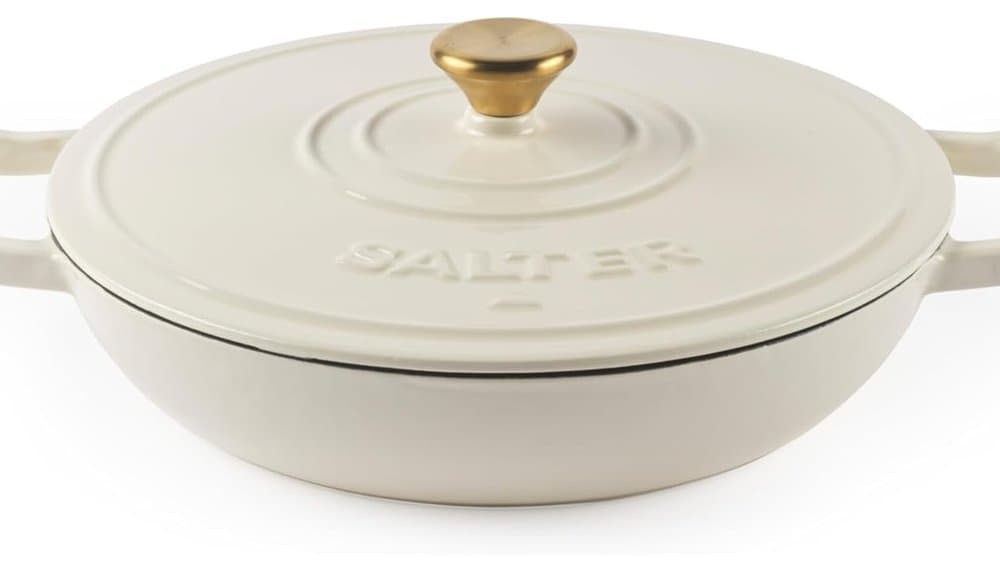
Salter Chester Enameled Cast Iron Dutch Oven Review
End sous-vide precision with perfect finishing. Review of the Salter Chester enameled cast iron casserole for browning, simmering & slow cooking.

nuovva Shallow Cast Iron Dutch Oven Review
A shallow cast iron dutch oven for precision finishing & long-duration cooking. Achieve perfect Maillard reaction and controlled heat.