Sous-vide foie gras: temperature and time
Verdict
The setting on an immersion circulator describes the bath temperature. That alone does not establish the core temperature of the foie, the time spent at that temperature, or the safety of a homemade product.
Method. We do not give a time-temperature pair, or a storage life, to apply at home. Industrial schedules (pasteurised mi-cuit at 65-75 °C, sterilised preserves) do not validate a domestic cook. No price is stated as fixed.
This is neither a preserve nor a product equivalent to commercial mi-cuit. Shelf lives given for pasteurised or sterilised foie gras do not apply to a lower-temperature cook at home.
Commercial mi-cuit and home cooking: two different schedules
According to the foie gras interprofession, ready-to-serve mi-cuit is pasteurised at a core temperature between 65 and 75 °C for 1 to 2 hours. A preserve is sterilised in an autoclave. For a shop product, rely on its label for the date and the storage conditions, especially after opening. Those figures describe industrial processes. They do not validate a sous-vide cook at home, nor the storage life of a homemade preparation.
The interprofession describes a generally melting texture, with a centre that may stay slightly pink. Those cues apply to commercial mi-cuit, which is pasteurised, then cooled quickly and kept in the refrigerator. They do not apply to a home cook.
What sous-vide recipes say about temperature and time
The terrine recipe hosted by Anova is a community contribution, signed J B Basel. Meilleur du Chef describes another culinary process, in a water oven. These recipes illustrate different ways of aiming at a texture. They do not provide a microbiological validation that we can reuse as a guarantee. Thickness and packaging change the time needed to heat the core. We therefore give no time-temperature pair and no storage period to apply at home.
Storage and freezing
For commercial mi-cuit foie gras, the label comes first: use-by date and stated temperature. The interprofession says mi-cuit generally keeps for 3 to 6 months refrigerated before opening. Its storage page gives 6 months at 2 to 4 °C for a product in a tin, a jar or under vacuum, subject to the use-by date; a vacuum-film loaf is given as 21 days, and a terrine, crust or brioche under film or vacuum generally as 8 to 10 days, still at 2 to 4 °C. After opening, the interprofession indicates consumption within 4 to 5 days, with the product protected from oxidation. Anses more generally recommends eating opened perishable foods within 3 days, aiming for 4 °C in the coldest part of the refrigerator, and not leaving those foods at room temperature for more than 2 hours before refrigeration. If the pack gives no time after opening, the shorter period applies.
Those periods concern commercial pasteurised products. They do not apply to foie gras cooked sous vide at home. Vacuum packing, a hot-water bath or plain boiling does not turn a home preparation into a preserve: Anses notes that cooking by boiling is not enough to sterilise food, because Clostridium botulinum spores resist even boiling water. Commercial canned foie gras is sterilised in an autoclave at 105 °C for 1 to 2 hours, a process distinct from a sous-vide bath. Cooked but not sterilised products must be kept cold. We do not give a storage life for a homemade preparation, because no official validated schedule exists for that domestic use.
On freezing, the interprofession says raw foie gras may be frozen. For commercial mi-cuit, follow the pack first. Anses notes that home freezing at -18 °C stops the growth of microorganisms, but that most of them survive: it is better to freeze at purchase or just after preparation, not at the end of the use-by date. Thawing should be done in the refrigerator, in a microwave on the defrost setting, or by cooking; thawed foods should be eaten promptly (no more than three days) and should not be frozen again.
Safety: what these temperatures do not do
Vacuum packing does not turn a homemade preparation into a preserve. If the safety of a dish is uncertain, do not serve it. Anses lists foie gras among the foods to avoid during pregnancy. It also advises against cooked charcuterie that must be kept cold, for pregnant women and for older people. In that context, a refrigerated commercial mi-cuit is not a fallback.
A hot-water bath or boiling water does not sterilise a homemade preparation; the detail is in the storage section.
See priceWhat about the Thermomix?
The Thermomix TM6 has a sous-vide mode documented on Cookidoo, Vorwerk's official recipe platform. On the official TM6 and TM7 pages, that mode is described as cooking between 40 °C and 85 °C, for up to 12 hours. Cookidoo states that bags go in the cooking basket or on the cooking disc, fully covered with water; that the juice of half a lemon, or a teaspoon of vitamin C (ascorbic acid), should be added to limit rust spots during long cooks; that bags must be heat-resistant, food-grade, sous-vide bags of the kind Cookidoo specifies; polyethylene bags not being suitable; and that bags must not be reused. Official times are counted once the water is hot. The Varoma is a steam-cooking accessory, distinct from the sous-vide mode.
Cookidoo also publishes an official recipe titled « Foie gras sous-vide », intended for about 400 g of raw duck foie gras, with a total announced time of 72 hours (preparation and resting included). The public page lists, among other items, 1400 g of water, 10 g of lemon juice and ice cubes. The detailed steps, in particular the exact bath temperature and the cooking time, are not fully accessible without a Cookidoo account. We therefore do not reconstruct them here: if you cook with a Thermomix, follow the official recipe in the app, rather than a schedule copied from elsewhere.
Equipment for the sous-vide bath
You need at least a circulator that can hold a stable temperature, a bath deep enough, and a way to pack the foie (bags and a vacuum sealer, or a terrine then vacuum-packed, as in the Anova recipe). For choosing the circulator, start with our sous-vide immersion circulator guide. For packing, the vacuum sealer buying guide is the right entry point.
KitchenBoss
Three KitchenBoss circulators: the KitchenBoss G300T, the KitchenBoss G330 and the KitchenBoss G322PT. A KitchenBoss Wi-Fi model is also included, as is a KitchenBoss Vacuum Cooking Heater WiFi.
See the price of the KitchenBoss G300T on Amazon
See the price of the KitchenBoss G330 on Amazon
See the price of the KitchenBoss G322PT on Amazon
See the price of the KitchenBoss Immersion Heater Wi-Fi on Amazon
See the price of the KitchenBoss Vacuum Cooking Heater WiFi on Amazon
INKBIRD
Among the connected circulators: the INKBIRD ISV-101W WiFi, the INKBIRD ISV-200W WiFi and the INKBIRD ISV-100W WiFi.
See the price of the INKBIRD ISV-101W on Amazon
See the price of the INKBIRD ISV-200W on Amazon
See the price of the INKBIRD ISV-100W on Amazon
Other circulators
Also useful for comparison: the Princess Immersion Circulator, the Steba SV 100 Professional, the Fityou HU-XI-201 and the KEAWEO 1100W.
See the price of the Princess Immersion Circulator on Amazon
See the price of the Steba SV 100 on Amazon
See the price of the Fityou HU-XI-201 on Amazon
See the price of the KEAWEO 1100W on Amazon
Prices vary. This page states no fare and no promotion: the amount to rely on is the one Amazon shows at the time of the click.
Sources
- Le Foie Gras (interprofession), « Cru, Conserve ou Mi-cuit ? »
- Anses, prévention des toxi-infections alimentaires
- Anses, recommandations alimentaires pendant la grossesse
- J B Basel, « Foie Gras terrine mi-cuit », Anova community ; Meilleur du Chef, « Foie gras cuit à basse température »
- Cookidoo, « Foie gras sous-vide »
- Cookidoo, Thermomix TM6 sous-vide mode
- Le Foie Gras (interprofession), "Storing foie gras" : storage times for commercial mi-cuit, subject to the use-by date.
- Anses, what is botulism and how to prevent it : boiling is not enough to sterilise food; Clostridium botulinum spores resist boiling water.
- Anses, keeping the cold chain : 4 °C, opened foods, freezing at -18 °C, thawing, no refreezing.
- Anses, ten simple kitchen gestures : no more than 2 hours at room temperature before refrigeration.
- French Ministry of Agriculture, botulism and canned food : plain boiling is not enough; low-acid canned foods need a treatment above 100 °C, typically in an autoclave.
- Cookidoo, sous-vide cooking : official sous-vide mode instructions (bags, lemon or vitamin C, suitable bags).
We may receive a commission if you buy through our links, at no extra cost to you, as explained in the legal notice.
100% free and independent — All our articles are written independently, without any sponsorship. We may earn a commission on purchases made through our links, at no extra cost to you.
Guides you might like
The Sous Vide Immersion Circulator Guide
Solve steak woes with a sous-vide immersion circulator for precise, perfect cooking every time.
Best Beginner Sous Vide Kit
Find the perfect sous-vide starter kit on a budget. Learn the three essential features to look for to cook your first perfect steak without the headache.
Stainless Steel Sous Vide Containers: A Practical Guide
Find the right stainless steel vacuum container for sous vide cooking. We compare durability, Gastronorm sizing, and lid systems for better food preservation.
Articles you might like
COYUN Vacuum Lid Review for Sous Vide Cooking
Optimize sous-vide cooking with the COYUN Vacuum Lid. This accessory stabilizes water temperature and reduces evaporation for more consistent results.
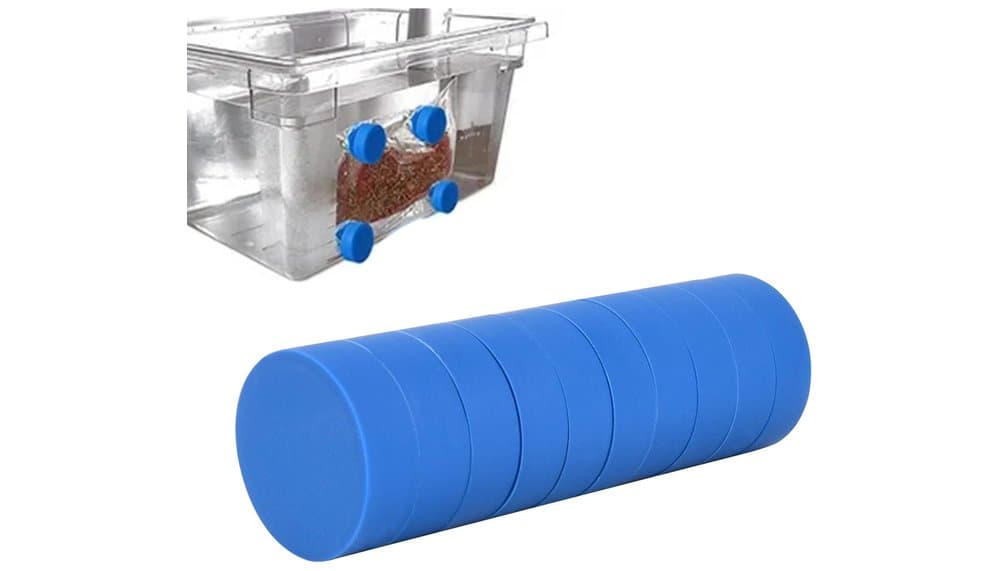
demaxiyad Vacuum Magnetic Weights Sous Vide Review
Keep sous vide food perfectly submerged with magnetic vacuum weights. Ensure even cooking every time. A new approach to classic immersion.

KOOSREEL Sous Vide Bag Rolls Review
Essential review of KOOSREEL vacuum bag rolls for sous vide cooking. Analyzes quality, performance, and value for precise, safe low-temperature cooking.