Ultimate Kitchen Blowtorch Guide
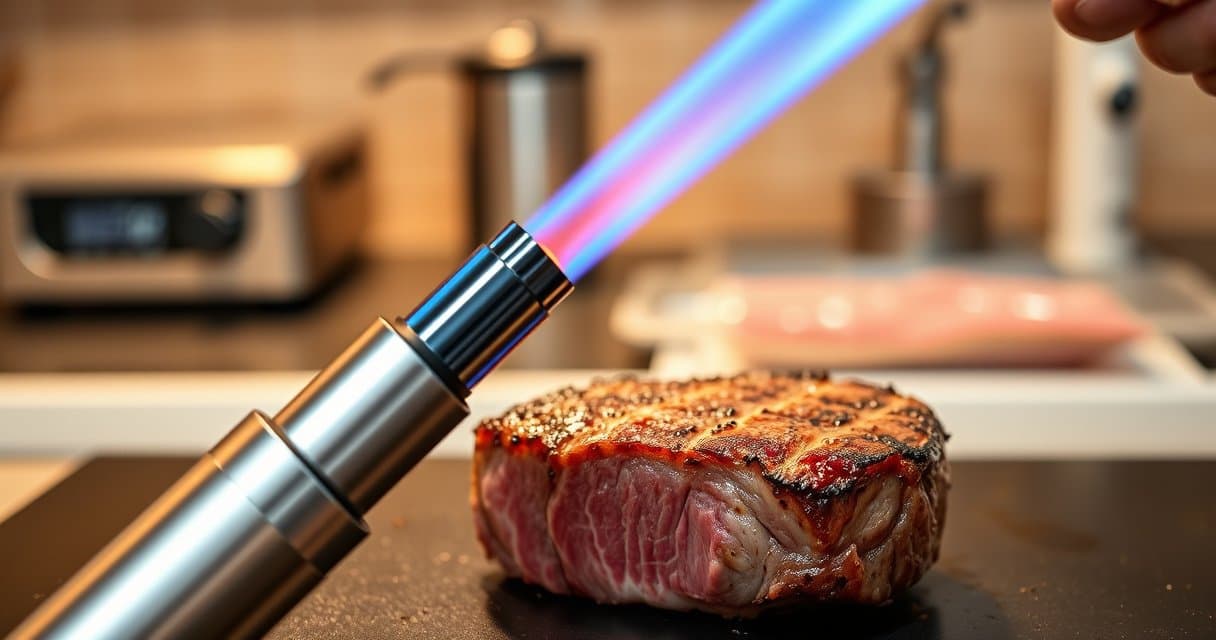
You've just pulled a magnificent beef roast out of your sous-vide bath: it's perfectly cooked inside, but uniformly grey and unappetizing on the outside. This is where everything changes. A kitchen torch, much more than a simple gadget, is the magical tool that transforms that tender texture into a crispy, caramelized work of art in just seconds. Let's see how to choose the one that will become a natural extension of your hand.
Key Points to Remember
- A kitchen torch is the ideal tool for searing meat after sous-vide cooking, creating a perfect crust without overcooking the flesh.
- For successful searing, prioritize a model with adjustable power and precise flame control, ideally through a dual air/gas control mechanism.
- Safety and ergonomics are crucial: look for an integrated piezo igniter, a check valve, and good grip for comfortable use.
- Regular maintenance, especially cleaning the nozzle and purging the gas line, guarantees the tool's performance and longevity.
What is a Kitchen Blowtorch and What is it Really Used For?
Frankly, it's not the tool that sits in the weekend DIYer's drawer. A kitchen blowtorch is an instrument designed specifically for flame in a culinary setting. Its flame is fine, direct, and, above all, precise. We're talking about temperatures that can easily exceed 1300°C, an intense and localized heat that your oven or frying pan simply cannot match. The principle? A gas canister (butane or propane) fuels a nozzle that produces this controllable flame. It is this precision that makes all the difference between burning and caramelizing.
Much More Than Burnt Sugar
If you're only thinking "crème brûlée," you're missing 90% of its potential. Today, it is a fundamental tool for modern cuisine, and especially for low-temperature cooking like ours.
- The Perfect Finishing Touch After Sous-Vide: This is its star role. You take a steak, a fish fillet, or vegetables out of their bag. They are cooked to perfection but without any color. In 60 to 90 seconds of quick, even passes, the blowtorch creates a flavorful crust (the Maillard reaction) without overcooking the flesh. This is why it is often cited as a key element for the best kitchen blowtorch for searing – the one that creates a uniform, fast crust without any aftertaste of fuel.
- Grilling and Flambéing Without a Grill: Slices of pineapple for dessert, peaches cut in half, a ribeye steak… You can "grill" them directly on the serving plate for a spectacular effect. The same goes for flambéing rum on a cake, with much more control than with a match.
- Degreasing and Finishing Sauces: A pro technique: quickly pass the flame over the surface of a consommé or roasting juices. It will instantly burn and bring up the last particles of fat, which you then remove with a spoon. Unbeatable for clarifying.
- Localized Thawing and Reheating: A piece of butter that's too hard? The surface of a soup that's too cold? A few seconds of distant heat and it's fixed, without altering the rest of the dish.
Quick Comparison: Blowtorch vs. Other Searing Methods
Hesitating between a scorching cast-iron pan or a grill? Here's the reality.
| Method | Main Advantage | Major Drawback for Finishing Sous-Vide |
|---|---|---|
| Cast-Iron Pan | Traditional "roasted" flavor. | Overcooks the thin outer layer of your already perfect meat. Splatters grease everywhere. |
| Charcoal Grill | Unmatched smoky flavor. | Long to heat up, difficult to control. Impossible for small pieces or indoors. |
| Kitchen Blowtorch | Total precision, zero overcooking. Uniform crust. Clean. | Learning curve for a smooth motion. Initial investment. |
My opinion? For everyday use after sous-vide cooking, the blowtorch is unbeatable in terms of clean results and cleanliness. The pan is for the weekend when you want that ritual and those splatters. The grill is for summer and a festive effect. But for scientific control over your perfectly cooked protein, the choice is quickly made.
Technical Characteristics: Power, Adjustment, and Consumption
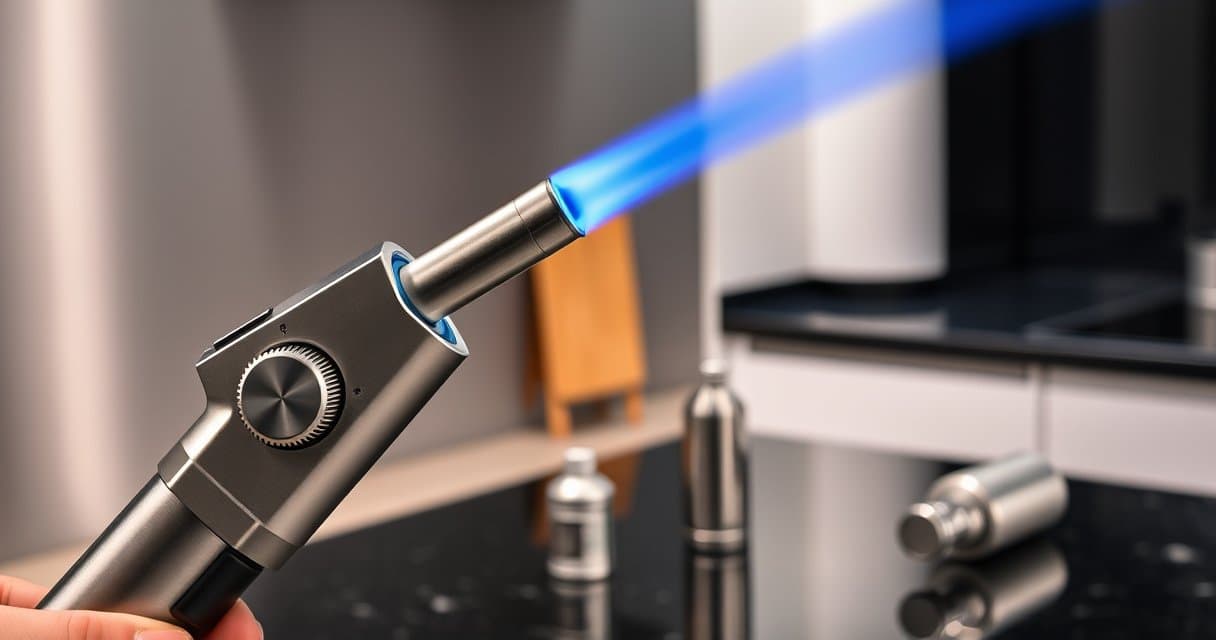
This is where toys are separated from serious tools. These three technical parameters determine whether your experience will be frustrating ("why isn't it browning?") or completely mastered.
Power: The Myth of "Always More"
Power is often given in Watts. An entry-level model will be 600-800W, a mid-range model 1200-1500W, and professional models can go up to 2500W and more. Be careful not to fall into the trap. For searing sous-vide meat, adjustable power between 1000 and 1500W is far more useful than a 2500W monster you'll never dare to use at maximum. At full power, you risk charring the surface instead of caramelizing it, plus you'll consume your gas at a crazy speed. The real question is: can you reduce the flame to a fine blue brush to delicately work on cheese or a dessert?
Flame Adjustment: The Key to Precision
This is the number one criterion for identifying a best culinary searing torch. There are two main systems:
- Single adjustment knob: You turn to ignite and adjust the intensity. Simple, but sometimes less precise.
- Dual control (air + gas): This is the holy grail. One valve controls the gas flow, another the air intake. This allows you to finely adjust not only the size, but also the temperature and nature of the flame. A blue, thin, and noisy flame is hotter (perfect for searing). A more yellow and wider flame is less hot, ideal for melting cheese evenly. This versatility makes all the difference.
Concretely, for a 5 cm thick beef steak, you'll start with a medium-hot flame to create a base, then finish with short bursts at full power to accentuate the texture. Without good adjustment, you're condemned to sear in "all or nothing" mode.
Autonomy and Consumption: The Logistics of Fire
Nothing is more annoying than running out in the middle of a sear. It all depends on the type of gas and the capacity of the cartridge or bottle.
- Standard butane cartridges (approximately 200g): Common on pen-style models. One cartridge may be enough for 4-5 medium steaks. Perfect for occasional use. Always check that your model accepts standard cartridges and not proprietary ones, which are much more expensive.
- Propane bottles (Campingaz®): Larger (900g, 1kg), they screw onto sturdier torches. Autonomy is multiplied. Frankly, if you cook sous-vide regularly and have several pieces to finish on Sunday evening, aim for this option. Propane also burns a bit hotter than butane.
- Connection to a camping gas bottle: This is the "workshop" option for enthusiasts who use it a lot. Autonomy is almost unlimited, but the setup is less compact.
A practical little calculation: a 1500W torch used at medium power consumes about 100g of gas per hour. To finish 4 steaks (about 8-10 minutes of work), you will therefore consume less than 20g of gas. The cost is negligible. The real issue isn't financial, it's having gas in reserve and not being caught off guard. Always keep a spare cartridge or bottle in your drawer.
Our Selection
Do you want to elevate your desserts, sear your meats to perfection, or dive into some DIY projects? The culinary blow torch has become the versatile tool that both enthusiasts and the curious dream of. In this selection, we analyze three popular models based on their technical specifications and community feedback. Each has its strengths, but also its little compromises. We'll help you see things more clearly.
| Product | Max Temperature | Gas Capacity | Practical Functions | Key Strengths (based on reviews) |
|---|---|---|---|---|
| Ankway Culinary Blow Torch | 1300°C / 2370°F | N/A (Butane not included) | Flame regulator, wide anti-tip base, 3 cartridge adapters | Lightweight, long and powerful flame, perceived good value for money. |
| Sondiko S907 Blowtorch | 1371°C | 10g | Transparent fuel gauge, one-handed adjustment and locking, compatible with all cartridges | Visibility of remaining gas, ease of use, continuous flame, multi-angle use. |
| MOKUTON Kitchen Torch | 1300°C | 120ml (bottle included) | Gas included, level gauge, ergonomic trigger, safety features | Practical "ready-to-use", perceived solid build, safety. |
Ankway Culinary Blow Torch
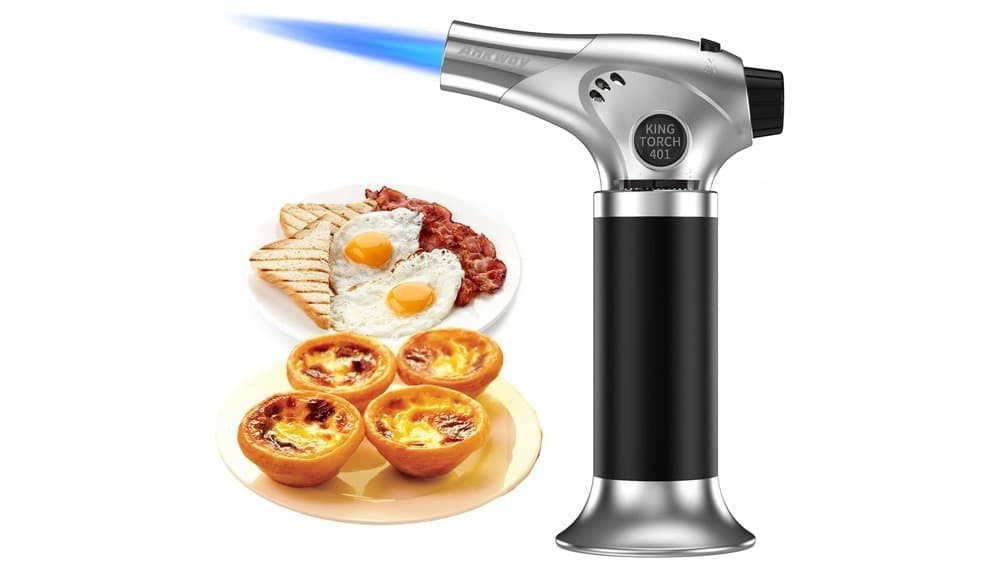
On paper, the Ankway presents itself as a professional and accessible tool. Its aluminum alloy shell promises lightness and heat resistance, with an advertised temperature reaching up to 1300°C. According to the specifications, it is designed for intense use, with an adjustable long flame that can reach 15 cm, useful for tasks like caramelizing crème brûlée or quickly searing a piece of meat.
The user community highlights several strengths. Its attractive price and ease of use are often mentioned. Reviews confirm that it heats up quickly and delivers enough power for most standard culinary uses. The fact that it comes with three adapters for short-neck cartridges solves a common problem with this type of device, which is much appreciated. Its wide base is also a plus for stability during refilling or when setting it down.
However, feedback also highlights some limitations. The main point of attention is related to the quality of the butane cartridge that the user will have to purchase separately. Many note that performance (flame stability, duration) depends heavily on the brand and purity of the gas used. Furthermore, the lack of a level gauge forces you to estimate the amount of fuel remaining, which can lead to inconvenient interruptions mid-preparation. Finally, a few users report that the piezo ignition mechanism can lose reliability over the long term.
Sondiko S907 Blowtorch
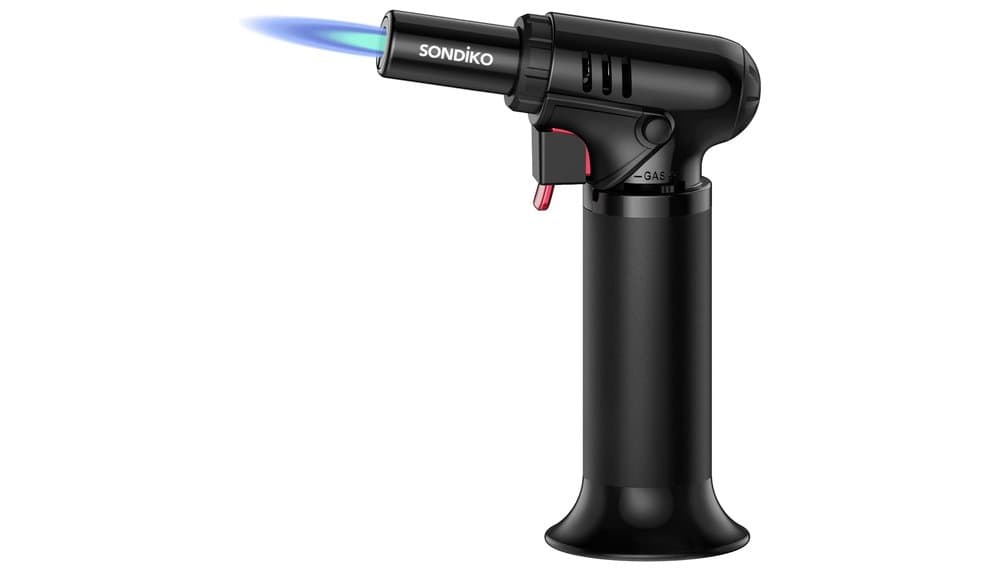
The Sondiko S907 immediately stands out with a feature rare in this segment: a transparent fuel gauge integrated into the base. On paper, this is a decisive advantage for anyone wanting to avoid unpleasant surprises. Its technical specifications also announce the highest temperature in our selection (1371°C) and universal compatibility with all butane cartridges, regardless of neck length.
User reviews strongly support these strengths. The gas visibility is praised as a major comfort and control gain. Its design allows for easy one-handed use, with a flame lock button that frees the user from having to maintain constant pressure, a real plus for precision or extended tasks. The community also notes its versatility, appreciating its ability to function at all angles, which is useful for DIY or light soldering projects.
But here too, not everything is perfect. The main compromise lies in its limited reservoir capacity of 10g. Even though the manufacturer advertises 20 to 50 minutes of runtime, feedback indicates that for regular use or intensive torching (like on a large crème brûlée surface), refills are more frequent. Some users also point out a plastic finish on some parts that may seem less premium than solid metal, although this contributes to its lightness. Finally, as with the Ankway, butane is not included.
MOKUTON Kitchen Torch
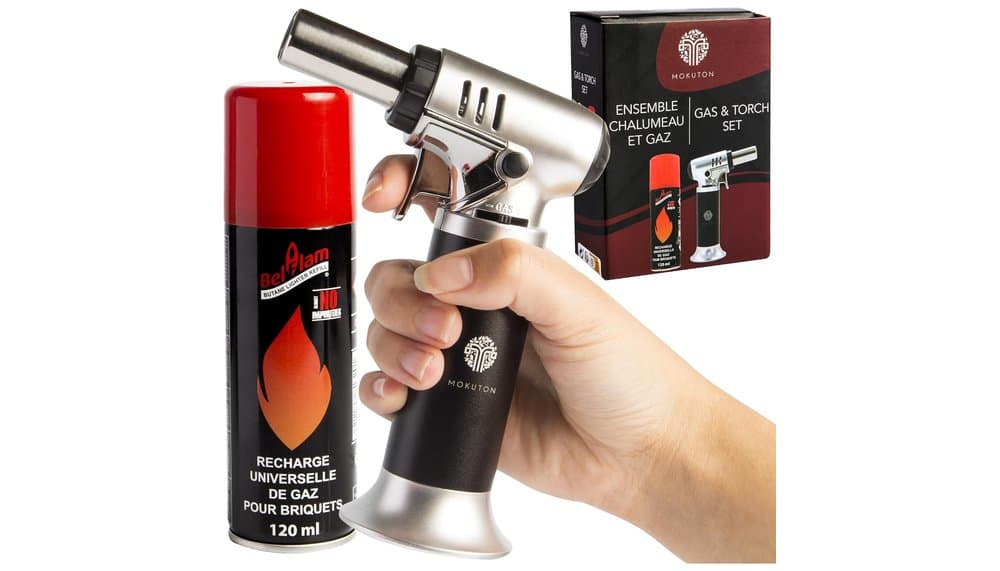
The MOKUTON plays the card of immediate convenience. Its main argument is clear: it comes with an included 120ml gas bottle. No more worrying about the first fuel purchase. On paper, its specifications (1300°C temperature, ergonomic trigger, safety features) place it in the same category as the others, but with a design often described as more robust and "pro".
According to community feedback, this model appeals to those who want a ready-to-use and reassuring tool. The aluminum finish and feel in hand are frequently praised. The presence of a level gauge (even if not transparent like the Sondiko's) and a safety lock is appreciated by families or users concerned about handling. Its larger integrated tank also gives it notable autonomy for several usage sessions.
The limitations mentioned by users often revolve around gas logistics. Once the provided bottle is empty, you need to purchase specific refills compatible with the torch's system, which can be less universal and sometimes more expensive than standard cartridge butane. Its weight (350g) is also greater than its competitors, which can be perceived as a sign of solidity, but also as a drawback for prolonged use or for people with weak grip strength. Finally, its bulkier design may make it less maneuverable for very high-precision work.
Choosing Based on Your Culinary Projects: From Brulee to Searing
Do not make the mistake of thinking a single tool can do everything perfectly. Your primary use will dictate the ideal choice—it's like choosing between a paring knife and a cleaver. Here's how to navigate.
For the Sunday Baker: Brulee and Gentle Finishes
If your ambition is limited to caramelizing sugar on creme brulee or lightly toasting meringues, your needs are simple. A lightweight pencil-style model, running on a small butane cartridge, is perfectly sufficient. It heats up quickly, is easy to store, and won't break the bank. Precise adjustment is secondary here: you want a fine, concentrated flame that you sweep quickly over the surface. Be wary of models that are too cheap, however: an unstable or overly wide flame can melt the cream underneath before caramelizing the sugar. It's frustrating.
For the Sous-Vide Cook: The Perfect Sear
Here, we get to the heart of the matter for finding the best kitchen torch for searing. The mission is clear: to create a flavorful, caramelized crust on meat that is already cooked through without overcooking it. For this, you need two things that small pencil torches often don't offer: available power (at least 1200W) and very fine adjustment. Why?
Imagine a large sirloin or a ribeye steak. The surface is large, moist, and you need to dry and brown it evenly. A flame that is too weak will make the operation endless and will cook the first layer of meat. A "flamethrower" mode without control will char the edges. The ideal is a torch with a wide nozzle that distributes heat well, and a dual control to switch between medium heat to "dry" the surface and more intense heat to finish the Maillard reaction, paying attention to the edges. It's a real sculpting job, not just a simple brushing. A model with an adjustable head and good gas autonomy (screw-on canister) will change your life for this task.
For the Versatile Enthusiast: From Roasting to Flambé
You also want to roast peppers, flambé a rumsteak, melt cheese on a gratin, or even deglaze a pan at the end of service? You need a pro tool. Versatility becomes the keyword.
In this case, look at models that offer interchangeable nozzles. A wide, flat nozzle for even searing, a concentrated nozzle for localized work, and perhaps a diffuser for gentler, more spread-out cooking. Flame regulation must be excellent, going from a fine brush for melting sugar on a Tarte Tatin to a wide, powerful flame for quick and safe flambéing. These models are more expensive, but if you use it several times a week for radically different applications, it's an investment that justifies itself. Frankly, stirring a chili with peppers you've just roasted yourself with a torch is priceless.
Safety, Handling, and Daily Use Comfort
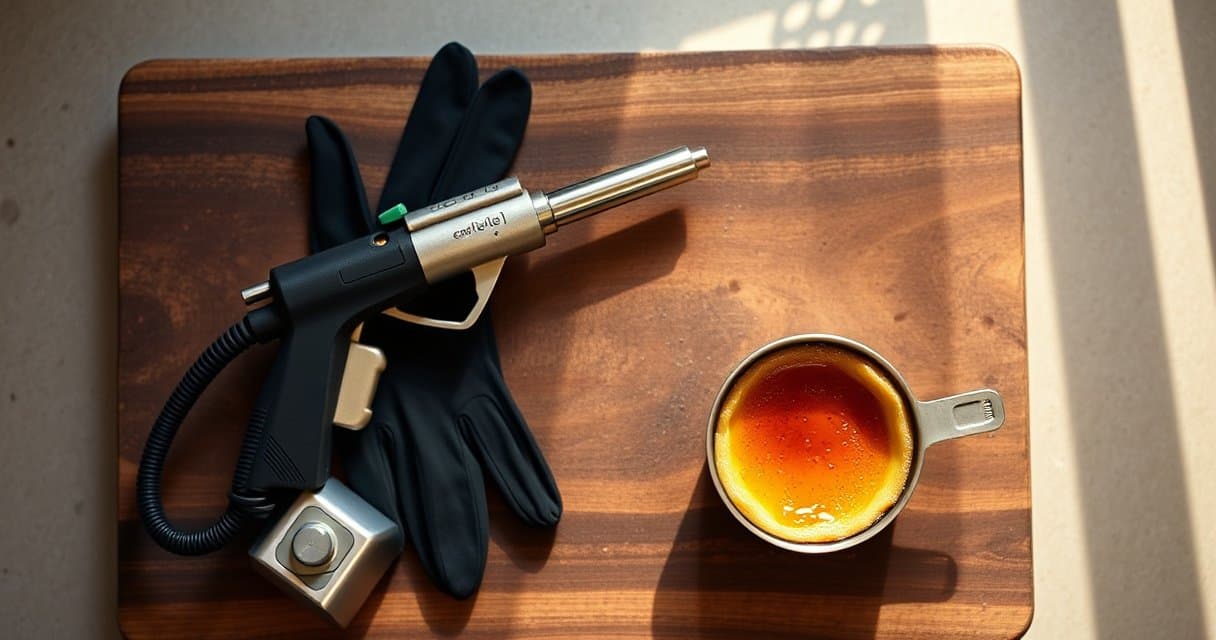
Let's be honest: a culinary torch is a flame over 1300°C in your hand. Safety is not an option; it's the foundation. But it's also a question of comfort: if the tool is heavy, poorly balanced, or noisy, you'll quickly stash it at the back of the cupboard, and your search for the best kitchen torch for searing will be a failure. Here's what truly matters.
Non-Negotiable Safety Systems
Start by checking two simple but crucial things. First, a flame failure safety device (a special valve in the nozzle). This prevents the flame from traveling back into the tube if it goes out suddenly. Without it, there's a serious risk of explosion. Second, a built-in piezo igniter. You should never need a separate match or lighter to start your torch. Using one forces you to hold the gas open with one hand and the flame with the other, an unstable and dangerous situation, especially when searing a fatty piece of meat that will splatter. A safe ignition button, with a trigger that must be held down for the gas to flow, is also a big plus.
Ergonomics: The Key to a Successful Searing Session
Weight and balance are everything. To sear a large roast, you might spend 3 to 5 minutes continuously, with your arm extended. A 1.5 kg torch that's poorly balanced (all the weight at the front) will tire your wrist in a minute. Prioritize models where the center of gravity is close to the handle, often thanks to a rear-placed fuel tank. The handle should be comfortable, with an ergonomic shape and a non-slip surface, even with kitchen gloves (which I highly recommend you use).
And let's talk about noise. Some powerful torches produce a loud blast, like a miniature jet engine. This can be stressful over time and may push you to rush the job. Test it in-store if possible, or read reviews on this specific point. A tool you can stand using is a tool you will use better.
Best Practices to Adopt from the First Use
Set up your workspace before lighting the torch. Place the item to be seared on a rack in a pan with sides, move dish towels and packaging away, and have a metal lid ready at hand to smother any potential pan fire. Does that seem excessive? Not after you've seen a puddle of fat catch fire.
Always hold the torch perpendicular to your surface, or at a slight angle. Never point it towards yourself. And most importantly, when you're done: always turn it off at the main valve on the canister, not just at the trigger. This purges the gas line and prevents leaks. Let it cool down completely on a non-flammable surface before storing it. These small habits make the difference between a tool that scares you and a reliable kitchen companion.
Maintenance and Durability: How to Make Your Tool Last?
A blowtorch is not a consumable, it's an investment. And frankly, nothing is more frustrating than a tool that rusts, clogs, or loses performance after a few months because it was mistreated. Models designed for intensive searing, often presented as the best kitchen blowtorch for searing, are built to last, but on one condition: that you take care of it. Here's how.
Post-Use Cleaning: The Five Minutes That Change Everything
The golden rule is simple: no water, no abrasive sponges. Let the device cool down completely in the open air. For the body, a slightly damp microfiber cloth is enough to remove grease splashes. The real work is at the nozzle. It's the part that gets clogged with splashes of fat and caramelized sugars, leading to an irregular or weak flame.
Once a month (or after a particularly greasy session), use a toothpick or a fine brass needle (never iron, which scratches) to gently clear the orifice. Some high-end models even include a small brush for this. Then, wipe the outside of the nozzle with a cotton swab soaked in 90% isopropyl alcohol. This 3-minute routine prevents 90% of problems.
Storage: Much More Than Just Tidiness
Don't toss it in a drawer with your whisks and spatulas! Shocks damage the fragile internal mechanisms. Ideally, keep it in its original box or in a rigid case. If it doesn't have one, wrap it in a thick dish towel and store it horizontally in a cupboard. Absolutely avoid humid environments like a cupboard under the sink: moisture is the number one enemy of the circuits and promotes corrosion, even on stainless steel.
Purging and Gasket Inspection
This is the longevity secret many ignore. After each use, and especially before prolonged storage, purge the gas line. How? Light the blowtorch, close the valve on the cartridge or bottle, and let it burn until the flame goes out on its own. This evacuates the remaining gas in the hose, preventing the accumulation of impurities that can clog the nozzle over time.
Also, occasionally check the sealing gaskets, often located at the connection with the cartridge. If they are cracked or hard, they can cause leaks. A replacement kit costs a few euros and can be changed in a minute. Don't wait for the blowtorch to become dangerous to think about it.
One final tip: if you use a professional gas bottle, invest in a quality hose with an integrated filter. This protects the internal circuits from impurities and ensures constant pressure. Your flame will be just as precise and powerful in five years as it was on day one.
Conclusion
There you have it, the veil is lifted on the kitchen torch. It's much more than a simple jet of flame.
It's the tool that makes you a chef, offering direct and spectacular control over the finishing of your dishes. From the crackling of crème brûlée to the perfect sear on a steak, it transforms technique into pure pleasure.
So, whether you're aiming for versatility or raw power for searing, your choice is now clear. Trust your needs, and let the flame do the rest. Happy cooking!
Frequently Asked Questions
What is the best kitchen torch for searing meat after sous vide?
The best torch for searing is a model offering adjustable power (between 1000 and 1500W) and fine flame control, ideally with a dual air/gas control, to create a caramelized crust without overcooking the flesh.
What is the difference between a kitchen torch and a DIY/hobby torch?
A kitchen torch is designed for a fine and precise flame, allowing total control for caramelizing without burning, while a DIY/hobby torch has a broader and less controllable flame, risking giving food a bad taste.
How to use a kitchen torch on a steak?
After sous vide cooking, thoroughly dry the surface of the steak then quickly and evenly pass the blue flame of the torch a few centimeters from the meat for 60 to 90 seconds to create a flavorful crust via the Maillard reaction.
What gas to use with a kitchen torch?
Torches mainly use butane in cartridges for occasional use or propane in bottles for greater autonomy and slightly more intense heat, ideal for regular searing.
Is a kitchen torch dangerous?
A kitchen torch is safe if equipped with safety systems like an integrated piezo igniter and a flame anti-backflow valve, and if used with proper techniques, such as holding it perpendicular to the surface and always having a lid within reach.
How to clean and maintain a kitchen torch?
After complete cooling, clean the nozzle with a toothpick to dislodge residue and use a cotton swab dipped in isopropyl alcohol, then always purge the gas line by letting the torch extinguish after closing the bottle.
100% free and independent — All our articles are written independently, without any sponsorship. We may earn a commission on purchases made through our links, at no extra cost to you.
Guides you might like
Bell Jar Vacuum Sealer Buying Guide
Upgrade to a chamber vacuum sealer for professional sous-vide results at home. Perfect for liquids and flawless, long-lasting seals.
Best Beginner Sous Vide Kit
Find the perfect sous-vide starter kit on a budget. Learn the three essential features to look for to cook your first perfect steak without the headache.
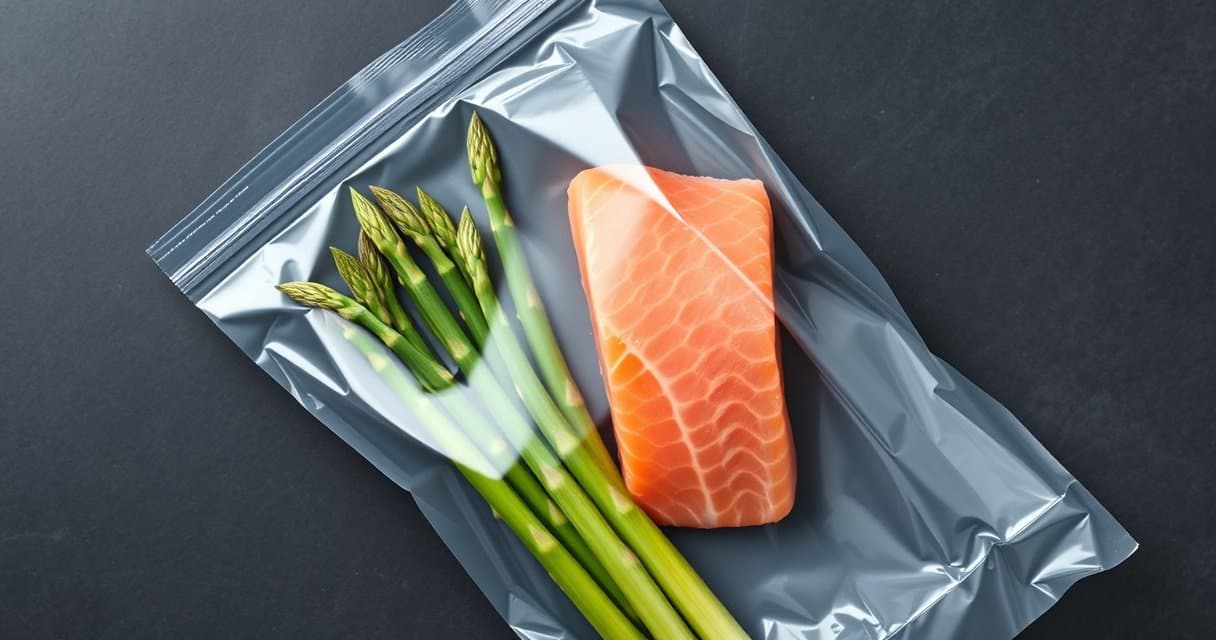
Best Vacuum Bags
Choose the right vacuum sealer bags for perfect results. Learn key specs like heat resistance, thickness, and barriers to avoid culinary disasters.
Articles you might like
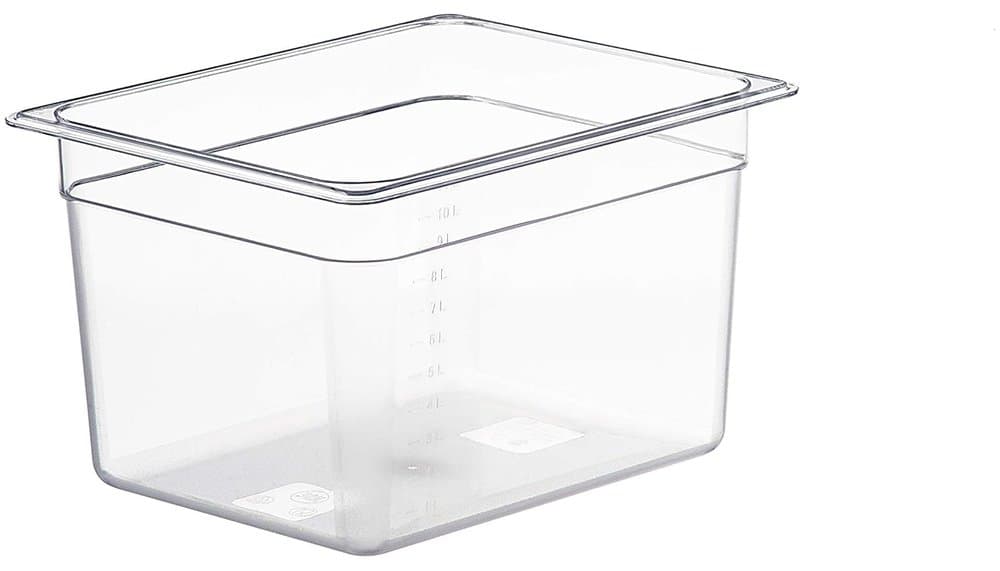
Lipavi C10 11.3 Liter Vacuum Container Review & Test
LIPAVI C10 sous-vide container review: analyzing its energy efficiency, thermal stability & ease of use for precision cooking.
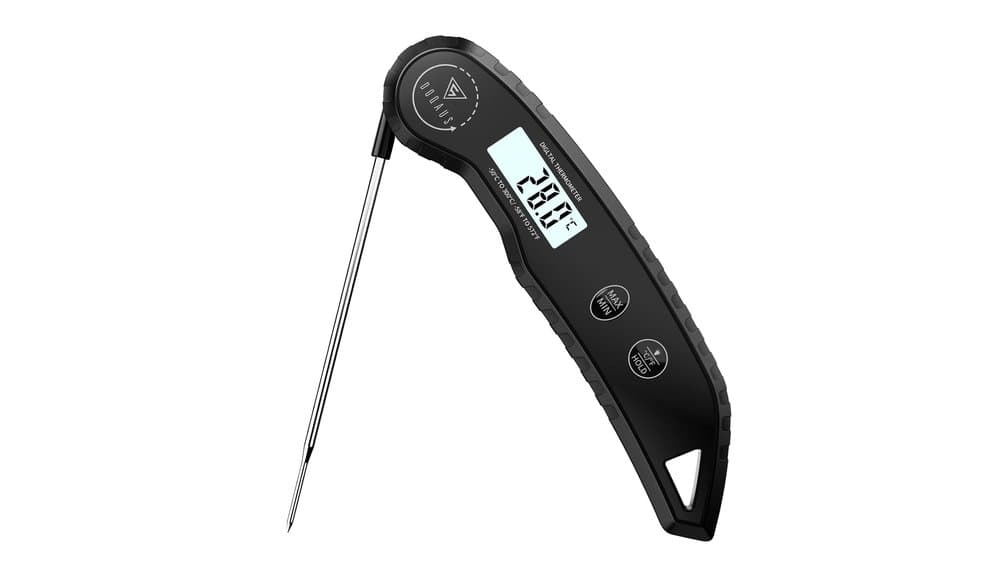
DOQAUS Instant Read Dial Thermometer Review
Master temperature for perfect cooking. Dial thermometer for instant, reliable readings on steak, syrup, ovens. Essential precision tool.
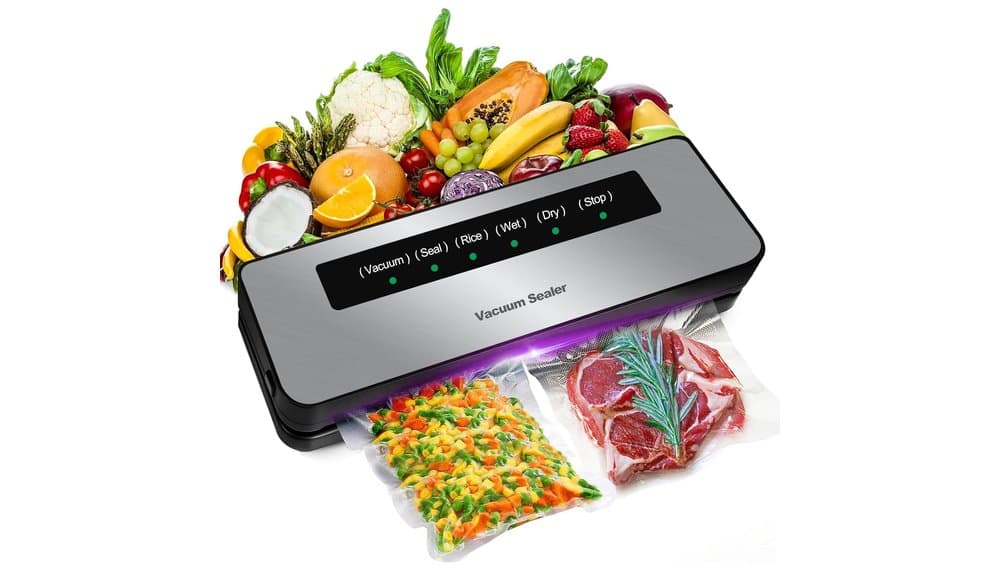
Dictien CF-001A 6-in-1 Sous Vide Machine Review
Ensure perfect sous-vide with the versatile Dictien CF-001A 6-in-1 vacuum sealer for both dry and moist foods. A comprehensive review.