Best Vacuum Bags
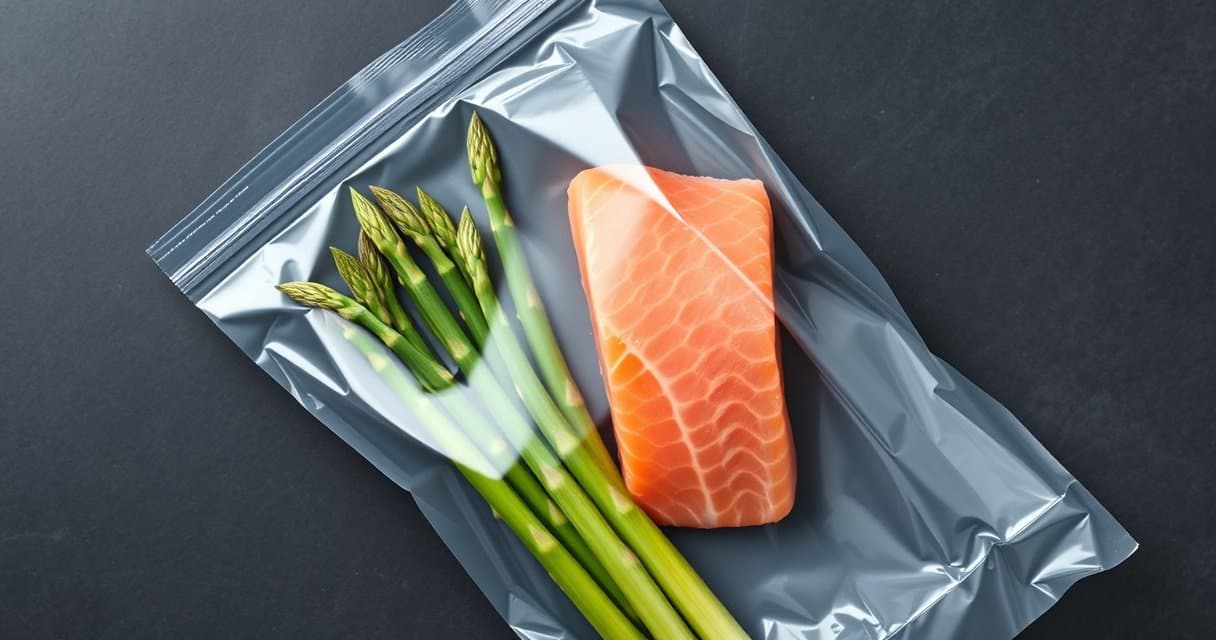
You finally treated yourself to a wonderful vacuum sealer? Congratulations! But honestly, without the right bags, your beautiful cuts of meat and perfect vegetables are just a distant dream. Choosing the ideal bag is the secret key to impeccable results every time — and avoiding some very real culinary disasters.
Key Points to Remember
- Choosing a bag with heat resistance up to 121°C, a thickness of 80-100 microns, and a fat/aroma barrier is essential for safe and perfect results.
- Opt for textured/gusseted bags with an external suction machine and smooth bags with a chamber machine, avoiding shrinkable bags for cooking.
- For regular use, a large roll of bags is much more economical per unit than pre-cut bags.
- A perfect seal requires a clean and dry area; techniques like pre-freezing liquids are essential.
- Reusing cooking bags is risky and should be limited to once, strictly for the same food item, after a thorough inspection.
The Fundamental Properties of a Reliable Cooking Bag
You see this as a simple plastic pouch? Think again. It's your first and last line of defense between your wagyu beef and questionable cooking water. For the best sous vide cooking bags, three properties are non-negotiable. If one of them is lacking, your entire dish risks ending up in the trash.
Heat Resistance, The Absolute Criterion
This is the most critical point, and yet so often overlooked. A bag for cooking must withstand two extremes: long stays in a low-temperature water bath (for example 55°C for 48h) and, sometimes, a brutal thermal shock if you finish cooking by plunging it into boiling water to pasteurize vegetables.
Always check the label. You're looking for an explicit range, like -40°C to +121°C (sterilization temperature). Standard "freezer" bags? Forget them. They often soften as low as 70°C. For me, frankly, any bag that is not clearly rated to at least 100°C has no place in a sous vide kitchen. It's playing with fire, or rather with melted plastic in your immersion circulator.
Thickness: Your Guarantee Against Accidents
Thickness, expressed in microns (µm), is the robustness index. Too thin, and a sharp bone or simple agitation in the bath can puncture it. Too thick, and your domestic machine might not be able to extract the air properly.
For safe and versatile cooking use, aim for a range of 80 to 100 microns. That's the sweet spot. A 50 µm bag is often a "shrink" bag for storage, too fragile for long cooking. Conversely, a 150 µm bag is professional equipment, often reserved for chamber vacuum machines. A friendly piece of advice: if you often cook large cuts with bones (beef ribs, lamb shank), prioritize the higher end of the range, 90-100 µm. Peace of mind is priceless.
Impermeability to Flavors and Fats
Here is a detail that makes all the difference in the long run. A good bag must not only be watertight, but also be a barrier to fats and strong aromas. You don't want your Sunday vanilla cream to have a vague taste of last Friday's smoked salmon because the plastic has "absorbed" the odors.
The best sous vide cooking bags are designed with specific polymer layers for this. How can you tell? It's a bit by feel and experience. A poor-quality bag sometimes smells strongly of plastic when opened, or becomes discolored after containing a rich tomato sauce. Prioritize bags with materials certified for high-temperature food contact—this is often indicated by a small fork and glass symbol on the box.
Understanding Bag Types: Smooth, Textured, Shrink
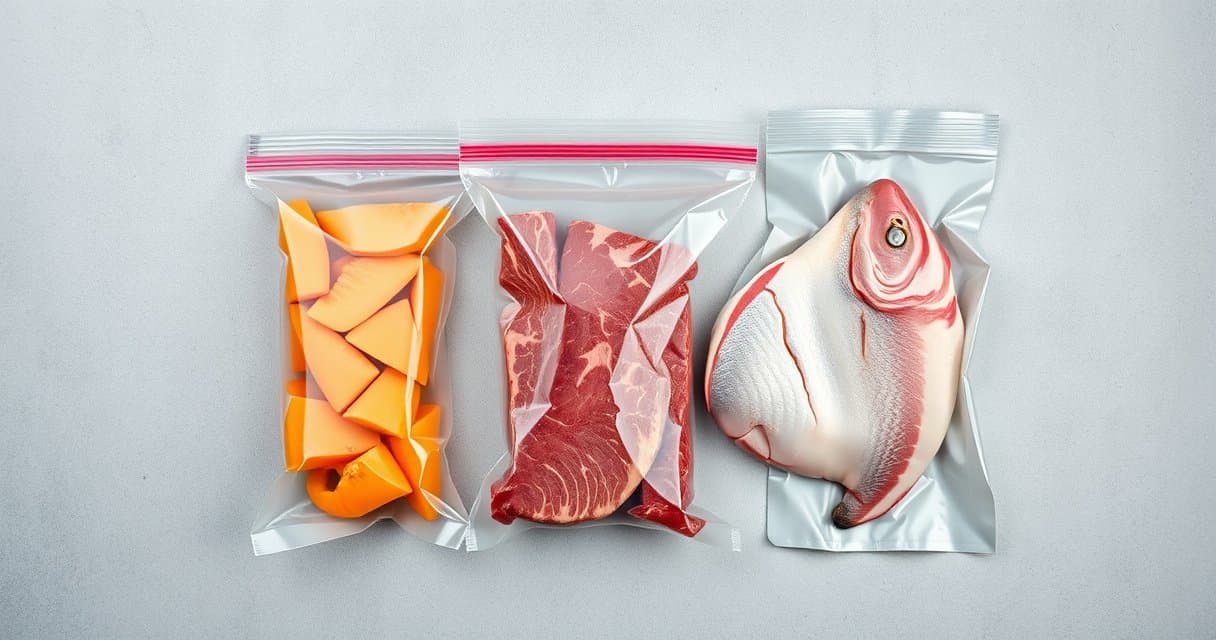
Now that we've covered the technical basics, it's time to choose your soldier. And here, everything hinges on the bag's texture. Smooth, textured, shrink? It's not just about looks; it's primarily a matter of compatibility with your machine and effectiveness for the food you're packaging.
The Textured Bag, the Partner for Home Machines
This is the most common type, the one you'll easily find in supermarkets or on generalist websites. Its surface has a honeycomb pattern, a rough texture. Why? Because this structure creates micro-channels that allow air to escape more easily when your external suction machine does its work.
It's an excellent versatile choice for most solid foods: a chicken breast, green beans, a nice cut of beef. The vacuum achieved is generally very good. However, I have a personal reservation about liquids or very moist preparations (a marinade, a sauce). Droplets can clog these small channels and compromise the final seal. For that, I switch to something else.
The Smooth Bag, the Precision Tool
This is my favorite for careful cooking. Without texture, it looks very simple. But that's precisely its strength. First, it is mandatory if you own a chamber vacuum machine (a professional or semi-pro appliance that evacuates air from the entire chamber). The texture would interfere with a perfect seal.
Furthermore, for domestic machines, it is perfect for liquid, pasty, or delicate foods. Think of a crème anglaise, soft-cooked eggs, or a delicate fish fillet. The uniform surface allows for an impeccable seal, without risk of leakage. Another detail that matters: it offers a much neater presentation; the food is visible and beautiful through the plastic. For me, if you aim for truly clean results and make varied preparations, investing in quality smooth rolls is a real game-changer.
The Shrink Bag: A False Good Idea for Cooking?
Beware, this is the trap. These bags, very thin (often around 50-60 microns), are designed to literally "cling" to the food under the effect of the vacuum, eliminating any air pocket. It's fantastic for freezer storage; your meat takes the shape of a compact brick.
But for cooking? Extreme caution. Their heat resistance is often much lower. Many are specified for a maximum of 70 or 85°C, which is completely insufficient for sous-vide cooking that can exceed 90°C for some vegetables, or for thermal shocking. Using them beyond that is risking the plastic melting in your water bath. My opinion is clear: unless the manufacturer explicitly states a tolerance of +121°C on the packaging, keep them for the freezer. Do not mix them with your best sous-vide cooking bags.
Our Selection
When it comes to sous vide cooking, having the right equipment is one thing, but having the right accessories and a bit of inspiration is another. We have gathered here three products that revolve around this technique: two vacuum bag references and a recipe guide. Based on technical specifications and community feedback, here is what sets them apart and who they are for.
| Product | Quantity / Recipes | Compatibility | Ease of Use | Key Strengths |
|---|---|---|---|---|
| Bonsenkitchen VB3207 | 2 rolls (28 cm x 6 m) | All devices > 28 cm | Manual cut and seal | Quantity/price ratio for occasional use |
| 40 Sous Vide Recipes | 40 low-temperature recipes | Independent (physical book) | QR code access to photos | Educational guidance and anti-waste |
| Bonsenkitchen VB3211 | 3 rolls 28cm + 3 rolls 20cm | All devices > 28 cm | Manual cut, two widths | Versatility (small & large formats) and substantial stock |
Bonsenkitchen VB3207 Vacuum Bags
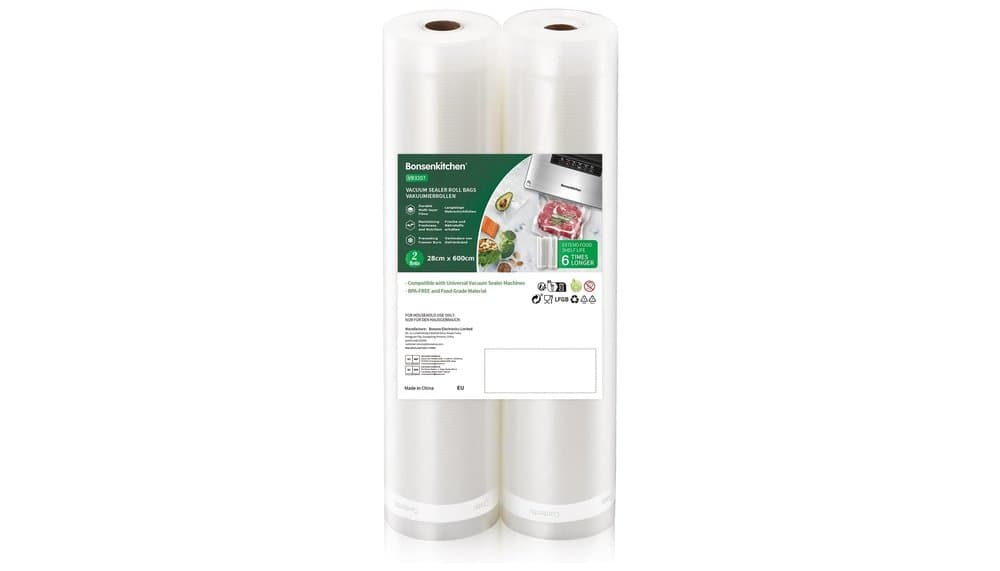
This reference offers the essentials to get started without breaking the bank: two rolls 6 meters long and 28 centimeters wide. On paper, the specs announce a BPA Free material, suitable for freezing, microwaving, and even dishwasher washing, which suggests good reusability.
According to customer reviews, the most frequently praised point is precisely the value for money. For occasional use (packing portions of meat, cheeses, or preparing a few marinades), this basic pack seems to fulfill its mission. The community also notes the good seal quality achieved with common machines, thanks to the relief patterns (embossing) that facilitate air extraction.
However, some feedback highlights limitations. The first is the single available width (28 cm). For packing small foods (like a handful of nuts or a piece of cheese), this can seem disproportionate and generate film waste. Then, although reusable in theory, reviews point out that perfectly cleaning the bags after use with greasy or staining foods (like red meat or sauces) can be tedious, which sometimes leads to using them as single-use products. Finally, we note that the absence of pre-cut bags implies an extra step to cut and seal the second end, a step that requires some practice to master.
40 Sous Vide Recipes
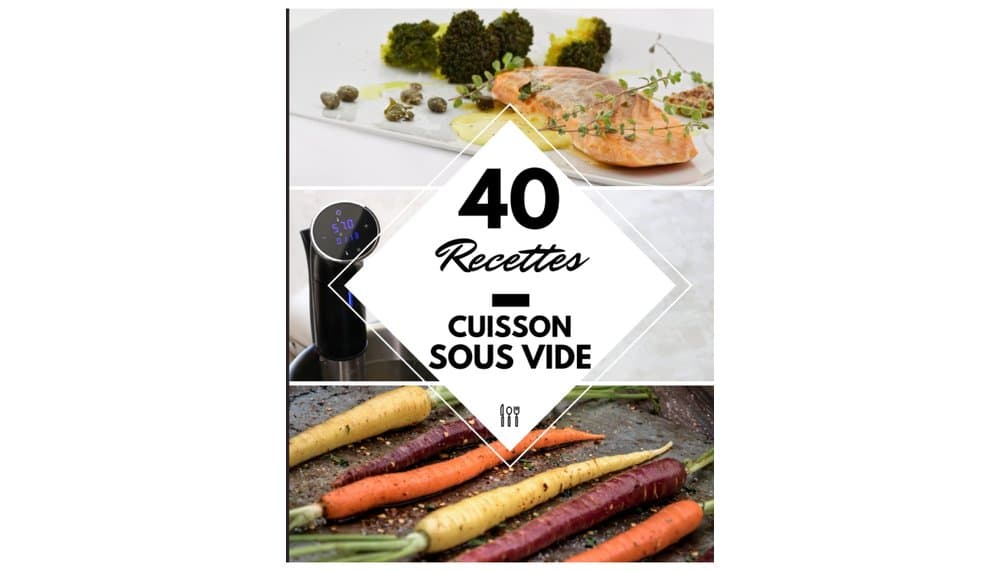
This book positions itself as a practical guide to fully utilize a vacuum machine at home. What interests us here is not a gadget, but a source of structured inspiration with 40 proposals focused on low-temperature cooking, also including an anti-waste approach.
User feedback highlights its educational aspect. It seems particularly appreciated by beginners who own a machine but are not quite sure where to start, beyond simple preservation. The physical format is practical for the kitchen, and the presence of QR codes to access photos of the dishes is a modern plus often mentioned. The eco-responsible approach, which proposes recipes for using leftovers, also finds its audience.
However, the community points out some reservations. The overall rating (3.6/5) suggests the experience is not unanimously convincing. Some readers would have liked more photos directly in the book, finding access via QR code less immediate. Other reviews note that some recipes may seem basic for cooks already skilled in sous vide technique. Finally, as with any recipe book, the result also depends on the device used (the precision of the water bath thermostat) and personal tastes, which can explain some of the criticism.
Bonsenkitchen VB3211
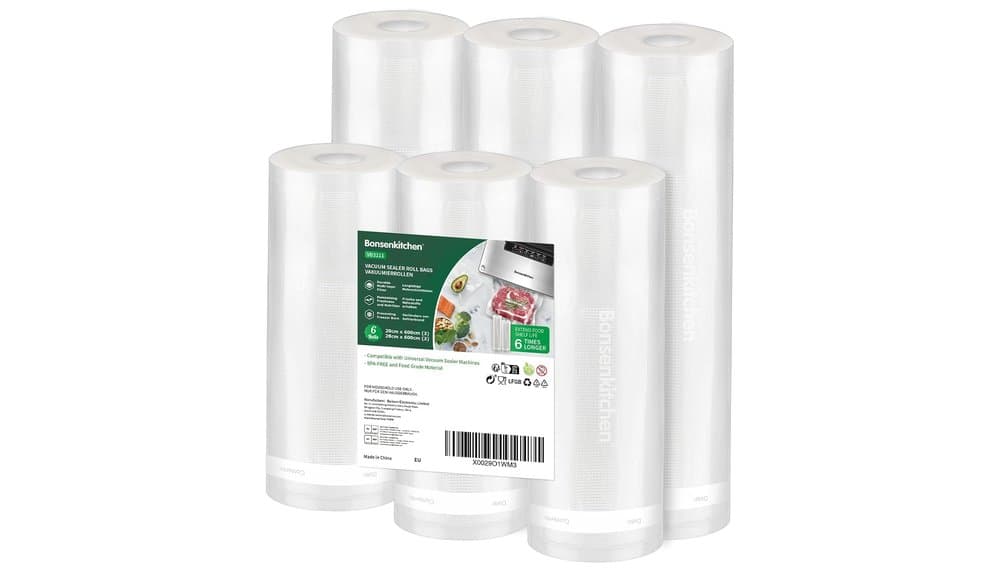
This pack is clearly the brand's "prolific" version. It combines 6 rolls in total: three at 28 cm wide and three at 20 cm. This offering of two widths changes the game radically compared to the VB3207 model.
Analysis of the specifications and thousands of reviews (rating of 4.7/5) shows that it is this dual format that drives its success. The rolls 20 cm wide are seen as a major asset for packing individual portions, vegetables, snacks, or small leftovers in a more economical and less bulky way. This offers a much-appreciated versatility for managing all types of foods. As with the VB3207 model, the technical characteristics promise safe use (BPA Free, microwavable, washable) and good compatibility with sealers.
The limits mentioned by users are, unsurprisingly, related to volume. If you only use your vacuum machine occasionally, 6 rolls represent a very substantial stock that can take time to use up. Therefore, you need to have a real regular need to justify this purchase. Furthermore, some reviews point out that you need to be careful during manual cutting to avoid tearing the film on the side, a manipulation that requires a bit of delicacy, especially with the thinner 20 cm models. Finally, this pack is physically bulkier to store.
Adapting Your Choice to Your Machine and Your Cooking Style
This is where theory meets your kitchen. Because the perfect bag doesn't exist in absolute terms. It's the one that adapts to your equipment and the way you actually cook. Let's get practical.
Your Machine Dictates the First Rule
This is non-negotiable. First, look at your appliance.
- External Suction Machine (the one with a bar you place on the edge of the bag): It is designed for ridged/textured bags. Their texture helps evacuate air. You can technically put a smooth bag in it, but the results will be inferior, the pump may struggle, and you risk faulty seals. Stick with ridged, it's safer.
- Chamber Vacuum Machine (a unit with a lid that closes over a tub): Here, it's the opposite. It requires smooth and more rigid bags. A ridged bag may not seal well, as air remains trapped in the pockets. With a chamber, you have access to near-perfect vacuum, but you must play by the rules with the right material.
Your Cooking Rhythm Changes Everything
Next, ask yourself: are you a weekend cook, a batch cooking enthusiast, or a perfectionist who weighs their eggs?
- For Everyday Meals and Simplicity: Opt for pre-cut ridged bags, medium-sized (e.g., 20x30 cm). It's fast, it works every time for a steak or fish fillets. No need to look further. A roll of 50 to 80 microns will do very well. Your goal is hassle-free efficiency.
- For Meal Prep and Large Quantities: Here, the game changes. You'll be packaging kilos of chicken breasts, kilos of vegetables. The per-unit cost becomes crucial. Turn to large rolls (28 cm wide, 10 or 20 meters long). You cut to the desired length, it's infinitely more economical. Prioritize a sturdy thickness (80-100 microns) to avoid tears when handling large volumes. If you have a chamber machine, this is the time to invest in a quality professional smooth roll.
- For Precision and Experiments: You want to cook an egg yolk at 63°C, a foie gras mousse, or cocktails sous vide? Your best sous vide cooking bags will then be smooth bags, thick enough (70+ microns) for fine handling and a flawless seal. The clarity of the plastic lets you see what's happening inside, and the smooth surface is essential for liquid or airy textures.
One Last Piece of Friendly Advice
Don't mix everything in the same drawer. Honestly, it's an open invitation for mistakes. Buy bags clearly identified for cooking, with their temperature range, and keep the thin bags for the freezer. Your cooking will be safer, and your results much more consistent.
The True Cost of Use and Pitfalls to Avoid
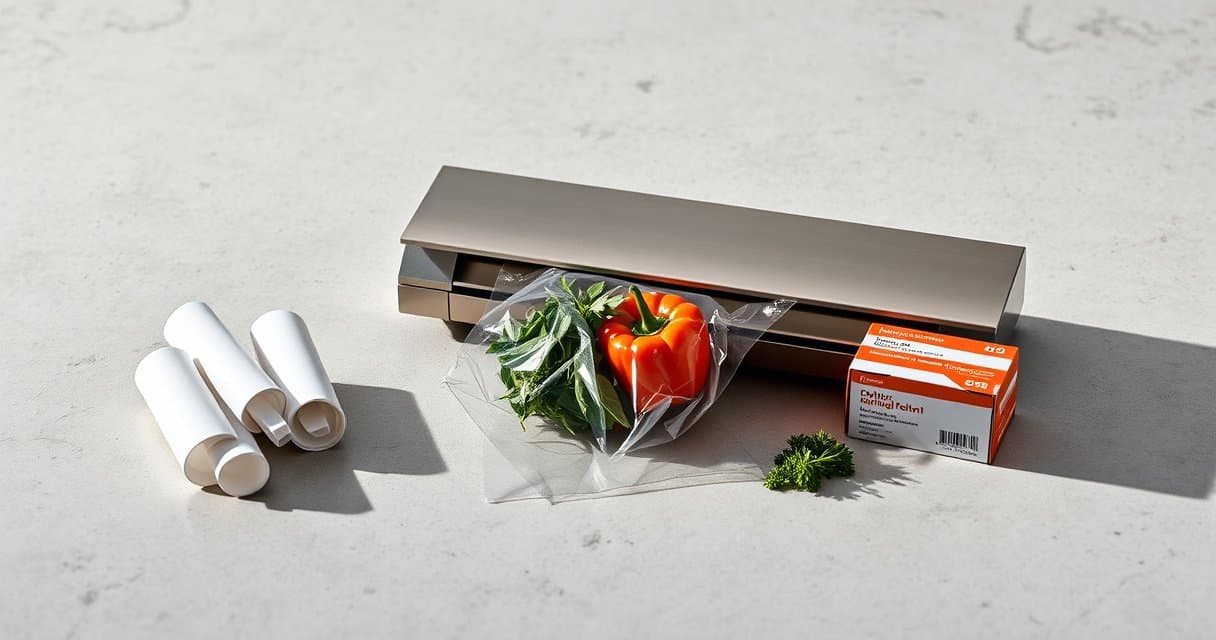
Looking only at the package price is the best way to get ripped off in the long run. The true cost is that of the bag you actually use, sometimes with nasty surprises that double the bill. Let's calculate together.
The Unit Price, the Only Honest Indicator
Always compare the cost per square centimeter or per individual bag. A large roll at €40 might seem expensive, but it's often much more economical than a small pack of pre-cut bags at €15.
Let's take a concrete example:
- A pack of 20 pre-cut bags (20x30 cm) at €12: €0.60 per cook.
- A roll of 11.5 meters (width 28 cm) at €35: You can cut approximately 38 bags 30 cm long. This works out to approximately €0.09 per cook.
The difference is enormous. For regular use, the investment in a roll pays for itself in a few weeks. This is the foundation for identifying the best sous vide cooking bags from a budgetary standpoint.
The Hidden Pitfalls That Inflate the Bill
- The Phantom Thickness: Some brands show an attractive price but use plastic so thin (50 microns or less) that the rate of tearing or failed seals skyrockets. Result: you throw away two bags for a single cook. The real price instantly doubles. Aim for 70 to 100 microns for cooking; it's a reliable standard.
- Misleading Compatibility: "Universal" bags are often a bad compromise. They are not optimized for your machine. Consequence? Seals that fail mid-sous vide, imperfect vacuum that alters the cooking... and a potentially ruined dish. A direct loss far greater than the price of the bag.
- The Myth of the Reusable Bag for Everything: Yes, some thicker bags can be washed and reused. But frankly, for cooking meats or fish, it's a sanitary risk I wouldn't take. For vegetables, why not. But count it as a separate purchase, not as a systematic saving. Its initial cost is much higher.
Smart Calculation: Think "Cost Per Successful Meal"
Don't think "bag". Think "successful meal insurance". A bag that's too cheap and leaks is:
- The cost of the lost bag.
- The cost of the wasted food (a salmon fillet quickly adds up in the budget).
- The cost of electricity or gas for a useless cook.
- The frustration of having to order a pizza instead.
Investing a few more cents in a suitable, durable bag is ensuring your investment in good ingredients and the time spent in the kitchen. That's where the real savings are. For occasional use, a mid-range quality pack is perfect. As soon as you cook sous vide twice a week, the roll becomes your best financial ally.
Mastering Sealing and Packaging Techniques
Having the best sous vide bags is useless if the seal fails or the packaging is poorly done. This is the manual step, the one where your expertise makes all the difference between success and failure in the water bath. Here's how to master the art of sealing.
The Seal Zone: Your Best Enemy
The golden rule is simple: the area where the two walls of the bag will fuse must be perfectly clean, dry, and wrinkle-free. A single grain of salt, a drop of oil or marinade, and the seal will be porous. Air will eventually seep in.
Specifically:
- Wipe the edges. After placing your food, use a clean cloth or paper towel to clean the top 3 to 4 centimeters of the bag, inside and out.
- Create a clean "bridge." For liquids or very wet foods (like a marinade), the freezer technique is magic. Pour your preparation into the bag, close it without sealing, and place it flat in the freezer for 30 to 45 minutes. The liquid freezes on the surface, creating a solid barrier. You can then open the bag, wipe the area above the frozen block, and proceed with perfect vacuum sealing.
- Avoid wrinkles. When positioning the bag in the machine, stretch it well so the edges are perfectly aligned and flat on the sealing bar. A small wave turns into a micro-leak.
The Art of Vacuum Sealing: Evacuation and Sealing
Don't rush the finish. A good machine has two distinct steps: evacuating the air and sealing. Master them.
- For delicate foods (strawberries, foie gras, tender-fleshed fish): Use the pulse or "soft" function if your machine has one. It evacuates in short bursts, avoiding crushing the food. Stop manually before total compression and seal. The bag conforms to the shape without crushing.
- For solid and dry foods (steaks, carrots): Let the full evacuation cycle run. The bag should become rigid like a board.
- The sealing moment: Do not release the pressure before the sealing light goes off. Wait one more second. This guarantees a complete fusion of the plastic. A successful seal is smooth and uniform, without bubbles or translucent spots.
Advanced Packaging Techniques for Pro Results
- The "Double Seal" for safety: For very long cooks (24h+ or at high temperature >85°C), I always seal twice. After the first seal, I cut the bag a few centimeters above, and make a second parallel seal. It's a safety belt against failures.
- Layered packaging to avoid contact: Want to cook potatoes and a steak together, but don't want them to touch? Cut a wider bag, place one food on one side, seal a vertical separation using a suitable soldering iron (or very carefully with your machine's sealing bar), then place the second food in the created compartment. You get two individual pouches in a single bag.
- Label and date, always: With a permanent marker, note the contents, date, and intended cooking temperature directly on the bag before filling it. Once frozen, you won't guess what it is anymore. It's essential for flawless organization.
Maintenance, Reuse, and Safety Questions
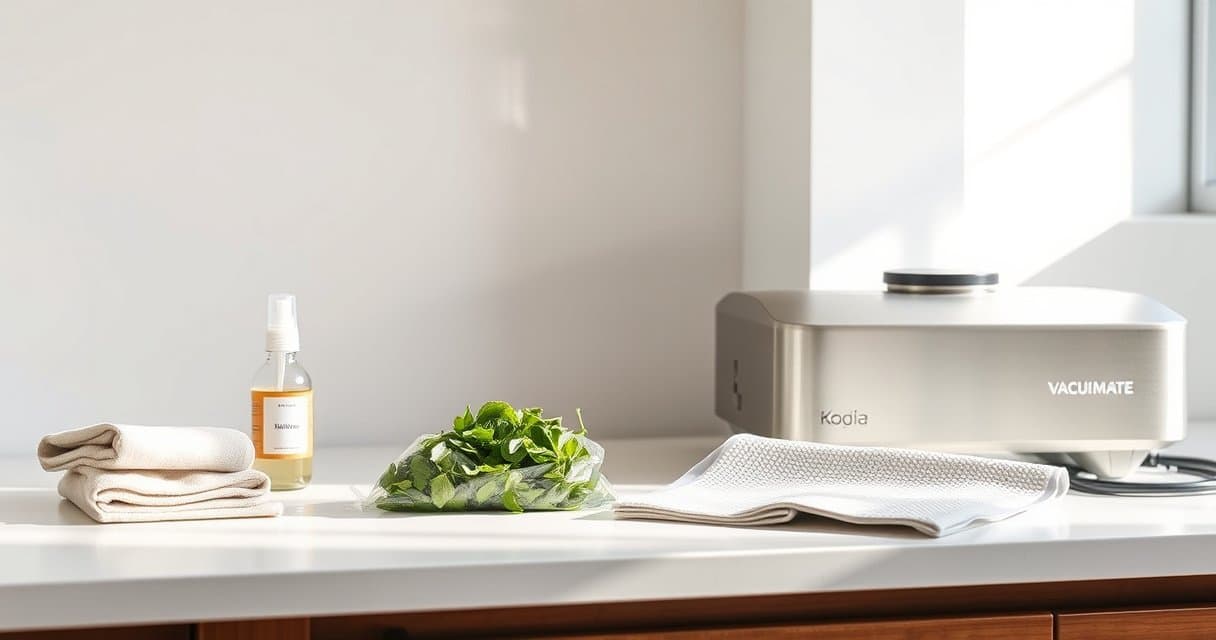
Switching to the best sous vide bags also means considering their lifespan and the risks involved. We are talking about plastic, heat, and our food after all. Let's not bury our heads in the sand. Here are the facts and my honest advice.
Can you really reuse a cooking bag?
Frankly, the official answer from manufacturers is always "no" for legal liability reasons. In practice, it's a bit more nuanced, but strict rules are necessary.
- Never for different foods. If you cooked salmon in a bag, that bag should only be used for salmon again. Odors and microparticles become embedded. Reusing a bag for meat for dessert creams is a sure way to get a strange taste.
- Mandatory meticulous inspection. After washing, stretch the bag against the light. Look for micro-folds or whitish areas near the seal, which are signs of wear. Any damage = trash.
- One reuse, maximum. Even for the same food, I do not exceed this. The plastic structure degrades with heat, even slightly. The savings are minimal, the risk is not worth it.
To wash a reusable bag, turn it inside out like a sock, rinse with very hot water and a bit of white vinegar, scrub the inside with a bottle brush, and let it dry completely inside out. It's tedious, which is why many knowingly prefer disposable ones.
Temperature Limits and False Friends
A bag can be perfect for cooking at 63°C for 3 hours but completely deform at 85°C. The upper limit is crucial.
- Always check the label or technical data sheet for the plastic's melting point (often PE or PP). Many so-called "vacuum" bags are designed for freezer storage and melt at 70-80°C. A disaster waiting to happen.
- For cooking above 90°C (certain vegetables, confits), only very thick, smooth bags (100+ microns) from serious culinary brands will do. Don't play the sorcerer's apprentice.
Storage and Lifespan: Don't Neglect the Original Packaging
You bought a 10-meter roll? Great. But don't leave it lying in a humid drawer near the oven.
- Store bags in their original opaque packaging, protected from direct sunlight and heat (so not above the fridge or near the cooktop). UV rays degrade plastic.
- Pre-cut bags should be kept in their sealed pouch. Exposed to air, they collect dust and kitchen odors.
- No bag, even new, has an unlimited lifespan. If you find a partially used pack that's three years old, be particularly vigilant during inspection before use. The material can become brittle.
The Tricky Question: Food Safety and Plastic
It's often discussed half-heartedly. Here is my informed opinion. To date, there is no robust scientific evidence that sous vide cooking in high-quality food-grade polyethylene or polypropylene bags, used a single time within their temperature limits, presents a risk of endocrine disruptor migration higher than any other food-grade plastic packaging (bottles, cling film...).
The real risk lies elsewhere: in uncontrolled reuse, in using non-food-grade bags (like some low-end freezer bags), or in cooking very acidic foods (like a strong vinegar marinade) or very fatty foods at high temperature for hours, which can accelerate migration. For these preparations, prioritize a high-quality smooth bag and single use.
Conclusion
So, the best vacuum sealing bags? Choosing them is a science almost as precise as the cooking itself.
Stop choosing at random. A good bag is the guarantee of your investment and of the safety on your plate.
Think about your machine, your favorite dishes, your cooking frequency. The perfect bag for you exists.
Now, go ahead. Preparing an extraordinary meal has never been so safe.
Frequently Asked Questions
What is the maximum temperature for a sous-vide cooking bag?
A reliable sous-vide cooking bag must imperatively withstand at least 100°C, and ideally up to 121°C for sterilization, to avoid any melting of the plastic in the water bath.
What thickness should I choose for sous-vide cooking bags?
For versatile and safe use, the optimal thickness is between 80 and 100 microns, which offers good resistance to tearing without compromising the vacuum sealing with a domestic machine.
Smooth or textured bag for a domestic vacuum sealing machine?
For a standard external suction machine, prefer textured bags whose texture facilitates air removal; smooth bags are designed for professional chamber machines.
What is the true cost of a sous-vide cooking bag?
The true cost is calculated per unit: a large roll can cost about €0.09 per cooking session, compared to €0.60 for pre-cut pouches, making a massive economic difference over time.
Can I reuse a sous-vide cooking bag?
It is not recommended and is risky, but if you do it, apply strict rules: never for different foods, with meticulous inspection, and a maximum of one reuse to avoid health risks and migration.
Are shrink bags suitable for sous-vide cooking?
No, they are generally too thin and designed for freezing, with a heat resistance often limited to 70-85°C, which is insufficient and dangerous for most sous-vide cooking.
100% free and independent — All our articles are written independently, without any sponsorship. We may earn a commission on purchases made through our links, at no extra cost to you.
Guides you might like
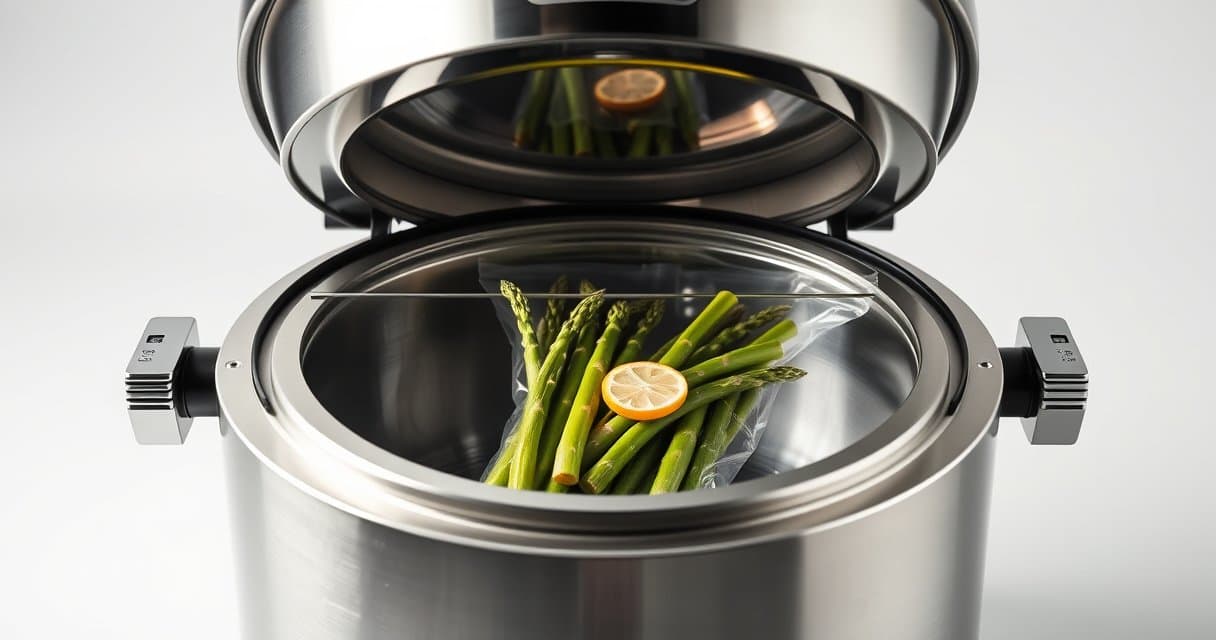
Bell Jar Vacuum Sealer Buying Guide
Upgrade to a chamber vacuum sealer for professional sous-vide results at home. Perfect for liquids and flawless, long-lasting seals.
Best Beginner Sous Vide Kit
Find the perfect sous-vide starter kit on a budget. Learn the three essential features to look for to cook your first perfect steak without the headache.
Cast Iron Pan Buying Guide
Select the perfect cast iron skillet: understand natural for searing vs enameled for easy care to transform your cooking results.
Articles you might like
Lipavi C10 11.3 Liter Vacuum Container Review & Test
LIPAVI C10 sous-vide container review: analyzing its energy efficiency, thermal stability & ease of use for precision cooking.
DOQAUS Instant Read Dial Thermometer Review
Master temperature for perfect cooking. Dial thermometer for instant, reliable readings on steak, syrup, ovens. Essential precision tool.
Dictien CF-001A 6-in-1 Sous Vide Machine Review
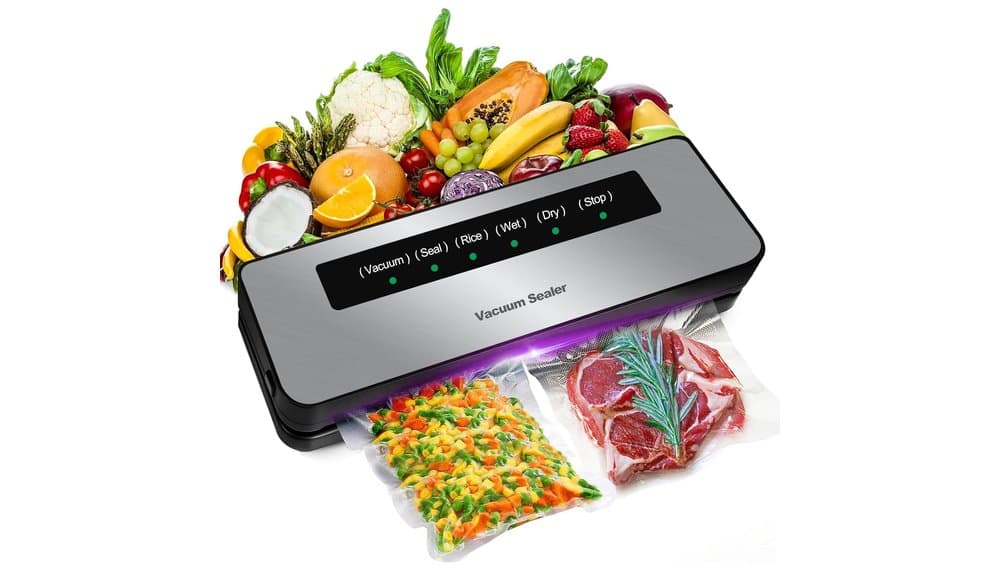
Ensure perfect sous-vide with the versatile Dictien CF-001A 6-in-1 vacuum sealer for both dry and moist foods. A comprehensive review.