The Ultimate Portable Vacuum Sealer Guide
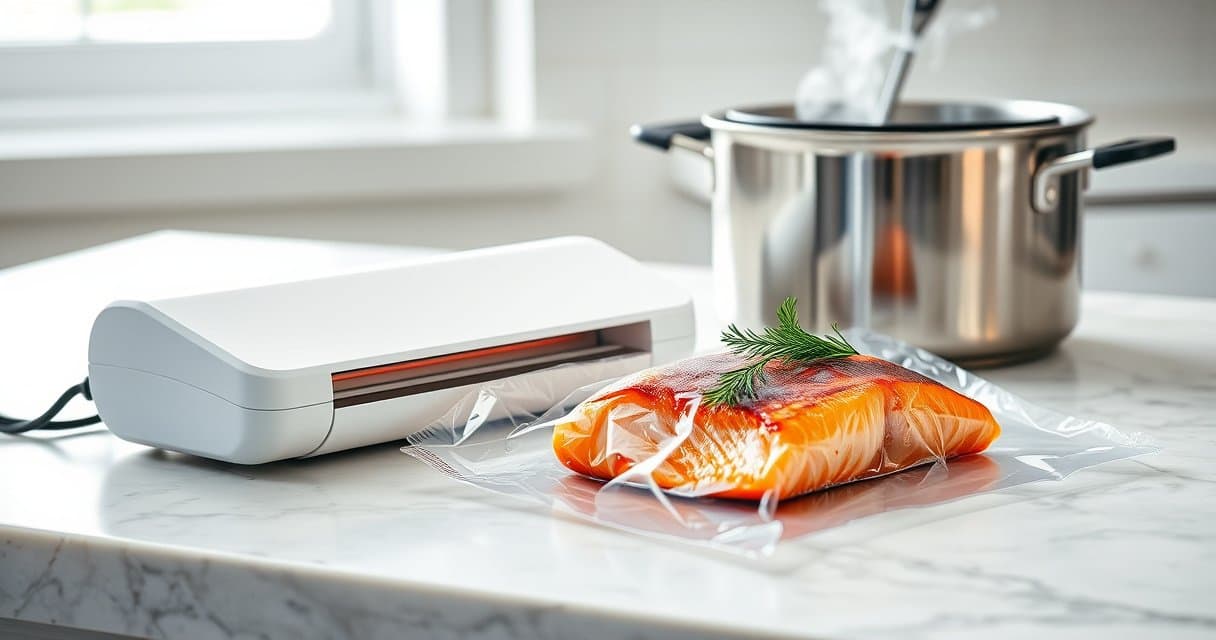
Picture this: a beef tenderloin cooked to absolute perfection, a beautifully crisp sear, and that unmistakable melt-in-your-mouth tenderness. To achieve this consistently, the secret isn't just in your immersion circulator — it's in what happens before cooking: a flawless vacuum seal. Choosing the right portable vacuum sealer changes everything, because it's what ensures perfect contact between your food and the hot water for absolute thermal control. Honestly, it's the step most people overlook, yet it's the most critical one.
Key Takeaways
- A perfect vacuum seal is crucial for ensuring even sous-vide cooking and making the most of your circulator's precision.
- A reliable sealing bar and a function for handling liquids matter more than wattage alone.
- Choose a manual machine for delicate or liquid-rich foods, and an automatic one for speed with dry products.
- Pick your machine based on how you actually cook — from batch cooking to fine dining — for optimal efficiency.
- Build quality, especially the sealing gaskets, determines the reliability and lifespan of the appliance.
Why Vacuum Sealing Is Your Circulator's Best Friend
You've invested in a precision circulator capable of holding water at 56.8°C with only a 0.1°C deviation. But if the bag your meat is sitting in isn't perfectly sealed, that precision is worthless. It's simple: without optimal thermal contact, you're playing culinary roulette. Your circulator delivers all the science; your vacuum sealer ensures that science transfers flawlessly.
Air Removal: The Foundation of Heat Transfer
Air is an excellent insulator. An air bubble trapped between the meat and the bag creates a cold spot — a zone where heat struggles to penetrate. The result? Uneven cooking. The best portable vacuum sealer eliminates this problem by creating enough vacuum for the plastic to literally conform to every contour of the food. You get total surface contact with the water. For a thick steak, for instance, this can shave several minutes off cooking time and guarantee a uniform texture from the centre all the way to the edges.
Precision Starts with a Perfect Seal
Your circulator controls the water temperature, not the internal temperature of your food — especially if the bag leaks. Even a micro-leak, invisible to the naked eye, lets water seep in. It dilutes the juices and, more importantly, completely throws off the cooking process by locally cooling the meat. That's a guaranteed disappointment after a 24-hour cook for a beef bourguignon. A strong, lasting seal is therefore non-negotiable. Frankly, a poor-quality weld is the most common failure point on budget appliances.
Vacuum Sealing Is About More Than Just Air
A high-performing machine doesn't just suck out air. It needs to handle the liquids that foods release — think marinades, or the natural juices from chicken. An appliance with a moist sealing function or powerful, fast suction is essential. Otherwise, the liquid rises up to the sealing bar, prevents an airtight closure, and you end up with a poorly sealed bag and a dirty machine. It's the classic mistake that frustrates so many beginners.
Demystifying Power and Reliability: What Watts Really Tell You
Looking at the wattage of a portable vacuum sealer is fine. But don't be fooled: that number alone doesn't tell the whole story. A 100W model can outperform a 120W one — it all depends on the engineering behind it. What really matters is how that power translates in your kitchen, with your hands covered in marinade.
Motor Power vs. Suction Speed
The stated wattage often indicates the motor's electrical consumption. What actually matters to you is the result: how well the machine extracts air, and above all, how fast. The best portable vacuum sealer combines solid power with a well-designed pump to create a deep vacuum quickly. Why does speed matter so much? Imagine sealing blanched vegetables that are still warm, or heavily marinated meat. If the suction is slow, the liquid has time to rise and compromise the seal. A high-performing appliance should empty a standard bag in a few seconds, not half a minute.
Endurance: The Real Difference Between a Gadget and a Tool
Power also needs to be judged over time. A machine might achieve a great vacuum... once. But could you seal ten bags in a row for your Sunday batch cooking session? That's where reliability comes in. An overheated sealing bar, a struggling motor, and you're stuck at bag number five. Quality silicone gaskets, a motor that doesn't overheat, and a housing that dissipates heat well — these are the invisible elements that make all the difference. Honestly, a good indicator is often the weight and overall feel of the appliance's build quality.
Watts and the Final Vacuum: The Proof Is in the Bag
The real test is in the end result. A powerful, efficient vacuum can be seen and felt. After sealing, the bag should be rigid, perfectly moulded to the food, with no residual air pockets. For delicate items like raspberries or a tender fish fillet, the ability to adjust the vacuum level is far more useful than maximum brute force. It prevents crushing the food while still ensuring thorough air removal. Ask yourself: does the appliance offer that level of finesse, or is it just a simple on/off switch?
So when comparing models, look beyond the watts. Ask yourself questions about real-world use. Do you plan to seal bags full of soup or sauce? The manual "pulse" function, which lets you stop the suction at any time, becomes indispensable. Are you planning long vacuum-sealing sessions? Durability and speed will be your best allies. Ultimately, power is the ability of the tool to do exactly what you need, as often as you need it, without fail.
Our Selection
Whether you're a batch cooking enthusiast, a camping lover, or simply looking for a way to reduce food waste, portable vacuum sealers are having a moment. We've scrutinised three popular models that promise to extend your food's freshness without the bulk of traditional machines. Which one best suits your daily needs or outdoor adventures? With technical analysis and community feedback to back it up, here's our selection.
| Product | Pressure (kPa) | Battery Life | Weight | Community Highlights |
|---|---|---|---|---|
| Vacuum Food Machine (DONGKER) | 60 kPa | ~40-60 seals | 100 g | Versatile modes, adjustable sealing temperature |
| Mini Machine Sous Vide (Kssvzz) | 60 kPa | Up to 1500 seals* | 530 g | Reusable bags included, ease of use |
| Portable Food Vacuum Sealer (VOYOR) | 65 kPa | Not specified | 220 g | Superior suction power, very compact and lightweight design |
*This figure, claimed by the manufacturer, should be taken with a grain of salt based on user feedback.
Vacuum Food Machine (DONGKER)
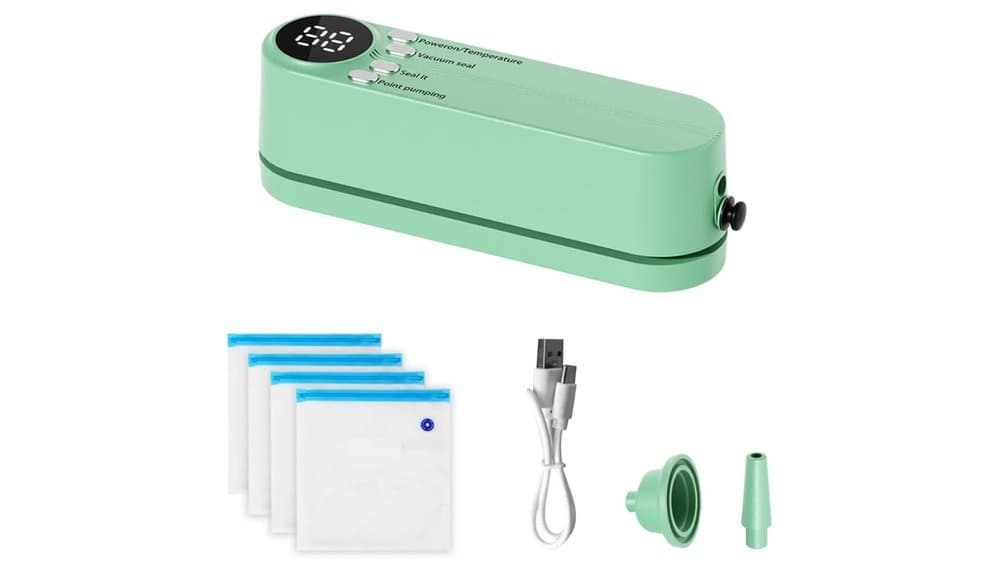
On paper, this model stands out for its advanced functional versatility. Beyond simple sealing, it offers three extraction modes (dry, moist, pulse) and an adjustable sealing temperature control across three levels (P1 to P3). According to the specifications, this allows you to adapt to different food types and bag thicknesses — an interesting feature for varied use. Its featherlight weight of 100 grams theoretically makes it the most portable of our trio.
However, community reviews highlight some important limitations. Real-world battery life is often described as falling short of the promised 40-60 uses, requiring more frequent recharging than expected. Several users also note that the included accessories (bags and nozzles) can feel mediocre in quality, and that getting the hang of the different modes isn't always intuitive without the manual. Finally, an average rating of 3.8/5 across around thirty reviews suggests a more mixed experience than its competitors, with long-term durability comments that remain to be confirmed.
Kssvzz Mini Machine Sous Vide Alimentaire
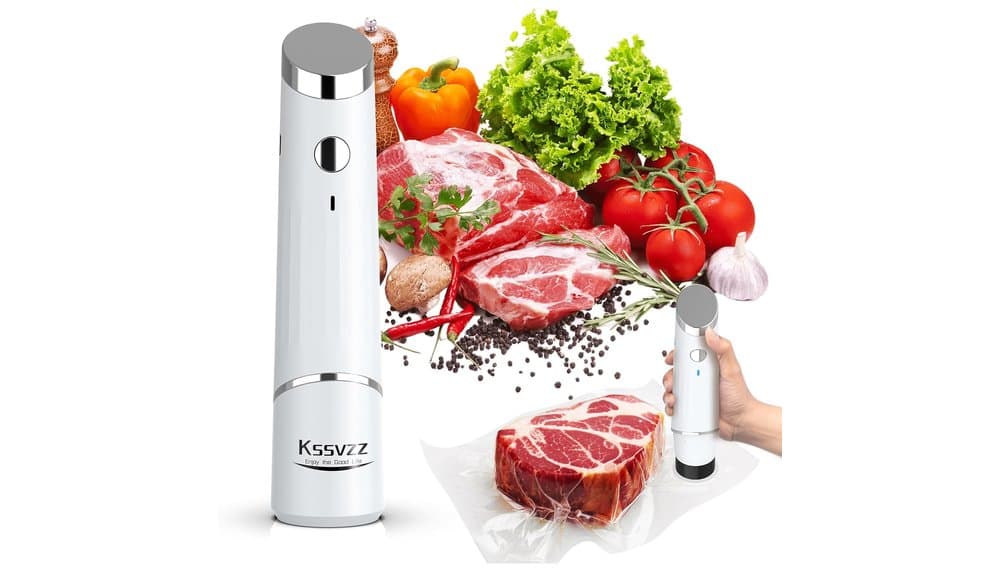
This product seems to have won over a large portion of its community, as reflected by its 4.0/5 rating based on over 200 reviews. Its standout feature is the complete kit: it ships with 10 reusable vacuum bags, described as dishwasher-safe, microwave-safe, and freezer-safe. This immediately solves the consumables question and makes a case for regular, eco-friendly use. The promise of phenomenal battery life (up to 1500 seals per charge) is also a strong selling point on the spec sheet.
However, it's precisely this battery life claim that draws the biggest doubts. Numerous customer reviews point out that this figure seems overly optimistic and doesn't reflect real-world experience. Additionally, at 530 grams, it's the heaviest unit in our selection. Its portability suffers as a result, even though it remains far more compact than a corded machine. Finally, its simple one-button interface, while practical, doesn't allow for the fine-tuned adjustments offered by the DONGKER model. This is the one to choose if you want a simple, all-in-one solution without aspiring to ultra-versatility.
VOYOR Portable Food Vacuum Sealer
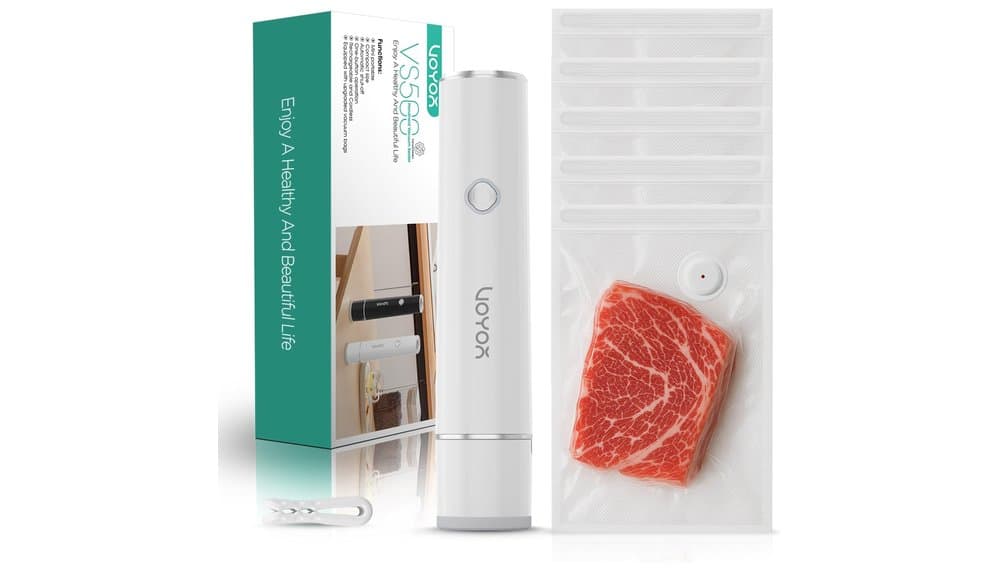
The VOYOR positions itself as the top performer on the technical front, with a stated suction pressure of 65 kPa — the highest in our comparison. This theoretical power should deliver a deeper vacuum and therefore better preservation. User feedback often confirms its effectiveness and speed. Its understated design, manageable weight (220 g), and compact form factor are also praised: it stores and travels effortlessly. A rating of 4.2/5 across over 200 reviews indicates high overall satisfaction.
The points of concern reported mainly involve the accessories. The product ships with only 5 disposable bags, which may feel limited and forces quick additional purchases for sustained use. Some users also mention that the noise level during operation is more noticeable than expected. Finally, despite being more powerful, it offers only a standard operating mode, without the adjustment options of the DONGKER. It should therefore be seen as a pure specialist in efficient sealing, no frills attached.
From Manual Suction to Perfect Vacuum: Finding Your Machine Type
The market offers several ways to extract air from a bag, and your choice will largely define your daily experience. It's not just about price — it's about how smoothly it fits into your routine. Do you want quick one-click action, or total control over the process right up to the last moment? Let's get practical.
Automatic Machines: Simplicity at the Press of a Button
Here, you place the edge of the bag on the sealing bar, lower the lever, and off it goes. The machine runs the entire sequence on its own: vacuum extraction to a preset level, then heat sealing. It's ideal for speed and consistency. You can bang out chicken portions for the week without thinking twice. But be careful — this automation has a downside. If your preparation is very liquid, the system may suck up juice before it seals, which contaminates the bar and can lead to a failed seal. For this type of machine, having a dedicated "moist seal" function (which adjusts temperature and timing) is practically mandatory if you cook with marinades or sauces.
Manual Machines (Pulse Button): Total Control
With this type of appliance, you manage both steps yourself. One button activates the suction, which you release when you judge the vacuum to be sufficient. A second button (or the same one) triggers the seal. It's the most versatile option and, in my opinion, the one that offers the greatest finesse. You feel the bag contracting under your fingers and you stop just before a salmon fillet gets crushed, or before a bit of broth rises too high. It's perfect for delicate foods or very liquid contents. The downside? It requires a bit more attention and "feel." But once you've got the knack, it's devastatingly effective.
The Crucial Question: Integrated vs. External Pump
This distinction is technical but critical for noise and footprint. In most portable machines, the vacuum pump is housed in the main body. It's compact, but can generate more noticeable vibrations and humming. Some more sophisticated models place the pump in a separate base, connected to the sealing head by a tube. The result: much quieter operation and often more power. This is a criterion worth weighing seriously if you plan to use your machine in an open-plan kitchen, or for long sessions.
So how do you decide? If you're looking for the best portable vacuum sealer for your needs, ask yourself two questions: "Do I often seal delicate or very liquid foods?" (Think manual). And "Do I prioritise speed and hands-off operation for large volumes of dry or low-moisture foods?" (Think automatic). Don't be swayed solely by the appeal of "fully automatic" — manual control is often the key to a better-adapted vacuum and therefore even more successful sous-vide cooking.
Sealing Effectively: Features That Make All the Difference in Practice
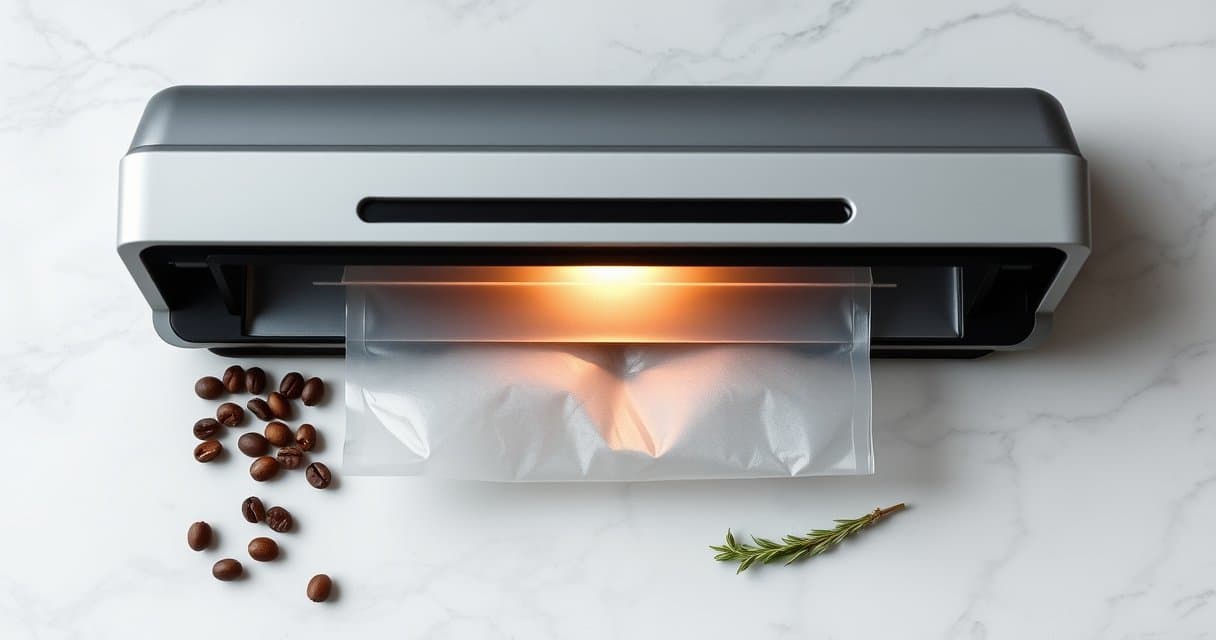
Once the pump has done its job, it's the sealing bar that takes over. It, and it alone, guarantees the perfect, lasting airtightness of your bag. A botched weld, and all your vacuum work and sous-vide cooking go straight in the bin — literally. This technical aspect doesn't get talked about enough, yet it's what separates a reliable machine from a constant source of frustration.
Double Sealing or "Double Impulse": Your Anti-Leak Insurance
Look closely at the specifications. Some models offer a double sealing function. In practice, the bar heats up, seals, pauses briefly to cool the weld, then reapplies heat for a second seal parallel to the first. Why is this so valuable? Imagine sealing a bag containing a piece of meat with some frozen juices. During the first seal, the heat can melt that juice and create a moisture film. The second seal reinforces the whole thing and guarantees airtightness, even under these borderline conditions. I consider this function almost indispensable for anyone who wants to freeze preparations or liquid marinades with complete peace of mind.
Sealing Bar Length: More Than a Detail
Standard sealing bars are often 30 cm long. That's enough for most bags sold in rolls. But if you cook in large volumes — for example, sealing a whole large fish or several chops side by side in a big bag — a wider bar (up to 40 cm) is a game changer. You avoid having to make two seals side by side, which is always a potential leak risk. Check this dimension: a long sealing bar is the hallmark of a machine designed for serious cooks.
Liquid Extraction System: True Versatility
Often called the "moist" or "moisture" function, this is no gimmick. When you vacuum-seal foods that are already cooked and juicy, frozen fruits, or even soup, the risk is that liquid gets sucked all the way up to the sealing zone. The result? The bar can't properly fuse the wet plastic, and the weld is weak. A good machine handles this in one of two ways. Either through an automatic pulse system that stops suction as soon as it detects liquid approaching. Or through a built-in drainage channel (a small tray or outlet) that redirects liquid before it reaches the bar. Without this function, you'll be forced to freeze your liquids before sealing them, which adds a tedious extra step.
Built-In Cutter and Roll Compartment: The Promise of Time Savings
It's convenient, yes. A compartment to slide in a roll of bags and a blade to cut them to size right on the machine. It saves you hunting for scissors. But frankly, don't make this a deciding factor. A good pair of scissors does the job just fine. What matters far more is the quality of the heating element itself. Is it robust stainless steel? Ceramic coatings are known for their durability and even heat distribution. A cheap element will overheat in spots, burn the plastic, and weaken over time. Pay close attention to the build quality of this part — it's the heart of the machine. The best portable vacuum sealer is judged here, on the robustness and precision of its sealing bar, far more than on its storage gadgets.
Matching the Machine to Your Culinary Ambitions: From Batch Cooking to Fine Dining
Your vacuum sealer isn't a standalone tool. It's the first link in a chain that includes your circulator, your frying pan, and your fridge. Your choice should reflect how you actually cook, not some Sunday fantasy. Honestly, investing in an overpowered appliance for occasional use is as absurd as buying a professional oven just to reheat pizza. Let's analyse your real needs.
For the Pragmatic Cook: Batch Cooking and Reducing Food Waste
Your main goal is to extend the shelf life of your groceries, prepare individual portions in advance, and save time during the week? Your requirements are simple: reliability and simplicity. Look for a sturdy machine with a solid sealing bar and a straightforward manual suction system. Moist sealing is a real bonus here, as it lets you freeze sauces, stews, or soups without having to solidify them first. Speed of operation matters: if you're sealing 10 bags of chopped vegetables every Sunday, every second saved on the suction/sealing cycle adds up. A roll compartment and built-in cutter aren't gimmicks in this case — they're genuine time savers. The best portable vacuum sealer for this profile is one that will never let you down on a busy Sunday evening, with intuitive operation and bulletproof endurance.
For the Precision Cooking Enthusiast: The Quest for Technical Perfection
If your circulator is your best friend and you're aiming for perfect duck, eggs, or root vegetables, then your vacuum sealer has a mission-critical role: creating the optimal airtight environment for heat transfer. Here, suction power must be sufficient to extract all the air, even from bags containing irregularly shaped foods like a whole deboned chicken or asparagus spears. An imperfect vacuum leaves air pockets that insulate the food and disrupt the cook. "Pulse" or "gentle suction" functions become essential. Why? To seal strawberries or spinach leaves without crushing them. For your complex marinades, opt for a model with a precisely adjustable vacuum level. This lets you infuse without over-compressing the texture of delicate foods.
For the Passionate Experimenter
You enjoy long cooks (48-hour short ribs), vacuum-infusing oils or spirits, or making your own charcuterie? You're pushing the limits of home use. Your requirements go up a notch. Pump and sealing bar durability is paramount when facing repeated cycles and sometimes large volumes. Look for machines with quality stainless steel or ceramic gaskets, built for intensive use. Compatibility with thick bags (15-20 microns) that can withstand ultra-long cooks where the slightest leak would be catastrophic is non-negotiable. Some high-end models even offer accessories for sealing glass jars — a brilliant feature for infusions and vacuum preserves. At this level, you're buying a professional tool, not a kitchen gadget.
Conclusion
Choosing the right portable vacuum sealer means laying the foundation for all your culinary successes. It's not an end in itself, but a beginning. A solid starting point for precise dishes, real savings, and creative freedom.
Don't overthink it. Identify your true cooking style, focus on the specifications that matter, and invest in reliability. The rest is up to your talent as a cook.
Go ahead — seal, cook. And savour every bite.
Frequently Asked Questions
Which portable vacuum sealer should I choose for an immersion circulator (sous-vide)?
The best portable vacuum sealer for sous-vide cooking is one that delivers a perfect vacuum and an airtight seal, with a manual control or "moist seal" function for handling marinade liquids. It acts as the essential partner to your circulator by ensuring optimal thermal contact between the food and the hot water.
Why do I need a vacuum sealer with a circulator?
Air is a thermal insulator, so without a flawless vacuum, air pockets in the bag create cold zones and uneven cooking, negating your circulator's precision. A high-performing vacuum sealer removes all the air so the bag moulds perfectly to the food, guaranteeing flawless heat conduction.
Automatic or manual vacuum sealer: which should I choose?
Choose an automatic machine for speed and consistency with low-moisture foods, and opt for a manual machine (pulse button) if you frequently seal delicate or very liquid foods, as it gives you total control over the vacuum level. The manual function prevents crushing fragile foods or sucking up liquids.
What should I look for in a portable vacuum sealer?
Prioritise the reliability of the sealing bar, the suction power and speed, and a "moist seal" function or liquid drainage system. Double sealing ("double impulse") is also a valuable asset for ensuring a perfect seal, especially with frozen or liquid foods.
Do watts matter for a vacuum sealer?
Wattage alone doesn't guarantee performance; what counts is the suction speed and the ability to create a deep vacuum quickly to prevent liquids from rising. Look for an appliance with a well-designed pump and good heat dissipation for intensive, reliable use.
100% free and independent — All our articles are written independently, without any sponsorship. We may earn a commission on purchases made through our links, at no extra cost to you.
Guides you might like
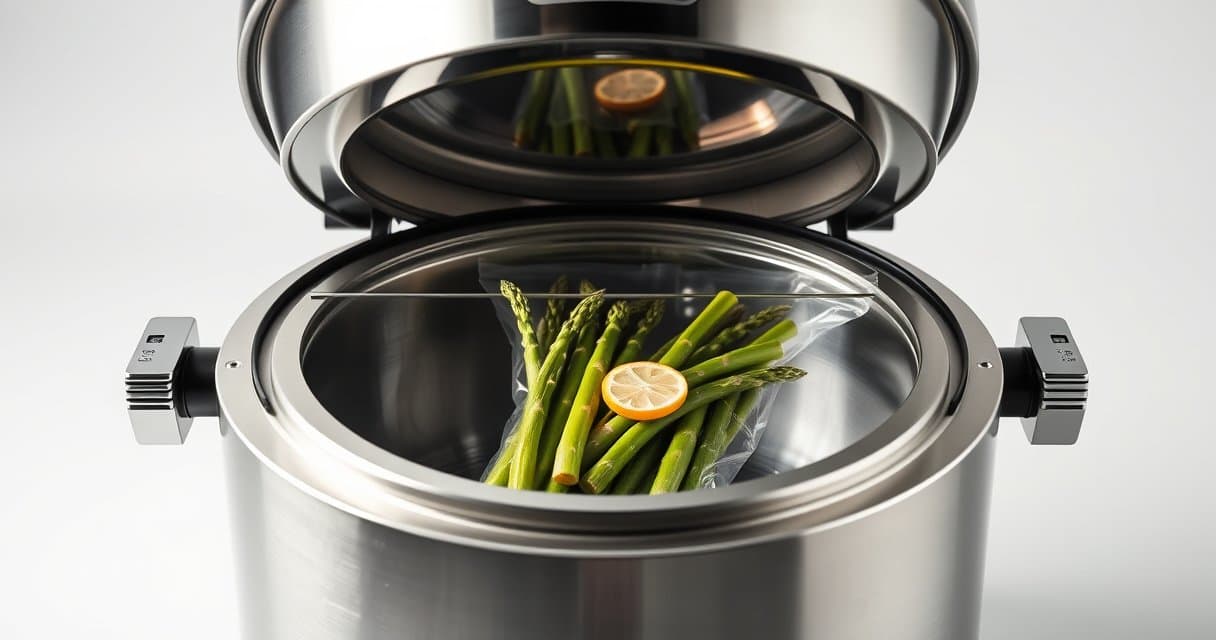
Bell Jar Vacuum Sealer Buying Guide
Upgrade to a chamber vacuum sealer for professional sous-vide results at home. Perfect for liquids and flawless, long-lasting seals.
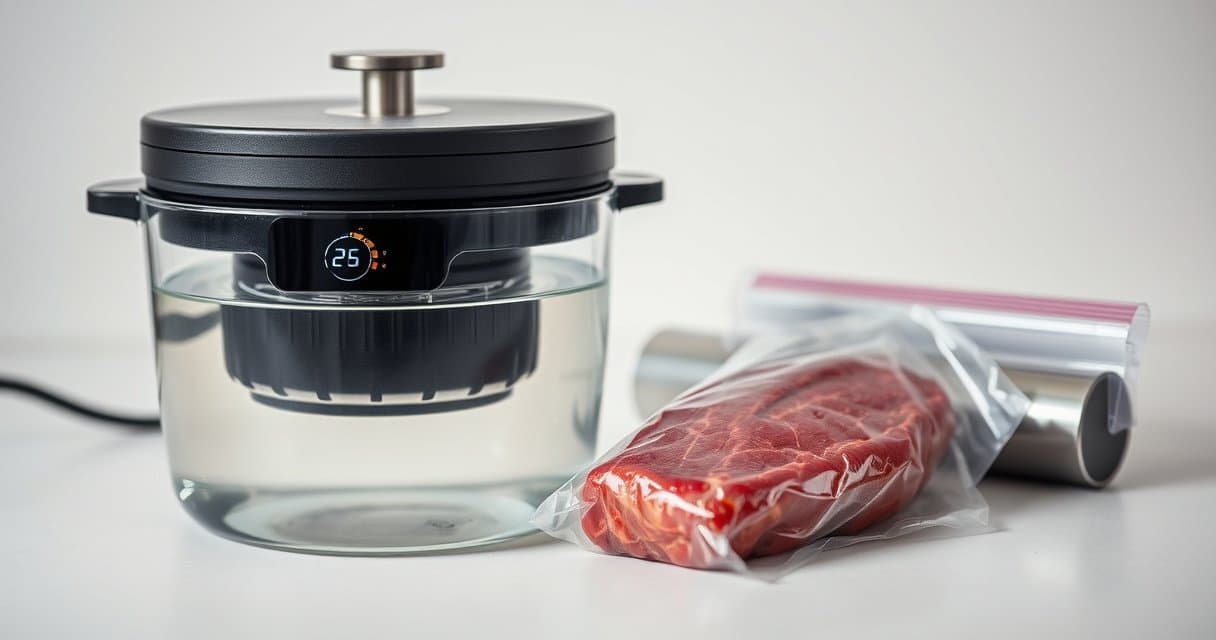
Best Beginner Sous Vide Kit
Find the perfect sous-vide starter kit on a budget. Learn the three essential features to look for to cook your first perfect steak without the headache.
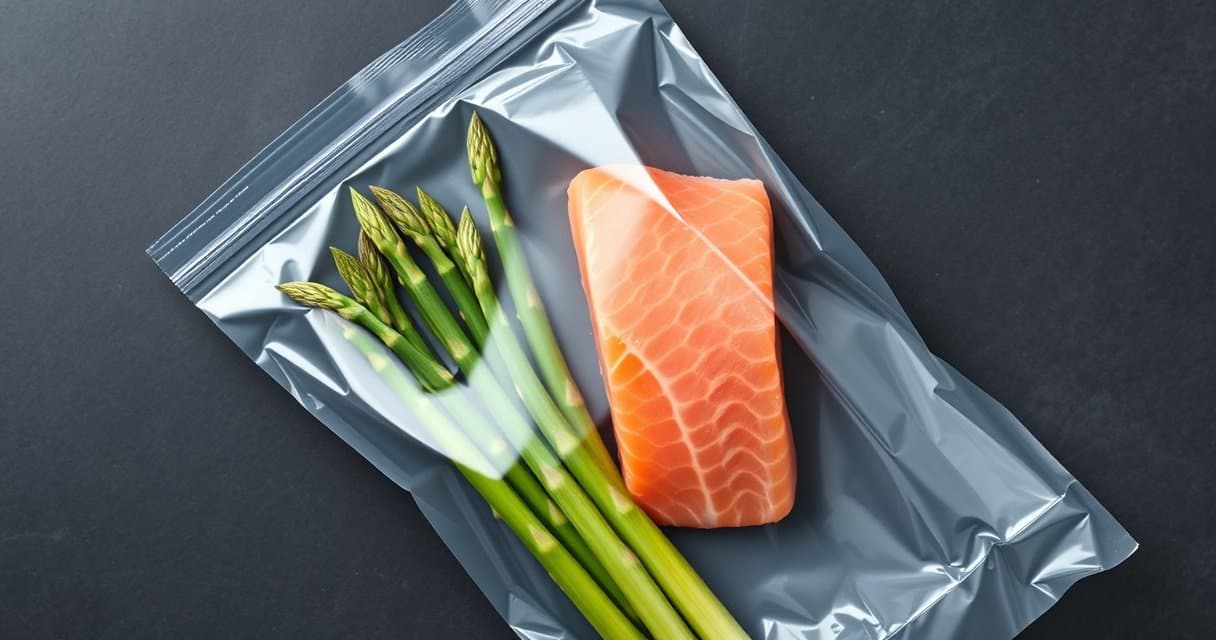
Best Vacuum Bags
Choose the right vacuum sealer bags for perfect results. Learn key specs like heat resistance, thickness, and barriers to avoid culinary disasters.
Articles you might like
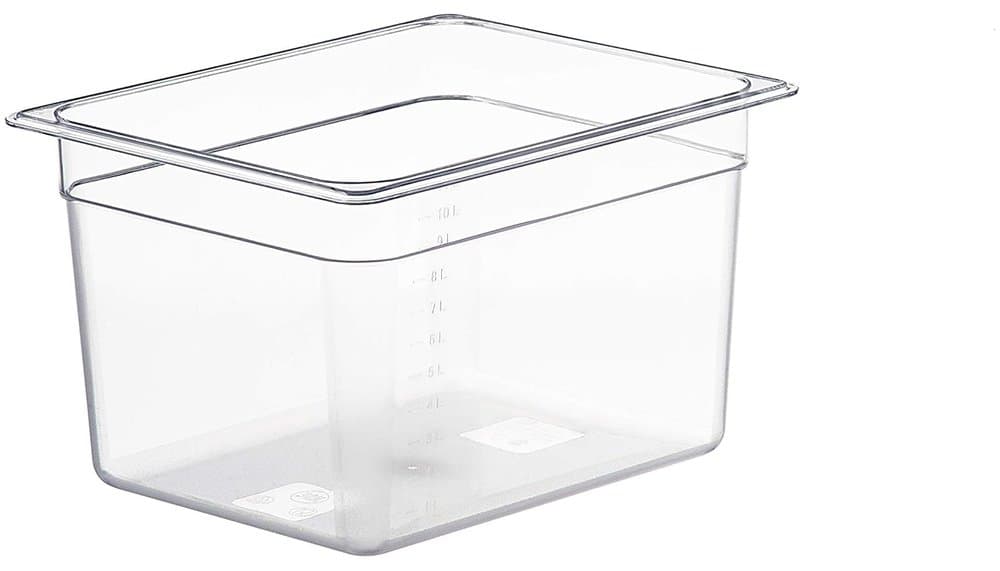
Lipavi C10 11.3 Liter Vacuum Container Review & Test
LIPAVI C10 sous-vide container review: analyzing its energy efficiency, thermal stability & ease of use for precision cooking.
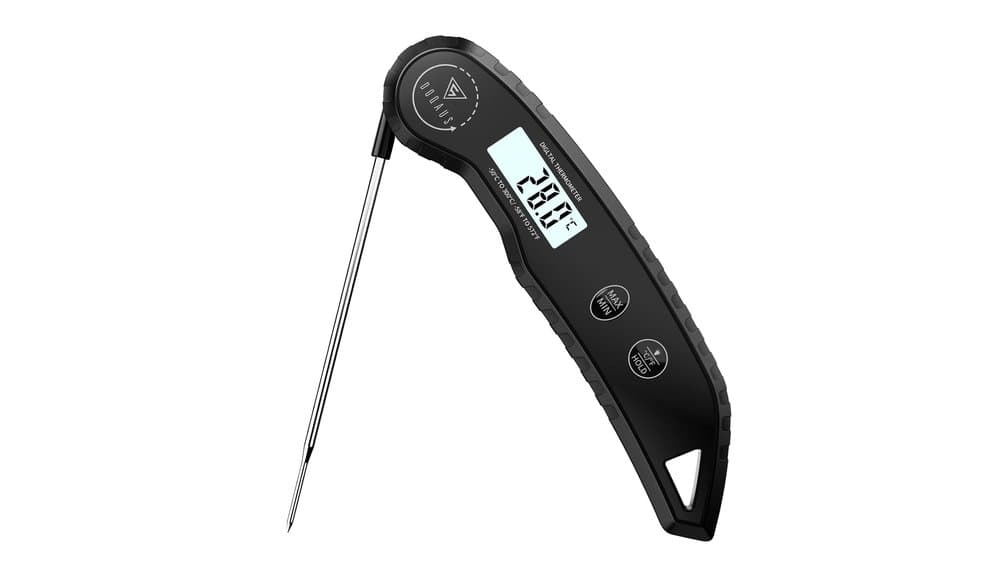
DOQAUS Instant Read Dial Thermometer Review
Master temperature for perfect cooking. Dial thermometer for instant, reliable readings on steak, syrup, ovens. Essential precision tool.
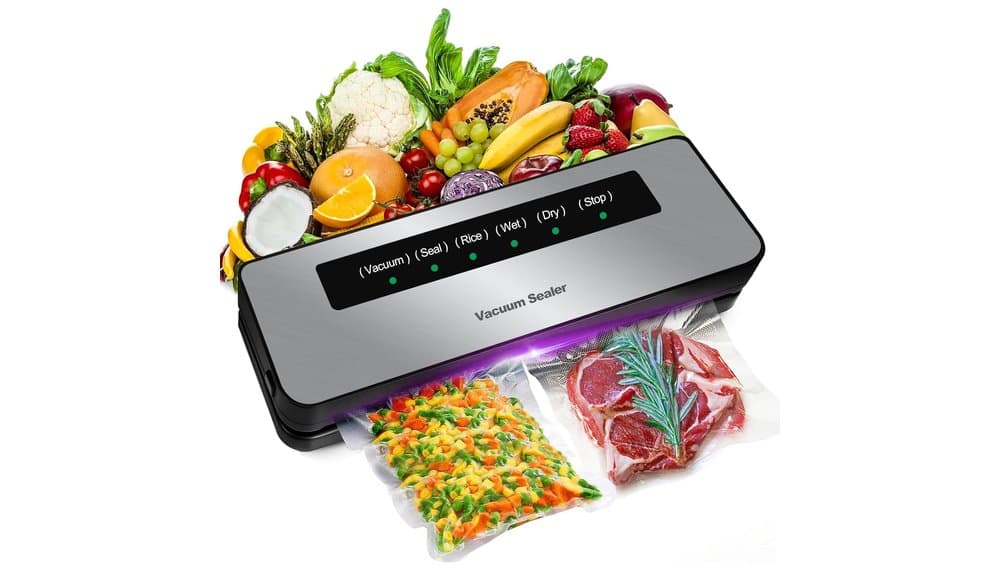
Dictien CF-001A 6-in-1 Sous Vide Machine Review
Ensure perfect sous-vide with the versatile Dictien CF-001A 6-in-1 vacuum sealer for both dry and moist foods. A comprehensive review.