Bell Jar Vacuum Sealer Buying Guide
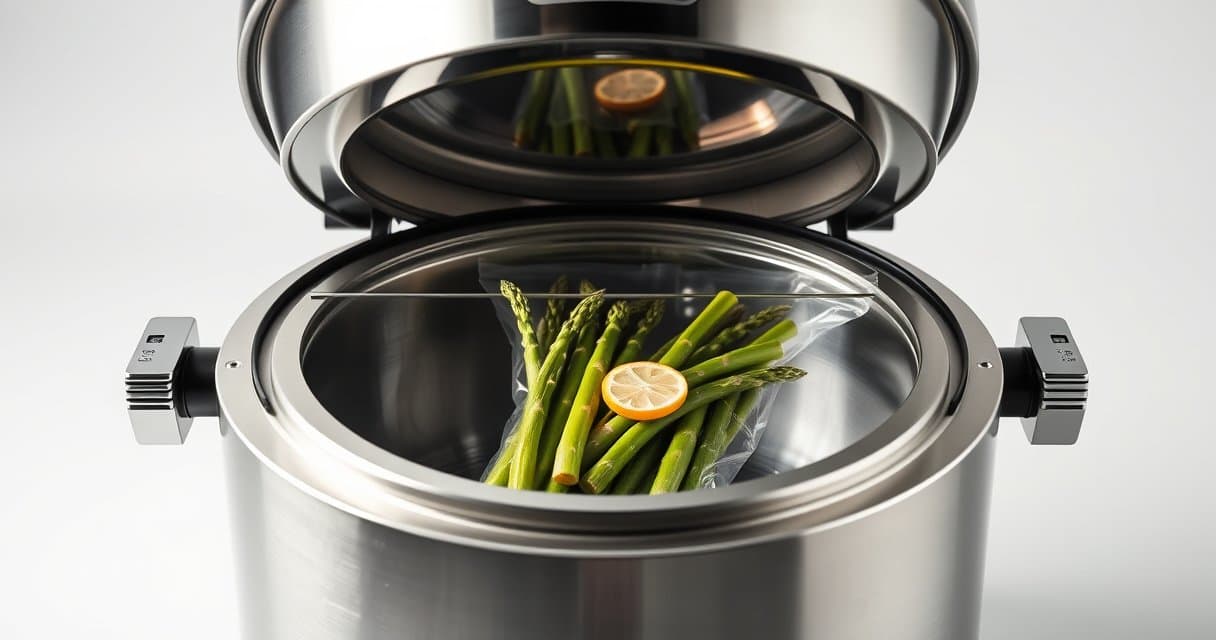
If the frustration of seeing your poorly sealed pouch ruin a precious cut of meat has ever happened to you, you have touched upon the limitation of traditional sealers. For absolute control over sous-vide cooking and preservation, nothing replaces the power and reliability of a chamber vacuum sealer. It is no longer equipment reserved for professionals, but the ideal tool for anyone seeking flawless precision, even with sauces or marinades. Let's talk concretely to find the one that truly suits you.
Key Points to Remember
- The chamber machine is significantly superior to external sealers for achieving a deep vacuum and sealing liquid or greasy products without risk.
- The three essential technical criteria to compare are pump power (m³/h), chamber size, and seal bar width.
- The choice between a countertop machine and a floor-standing model depends primarily on your preparation volume and desired ergonomics.
- The budget must include the recurring cost of bags and maintenance (filter, oil) to ensure the appliance's longevity.
- Advanced features (programming, high-pressure sealing) become useful for regular and precise use.
Why Choose a Chamber Vacuum Machine Over an External Suction Model?
This is the fundamental question. Frankly, if you're asking it, your sous vide cooking practice has already moved beyond the experimental stage. You know that a perfectly sealed bag is the foundation of everything, and that's precisely where the difference becomes clear. Let me explain why, for an enthusiast of precise cooking, the choice is often a no-brainer.
Imagine this: you're preparing duck confit for eight people, with its fat. With an external suction sealer, you spend your time wiping the bag's edge, praying that the fragile pump doesn't suck up a bit of fat, and ending up with a seal that always has a small point of doubt. The frustration is real. The chamber machine, on the other hand, handles this with radical elegance. The product, even if liquid or greasy, is placed in the bag, the bag's edge is placed on the sealing bar, and the chamber lid lowers. The powerful pump creates a deep and uniform vacuum in the entire volume of the chamber, around the bag. The sealing then happens in a protected environment. The result? A wide, robust seal, and complete peace of mind.
Let's get into specifics. The advantages boil down to three key tipping points:
Deep and Reliable Vacuum. This is the core of the matter. A good chamber machine achieves a vacuum of 99% or more, eliminating almost all residual air. Why is this crucial? Because perfect contact between the food and the plastic guarantees optimal heat transfer. No more air, no more "ballooning" during cooking. Your 5 cm thick steak will cook evenly, from the outside to the inside, period. This reliability is essential for long cooks (48 hours for short ribs) or delicate products like thin fish fillets.
Versatility with Liquids and Marinades. This is often the turning point. With a chamber machine, you can seal a liquid preparation directly—a soup, a sauce, a marinade your chicken is soaking in—without any worry. The suction happens in the enclosed space of the chamber, not through the food. No more splashes into the pump channel that damage it. This opens up a huge range of possibilities for preparation and preservation.
Robustness and Durability. A chamber machine is built for intensive use. Its oil pump is more powerful and better protected. The sealing bar is wide (between 4 and 10 mm compared to 2-3 mm on an external model), which makes for a much stronger seal, resistant to freezing and handling. It's a more significant initial investment, but it pays for itself over time. You won't be replacing your machine every three years.
So, when should you stick with an external suction model? Honestly, if your use is very occasional—sealing a few chicken breasts for the freezer once a month—and you never plan to work with liquids, it might suffice. But as soon as your practice becomes regular, you aim for perfection, and you hate frustration, the best chamber vacuum machine for your needs becomes not a luxury, but the logical tool to unleash your creativity in the kitchen. It's the step from tinkering to controlled craftsmanship.
Understanding Key Figures: From Pump Power to Seal Width
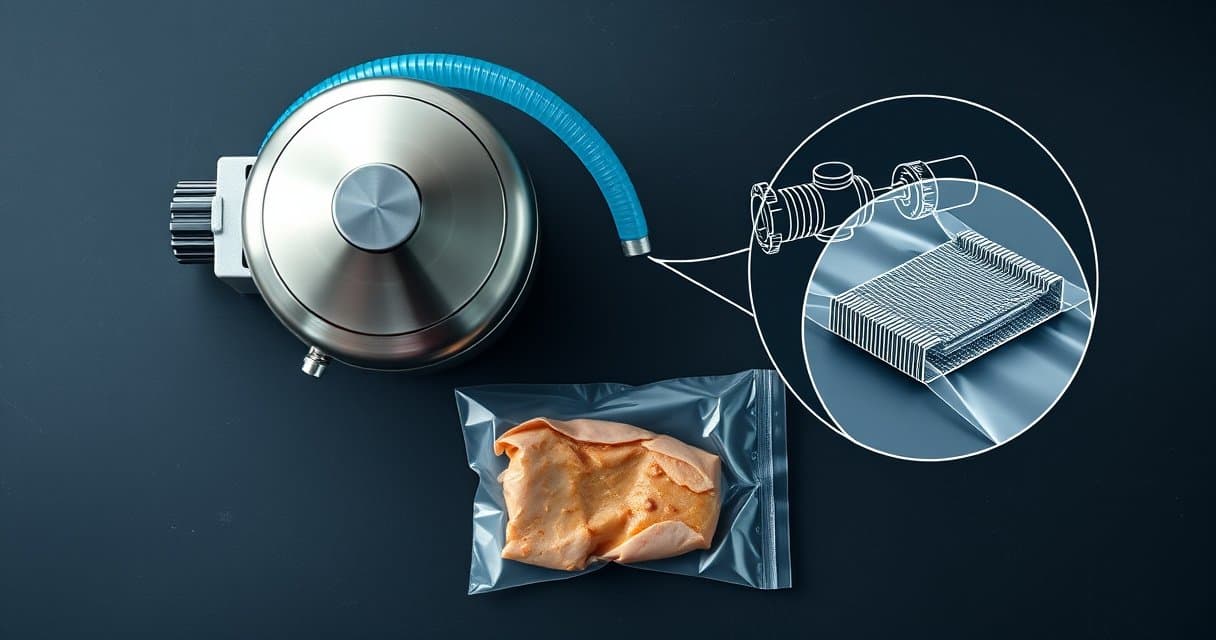
Now let's get to the heart of the matter: the technical jargon. Don't be intimidated by product datasheets. These numbers tell a very concrete story about what your future machine will be able to do, or not. Let's focus on the three that really make a difference.
The Vacuum Pump Power: The Machine's Breath
This refers to the ability to create a deep vacuum and, just as crucially, quickly. This power is usually expressed in cubic meters per hour (m³/h). A higher number means the pump extracts air faster.
- For demanding domestic or light semi-professional use, a pump around 20 m³/h is a good starting point. It will seal an average bag in 15-20 seconds. That's already very performant.
- For professional use or high-volume preparation, aim for 40 m³/h and beyond. Imagine sealing 30 portioned bags for the week in just over an hour. With a less powerful pump, you would waste a lot of time waiting for each cycle. Speed becomes a real ergonomic argument.
Beware of overselling! An overpowered pump on a small tabletop machine is not necessarily useful and can even be noisier. Balance with the bell jar size is important.
The Bell Jar Size: Your Maximum Format
It's simple: the interior length and width of the bell jar determine the maximum size of the bag you can insert. We often talk about a "30 cm" or "40 cm" bell jar. This dimension is your ceiling.
- A 30 cm bell jar allows you to work with bags up to about 28-29 cm wide. Perfect for most cuts of meat, fish fillets, vegetables.
- A 40 cm or larger bell jar opens the door to large formats: legs of lamb, whole chickens, large prepared lasagna trays. If you enjoy ambitious "meal prep" or entertain often, this extra dimension is really worth considering. Also check the bell jar's height, which influences the amount of liquid product you can seal without overflow.
The Seal Width and Heating Bars
This is the guarantee of your work's longevity. On a chamber machine, the seal bar is much wider than on external sealers. We generally talk about 4 mm to 10 mm.
- A 4 or 5 mm seal is sturdy and standard.
- An 8 or 10 mm seal is high-end. Why? Because it offers a huge safety margin. Even if your bag contains small particles or a bit of grease on the edge (which always happens), a wide bar allows for an airtight seal nonetheless. It's a detail that makes a monumental difference in long-term reliability.
Some models even offer two parallel seal bars. This is the ultimate insurance: if one of the two seals has a micro-flaw, the second acts as a backup. For vacuum preserves over several years or products intended for sale, it's a sensible investment. For regular domestic use, a single wide, quality bar is perfectly sufficient.
To find the best chamber vacuum sealer for you, it's not about looking for the highest number in each category, but finding the balance that matches your volume and reliability requirements. A large bell jar with a weak pump would be counterproductive, just like an ultra-fast pump on a small seal bar. Weigh these three elements together.
Our Selection
Vacuum sealing is a formidable solution for extending food freshness, organizing your freezer, or enjoying sous-vide cooking. Today, we are highlighting two chamber machines, a type of appliance known to be more powerful and versatile than external suction models. Here is a technical comparison to help you see things more clearly.
| Product | Pump Type & Suction Power | Usage Versatility | Key Features | Noise & Size |
|---|---|---|---|---|
| Maxxo VM ChamberLine 40 | 4 pumps, 72 L/min (950 mbar) | Very high. Handles liquids, marinades, compatible with containers (kit included) | Double seal, glass lid, fast marinating function | < 80 dB, weight 8.5 kg, compact format |
| Levkitch Vacuum Sealer | 1 pump, 5.5 L/s (≤ 1 kPa) | Standard. Advertised for dry, moist, oily, powdery products | 3-in-1 process (vacuum, sealing, cooling), pressure indicator | ≤ 80 dB, weight 19.5 kg, bulkier format |
Maxxo VM ChamberLine 40 Professional Food Vacuum Sealer
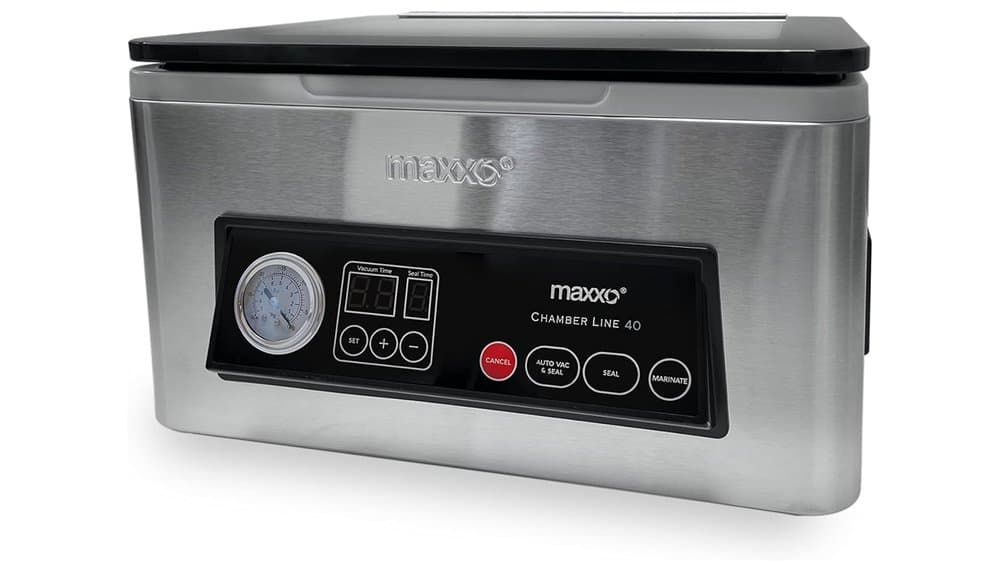
On paper, the specifications of the Maxxo VM ChamberLine 40 are impressive and geared towards intensive use, at home or in small-scale catering. Its 4-membrane pump, with a flow rate of 72 liters per minute and pressure reaching 950 mbar, promises fast and deep air extraction. The double sealing of bags is a major asset for reliability, especially with foods containing liquid or particles. The appliance is presented as versatile: it comes with a complete kit (30 reusable bags, integrated cutter, hose) and is compatible with vacuum containers, a highly appreciated feature for preserving liquid or fragile preparations without crushing them.
Based on user feedback, the highlighted strengths are its robustness (stainless steel structure), its relatively quiet operation for its category, and the practicality of its tempered glass lid which allows viewing the process. The accelerated marinating function under vacuum is also cited as a real plus. However, the community also notes some limitations. Some point out that the appliance is heavy and bulky (8.5 kg), requiring dedicated counter space. A few reviews report control inconsistencies with the digital touch screen, sometimes less intuitive than a physical button system. Finally, although the appliance comes with bags, an ongoing budget for consumables must be considered, as compatible rolls can represent a long-term cost. This is clearly not a trivial purchase, but for regular users or large families, its efficiency seems to make a difference.
Levkitch Vacuum Sealer
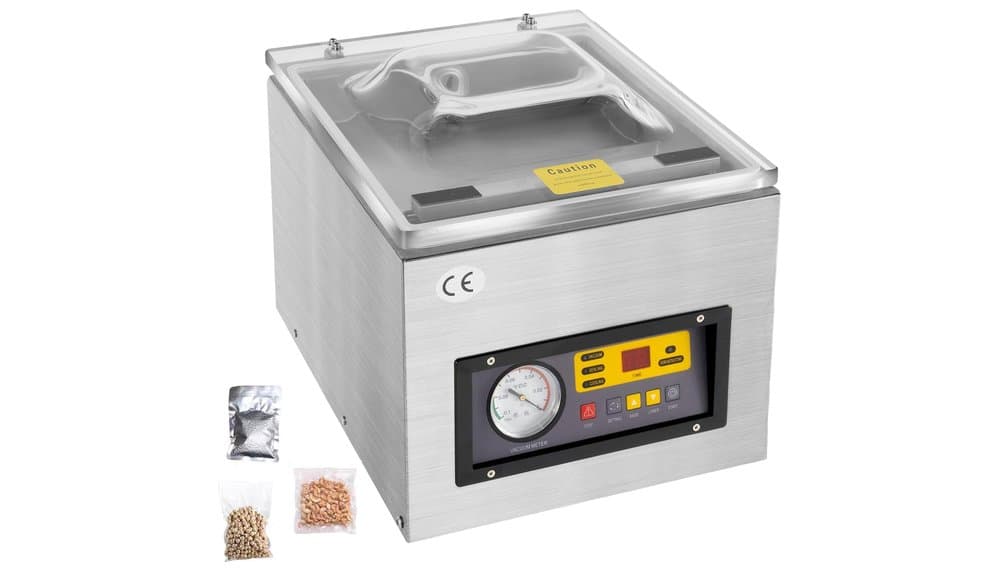
The Levkitch machine positions itself on an advertised professional or semi-professional niche, with technical specifications geared towards sustained throughput. Its main characteristic is its suction power, expressed as 5.5 liters per second, with a very low minimum pressure (≤ 1 kPa) meant to guarantee a very deep vacuum. The appliance highlights an integrated 3-in-1 function combining vacuum, sealing, and cooling, aiming to simplify the complete cycle. The technical specifications are detailed, mentioning a sealing speed of up to 4 bags per minute, hinting at sustained use.
However, analysis of community feedback, although limited, reveals a more nuanced landscape and calls for caution. The first observation is the very significant weight of the appliance (19.5 kg), clearly destining it for a fixed installation. Some reviews point out unexpected complexities in use, with strict startup procedures (such as pressing the lid firmly) to avoid malfunctions. The manual, in English, is described as essential but sometimes technical. More worryingly, several reports mention early reliability issues or oil leaks from the pump, with the manufacturer even indicating in the manual that this can happen after transport and requires user cleaning. Finally, it is important to note that, unlike the Maxxo, this appliance does not seem to be supplied with bags or a sealing clamp, requiring immediate additional purchases. The performance promise is there, but it seems to come with a steeper learning curve and more pronounced logistical constraints.
Choosing Your Format: Countertop, Pedestal Machines and Production Rates
Now that the numbers are clear, let's talk physical space. The shape of your machine will define its integration into your kitchen and, most importantly, your workflow. It's not just about footprint; it's about flow.
Countertop Machines: Compact for Occasional Use
This is the most common format for enthusiasts and small-scale production. The machine and its chamber form a single unit that sits on a countertop.
- Major Advantage: You take it out of the cupboard, use it, and put it away. Perfect if your space is limited.
- Capacity: They typically correspond to the 30 to 40 cm chambers we discussed. This is more than sufficient for 90% of advanced home needs.
- The Pitfall to Avoid: Watch out for the weight! A good countertop machine easily weighs 15 to 20 kg. If you have to move it often, check its ergonomics. A sturdy handle is a real plus. Frankly, if you plan to use it several times a week, you'll probably end up leaving it permanently on a dedicated section of counter.
Pedestal Machines: Ergonomics for Long Series
Here, the machine is fixed to a pedestal or column, and the chamber is removable. The operator works standing, often with an adjustable-height work surface below.
- For Whom? This is the obvious choice for semi-professional or very intensive domestic use (large family, serious passion). The great benefit is comfort. No more bending over to place or remove the bag. You can seal bag after bag without back strain.
- Production Rate: Coupled with a powerful pump (40 m³/h+), these machines are designed for productivity. You can easily prepare 50 individual protein bags for the month in a single session. The pedestal also often houses a more robust pump and a more efficient cooling system.
- Investment: It's a significant price jump compared to a countertop machine, but if you regularly process large volumes, this investment is justified by the sheer gain in time and comfort. This is often where you'll find the best vacuum chamber machine for a serious user who doesn't want to be limited by their tool.
What About Double-Chamber Machines? The Professional's Tool
This is the next level. The principle? Two independent chambers sharing a single central pump. While one chamber is in the sealing phase, the other is being prepared or emptied.
- Maximum Productivity: This allows you to never wait for the machine. The cycle is continuous. For a butcher, caterer, or restaurant vacuum-sealing kilos of product every day, this is the only viable solution. The production rate can easily double.
- Realism: For home use, even by an enthusiast, this is clearly overkill. Unless you plan to start your own business selling vacuum-sealed meals, the investment (several thousand euros) and footprint are not justified.
Your choice should start with a simple question: how many bags will I seal in a typical session? If the answer is "a maximum of about ten," the countertop machine is your friend. If you regularly exceed thirty and see it as a "production" moment, then the comfort of a pedestal machine quickly becomes indispensable. Don't underestimate the impact of ergonomics on your enjoyment of using the tool.
Integrating Maintenance and Consumable Costs into Your Budget
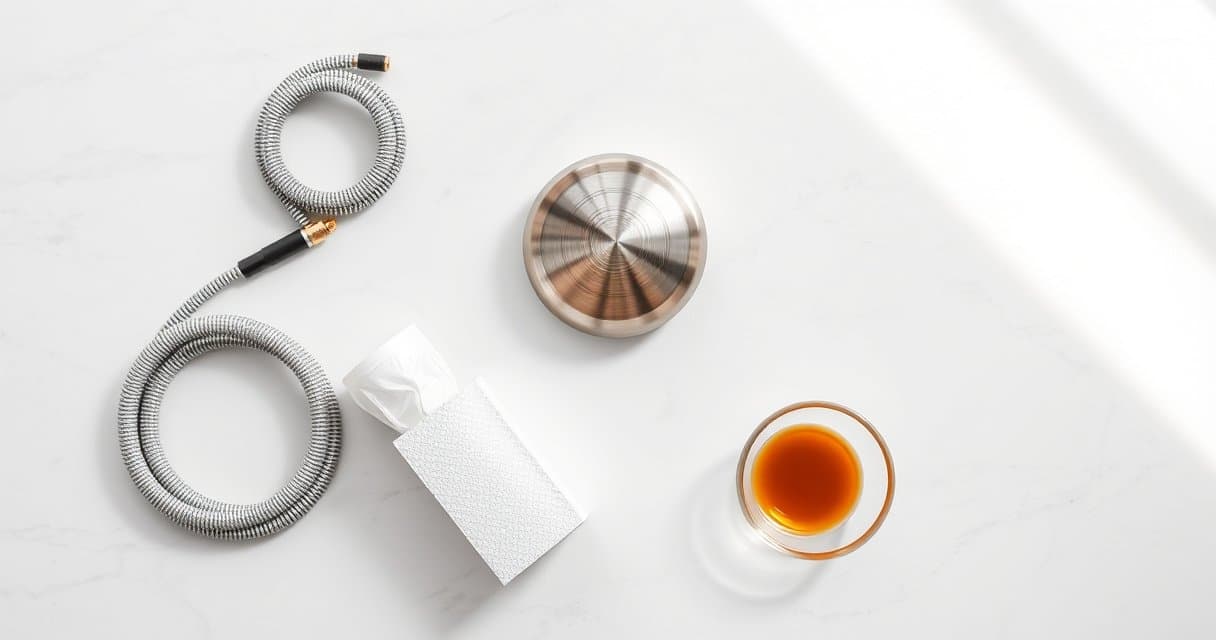
This is a point many overlook at the time of purchase, and it's a monumental mistake. The price of the machine is just the opening move. The true cost of ownership is calculated over time, with consumables and maintenance. Frankly, a vacuum sealer is like a car: if you don't maintain it, it will break down at the worst possible moment, and repairs are expensive.
Bags and Rolls: The Unavoidable Recurring Expense
This is the most obvious cost. With a chamber machine, you use smooth bags (for cooking) or textured bags (for long-term storage). Rolls are more economical in the long run but require a bit of organization.
- Rough Price Estimate: For good quality smooth food-grade bags, compatible with sous-vide cooking, expect to pay between 25 and 50 cents per bag (20x30 cm format) when buying boxes of 100 or 200. Rolls are even more cost-effective per square meter.
- Compatibility is King: Make sure the machine accepts commercially available bags and rolls. Some models, especially professional ones, require bags with a specific sealing strip. Being stuck with a single supplier can be a problem. A better chamber vacuum sealer will give you that freedom.
- My Advice: Before finalizing your machine choice, do a quick online search to check the availability and price of bags corresponding to its seal width (30cm, 40cm…). This avoids bad surprises.
Pump Maintenance: The Key to Longevity
This is the heart of the machine. A poorly maintained pump will lose power, become noisier, and eventually burn out.
- Oil Pump vs. Dry Pump: Oil pump models (often the most powerful) require regular oil draining and changes, typically every 30 to 50 hours of use. Special oil costs about 20-30€ per liter. It's a chore, but it guarantees decades of service.
- Dry Pumps are simpler (no oil to change) but can be less durable for very intensive cycles. It's a convenience choice, to be weighed against the intended use.
- The Filter: An unsung little hero! It protects the pump from greasy vapors, salt or sugar particles. Change it according to the manufacturer's recommendations (every 6 months to a year for domestic use). Neglecting it risks an expensive breakdown. The price? About 10 to 20€ per filter.
Cleaning and Small Wear Parts
This seems trivial, but a clean machine is a reliable machine.
- The Chamber Seal: This rubber band ensures airtightness. It should be wiped clean with a soft cloth after each session and checked regularly. If it cracks, the machine will no longer vacuum properly. Replacing it usually costs between 30 and 80€.
- The Sealing Bar: It can become clogged with plastic residue over time. Cleaning it with a specific cleaning pad (often supplied) maintains a perfect seal. If it's too damaged, replacing it is a technical operation.
- Estimated Annual Budget: For regular domestic use (a few hours per month), budget 50 to 150€ per year for bags and basic maintenance. For intensive use, this can easily double. Think about it before buying an entry-level machine: if maintenance is complex or parts are unavailable, it could become a very expensive paperweight in two years.
Advanced Features That Transform the User Experience
Beyond the basics, certain features truly make the difference between a machine that gets the job done and one that does it brilliantly. This is where we separate devices built to last from simple gadgets. These options are not always essential, but when they match your way of working, they quickly become indispensable.
Programming and Cycle Management: Automated Precision
Imagine needing to seal kilograms of strawberries or soups in series. Manually adjusting the sealing time and vacuum duration each time is tedious. Machines with programmable memory are a game-changer.
- You can record specific cycles for delicate products (like soft cheeses, requiring a gentler vacuum), for liquid products (with a pause before sealing to avoid splashing), or for meats in long-term vacuum storage (with an ultra-deep vacuum).
- Some models even offer automatic boil point detection. The sensor adapts the cycle if the product starts to boil under vacuum, preventing the bag from opening. For me, this is a true sign of quality engineering.
- Practically speaking, if you regularly make the same preparations, this function saves you a huge amount of time and guarantees perfect consistency. For a better cloche-style vacuum machine in a small-scale production context, this is a criterion to look at closely.
Specific Sealing Options for Every Challenge
Sealing isn't just about pushing a button. Difficult situations require adapted tools.
- High-pressure sealing: Essential if you work with powdered products (flour, spices) or products containing fine particles. The extra pressure guarantees a perfect seal even if grains end up on the sealing bar. Without this, you will definitely have leaks.
- Pulse mode or "gentle evacuation": For sealing fragile foods like raspberries, vegetable chips, or fresh pasta without crushing them. The pump takes pauses, letting the air escape gradually without deforming the product. A feature that shows the manufacturer has considered a diversity of uses.
Interface and Daily Ergonomics
Spending hours in front of your machine shouldn't be a chore. The user interface plays a huge role in fatigue at the end of the day.
- Backlit LCD screens with clear icons are a real plus compared to old rotary knobs and LED indicators. Knowing precisely where the cycle is at (vacuum in progress, sealing...) is reassuring.
- The placement of controls is crucial. Well-designed models have the sealing button and the cloche lever positioned for smooth one-handed operation. Avoid machines where you have to juggle to start a cycle.
- A detail that matters a lot: noise. A powerful but well-insulated pump (around 60-65 dB) is an appreciable luxury, especially for use in a kitchen or a small workshop. The noisiest models (70 dB and above) quickly become unbearable.
Frankly, these features have a cost. But if you use your machine daily, they are not a luxury. They protect your products, save you precious time, and reduce the margin for error. It's up to you to see which ones are truly worth the investment for your practice.
Conclusion
There you have it, you now have all the elements in hand to choose your chamber vacuum machine. Consider your workflow and your signature products. The right model is the one that will become a natural extension of your passion for precise cooking.
Don't rush your decision. Weigh the technical specifications against your real budget, including consumables. The objective is simple: seal and cook with complete confidence.
Happy researching, and see you soon around a perfectly sealed bag!
Frequently Asked Questions
What is the best chamber vacuum sealer for home use?
For demanding home use, a tabletop chamber machine with a pump of approximately 20 m³/h and a sealing bar width of at least 4 mm offers an excellent balance between performance and size. The key is to choose a model suited to your preparation volume and compatible with readily available bags.
What are the advantages of a chamber machine compared to an external suction sealer?
The main advantages are deep and reliable vacuum (often above 99%), the ability to safely seal liquid or greasy products, and greater durability thanks to a wider sealing bar. This technology eliminates problems of liquid being sucked into the pump and guarantees an airtight seal.
How to choose between a tabletop vacuum sealer and a floor-standing machine?
Choose a tabletop machine if your usage is occasional and your space is limited, as it is compact and storable. Choose a floor-standing machine if you regularly perform long sealing sessions, as it offers better ergonomic comfort by allowing you to work standing up.
Should one prefer an oil pump or a dry pump for a chamber vacuum sealer?
An oil pump is generally more powerful and durable, ideal for intensive use, but it requires regular maintenance (oil changes). A dry pump is simpler to maintain (no oil) and can be sufficient for regular but less demanding home use.
What is the annual maintenance cost of a chamber vacuum sealer?
For regular home use, plan an annual budget of 50 to 150 € for bags, filters, and consumables like pump oil. This cost increases with the intensity of use and also depends on the price and availability of bags compatible with your model.
100% free and independent — All our articles are written independently, without any sponsorship. We may earn a commission on purchases made through our links, at no extra cost to you.
Guides you might like
Best Beginner Sous Vide Kit
Find the perfect sous-vide starter kit on a budget. Learn the three essential features to look for to cook your first perfect steak without the headache.
Best Vacuum Bags
Choose the right vacuum sealer bags for perfect results. Learn key specs like heat resistance, thickness, and barriers to avoid culinary disasters.
Cast Iron Pan Buying Guide
Select the perfect cast iron skillet: understand natural for searing vs enameled for easy care to transform your cooking results.
Articles you might like
Lipavi C10 11.3 Liter Vacuum Container Review & Test
LIPAVI C10 sous-vide container review: analyzing its energy efficiency, thermal stability & ease of use for precision cooking.
DOQAUS Instant Read Dial Thermometer Review
Master temperature for perfect cooking. Dial thermometer for instant, reliable readings on steak, syrup, ovens. Essential precision tool.
Dictien CF-001A 6-in-1 Sous Vide Machine Review
Ensure perfect sous-vide with the versatile Dictien CF-001A 6-in-1 vacuum sealer for both dry and moist foods. A comprehensive review.