Bonsenkitchen VB3204 Vacuum Bag Review
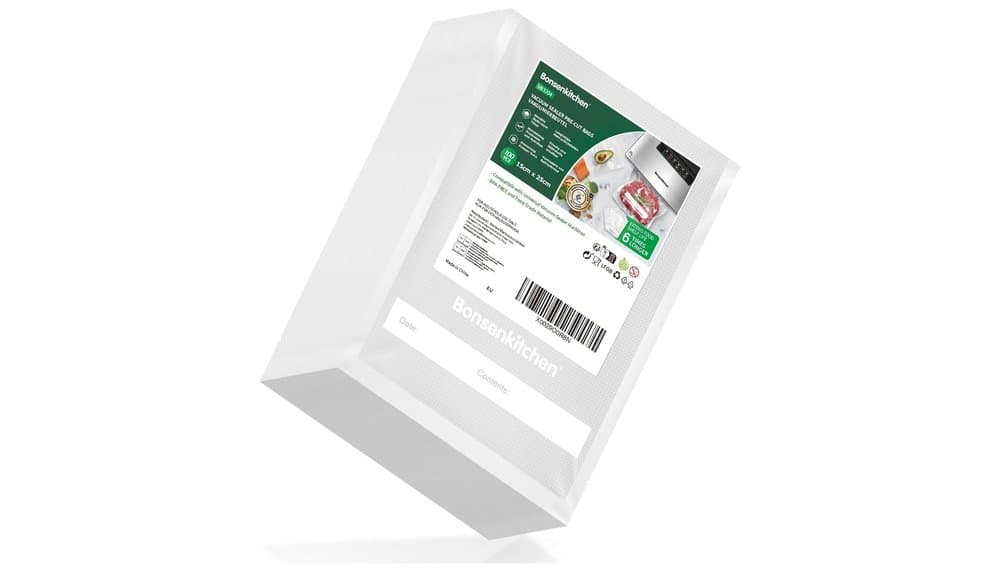
Bonsenkitchen VB3204 Vacuum Bag
Introduction
In the world of precision cooking, the sous-vide technique relies on a delicate balance between two pillars: the thermal stability provided by a high-performance immersion circulator and the perfect integrity of the vacuum packaging. Without the latter, even the most precise machine is rendered ineffective. Today, we examine the second pillar through an analysis of the Bonsenkitchen VB3204 100 Vacuum Bags. These are critical consumables, often underestimated, but whose quality directly dictates the success of a long cook, the preservation of flavors, and food safety. Are these bags, presented as versatile and heat-resistant, up to the standards of a sous-vide enthusiast? We analyze their specifications, compatibility, and real-world performance based on feedback from a vast community of users.
See also: Best Vacuum Bags · Bonsenkitchen VB3211 Food Vacuum Bags Review · Bonsenkitchen VS5100 Food Vacuum Sealer Review
Key Strengths
- Claimed Universal Compatibility: The product is presented as compatible with all vacuum sealing devices, whether they are external suction machines (the most common in home kitchens) or, potentially, chamber systems. This promise of universality makes it a top choice for cooks who own multiple machines or for beginners who don't want to worry about compatibility issues.
- Heat Resistance Suited for Sous-Vide: The specifications claim resistance to temperatures up to 90°C (195°F). This range covers the vast majority of sous-vide cooking, from tender vegetables to red meats and eggs, making it a product suited for most precision culinary applications.
- "Dotted" Embossed Design: The textured or waffled surface is a major asset. This design creates micro-channels that facilitate air extraction, theoretically allowing for more efficient vacuum sealing, especially with external suction machines, and limits the risk of trapping liquids in the sealing area.
- Versatile Preservation: According to the brand, the bags are reusable, washable (even dishwasher safe) and suitable for freezing. This versatility meets a need for economy and waste reduction for regular users.
Key Weaknesses
- Reduced Actual Dimensions: A critical point raised by several users is the discrepancy between the advertised dimensions (15 x 25 cm) and the usable space inside the bag. The side seals, necessary for airtightness, significantly encroach on the width, sometimes reducing the available space by 2 cm. For wide cuts of meat or large portions, this detail may necessitate using a larger size.
- Risk of Creases During Packaging: Some feedback, particularly regarding shipping logistics, indicates that the bags can arrive overly compressed, with permanent creases. These creases, located in the sealing area, can compromise airtightness by creating paths for air, forcing the user to reposition the bag multiple times.
- External Dimension Indication Only: The ambiguity about the measurement (internal vs. external) is not clearly explained on the product page, which can lead to ordering errors for the uninitiated. This is a notable lack of transparency.
Detailed Analysis for Sous-Vide Cooking
Material and Thermal Resistance
The primary material is polyethylene (PE), a common food-grade plastic for this type of application. The ability to withstand cooking temperatures up to 90°C is the critical threshold for sous-vide use. Although some cooks (like duck confit or certain extractions) may approach or exceed this temperature, 90°C effectively covers over 95% of recipes. The community does not report cases of melting or abnormal deformation under these conditions, indicating correct thermal reliability for standard uses. The "boilable" mention reinforces this claim.
See today's priceCompatibility and Performance with Sous-Vide Machines
This is where the embossed design plays its full role. For users of external suction machines (Anova, Joule, FoodSaver, etc.), these micro-channels are designed to maintain an open air evacuation path, even when the bag contains moist or irregularly shaped foods. On paper, this should allow for a more complete and reliable vacuum, limiting seal failures due to liquid suction. Universal compatibility is an asset, but it implies that the material must be flexible enough to properly adapt to the sealing gasket of various machine models, which user reviews generally confirm.
Seal and Long-Term Airtightness
The performance of a vacuum bag is also judged on its ability to maintain airtightness during prolonged cooks (24h, 48h, 72h). No user feedback reports delamination or seal rupture during long cooks. The perceived strength of the side seals and the final seal made by the machine is described as good. However, the note about creases from packaging reminds us that the integrity of the sealing area is fragile: any imperfection (crease, grain of salt, drop of oil) can create a leak point. Experienced users know this and emphasize the need to properly wipe the bag's edge before vacuum sealing, regardless of the product.
Versatility and Practical Use
The promise of reusability is interesting from an economic and ecological standpoint. For sous-vide cooking of vegetables or non-fatty proteins, a simple wash may suffice. However, for long cooks of fatty meats or marinades, residual odors and fats can persist, limiting practical reuse. The transparency of the material, on the other hand, is unanimously praised: it allows for easy content identification in the freezer or water bath without needing to label systematically.
Technical Specifications
| Feature | Bonsenkitchen VB3204 Specification |
|---|---|
| Product Name | 100 Food Vacuum Sealer Bags |
| Advertised Dimensions | 15 cm (width) x 25 cm (height) |
| Material | Food-grade Polyethylene (PE) |
| Quantity | 100 bags |
| Design | "Dotted" embossing (waffled) on one side |
| Temperature Resistance | Up to 90°C (195°F) |
| Features | Reusable, washable (dishwasher safe), freezable, boilable |
| Closure Type | Machine seal (external suction) |
| Claimed Compatibility | All vacuum sealers |
What Users Say
The analysis of thousands of customer reviews reveals a very high overall satisfaction, with a clear trend toward repeat purchases. The recurring positive points are:
- Perceived excellent value for money.
- Strength and reliability for freezing and sous-vide cooking.
- Transparency allowing for easy identification.
- Vacuum efficiency achieved thanks to the embossed design.
- Feeling of better performance compared to low-end bags or other brands, especially regarding seal durability.
The cautionary or negative points raised are less frequent but instructive:
- Dimension Problem: Several comments, including the highlighted review, point out that the 15 cm measurement is external. The usable interior space is therefore smaller, which sometimes requires choosing a size larger than initially planned.
- Packaging Quality: Some feedback indicates that the bags sometimes arrive too tightly packed in their plastic film, causing permanent creases. These creases can hinder vacuum sealing and require special care when positioning the bag in the machine.
- Shipping Errors: Isolated (but present) cases of wrong item being shipped (different size or quantity than ordered) are reported. This point relates more to logistics than the intrinsic quality of the product.
Overall, the community validates the promise of a reliable product for daily sous-vide cooking. The criticisms mainly concern logistical or informational aspects, rather than technical failures during use.
Conclusion
The Bonsenkitchen VB3204 100 Vacuum Bags position themselves as a solid and pragmatic choice for the vast majority of sous-vide enthusiasts. Their embossed design effectively addresses the challenge of air extraction with domestic machines, and their thermal resistance covers the essential cooking spectrum. For the beginner user looking to move beyond basic rolls, they offer a notable gain in reliability. For the experienced user, they constitute a reliable workhorse consumable for standard cooks and preservation.
The main pitfall is related to understanding the dimensions. It is essential to consider that the advertised width is not the available interior width. For substantial cuts of meat, opting for the larger size (20x30 cm) is a wise precaution. Despite this point of caution and some packaging inconsistencies, the bulk of user feedback confirms that these bags consistently fulfill their purpose. They do not claim to be professional chamber vacuum bags, but within their category (bags for external suction), they represent an effective compromise between performance, versatility, and accessibility, justifying their popularity within the community.
100% free and independent — All our articles are written independently, without any sponsorship. We may earn a commission on purchases made through our links, at no extra cost to you.
Articles you might like
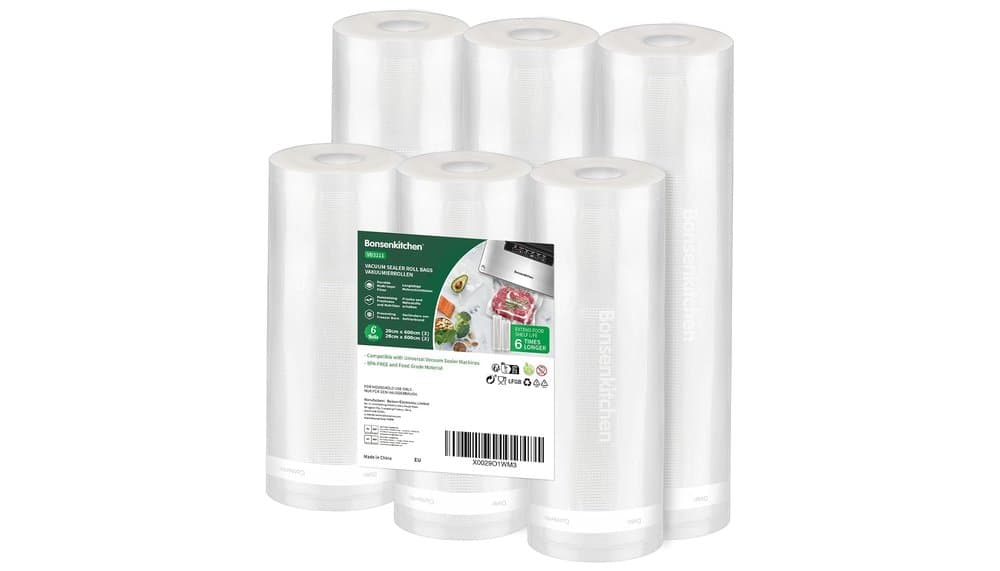
Bonsenkitchen VB3211 Food Vacuum Bags Review
Prevent sous-vide failure. We examine Bonsenkitchen vacuum bags for food safety, durability, and taste integrity. Essential gear for culinary precision.
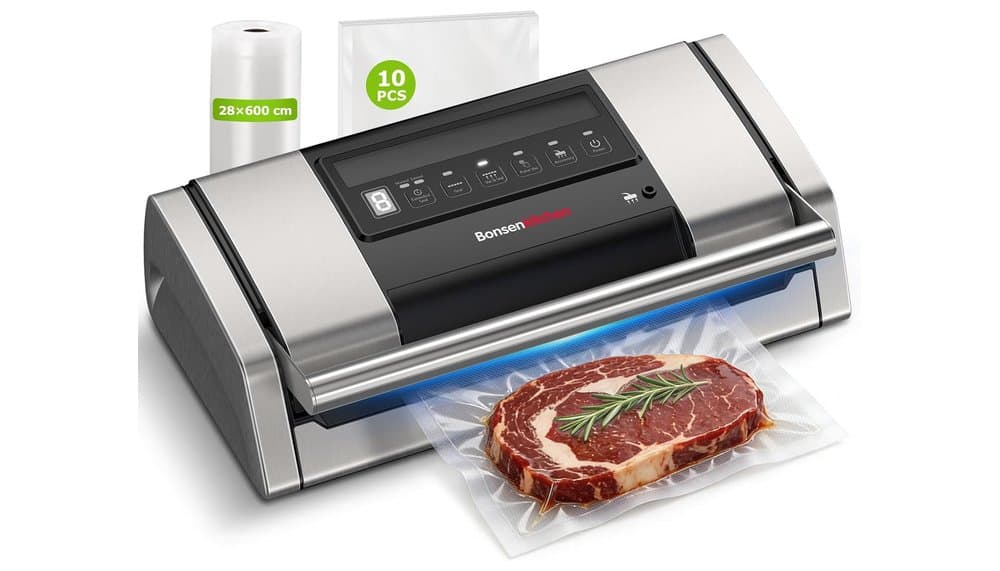
Bonsenkitchen VS5100 Food Vacuum Sealer Review
Master sous-vide results depend on a perfect seal. Our review of the Bonsenkitchen VS5100 vacuum sealer analyzes its performance for long cooks.
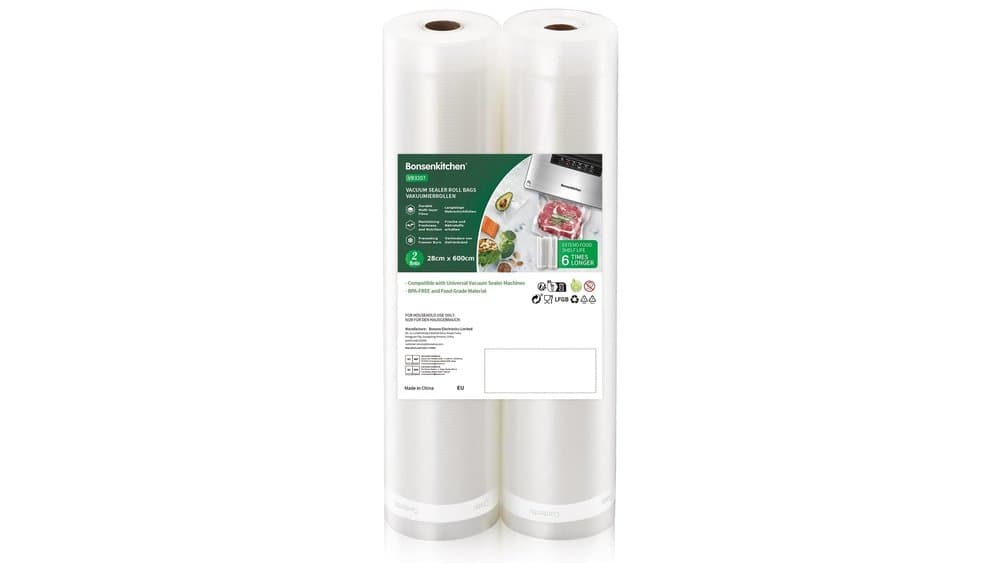
Bonsenkitchen VB3207 Vacuum Bag Rolls Review
Premium vacuum sealer bag rolls for flawless sous vide. Ensure perfect seals, no leaks, and precise cooking results with high-rated Bonsenkitchen rolls.
Guides you might like

Best Vacuum Bags
Choose the right vacuum sealer bags for perfect results. Learn key specs like heat resistance, thickness, and barriers to avoid culinary disasters.
Bell Jar Vacuum Sealer Buying Guide
Upgrade to a chamber vacuum sealer for professional sous-vide results at home. Perfect for liquids and flawless, long-lasting seals.
The Ultimate Portable Vacuum Sealer Guide
The secret to perfect sous-vide cooking? An efficient portable vacuum sealer to lock in freshness and master temperature control.