Electronic Housewares Portable Cordless Food Sealer Review
Introduction
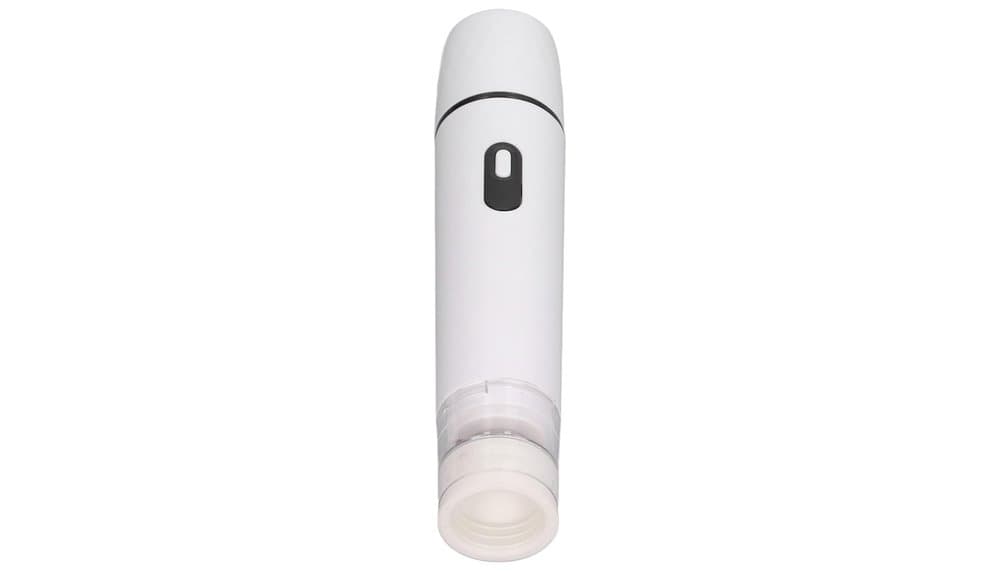
In the world of precision cooking, vacuum sealing is not just a preparation step, it is a fundamental pillar. It guarantees perfect contact between the food and the bag, essential for uniform heat transfer and an impeccable result. Today, we are examining a tool that promises to revolutionize this step through its flexibility: the Electronic Housewares - Portable Cordless Vacuum Sealer for Food (WHITE). Far from bulky countertop sealers, it presents itself as a portable and rechargeable solution. But in a domain where reliability and suction power are paramount for long cooks and perfect textures, does this little device live up to its promises? We analyze its specifications, compare its design to the practices of the sous-vide community, and evaluate its place in the hands of a beginner and a seasoned enthusiast.
Strengths
- Portability and absolute freedom: Its compact, lightweight, and above all cordless format is its main selling point. It can be taken anywhere, eliminating the constraint of needing an electrical outlet near the cooking vessel or at a picnic site.
- Ease of use: No complex settings. The device connects to the valve on the bag or container, and you press a button. It is a very accessible entry point for anyone wanting to get started with vacuum sealing without investing in a stationary machine.
- Versatility of supports: Designed to work with valve bags and vacuum storage containers, it offers a reusable and practical alternative for daily storage, beyond just sous-vide cooking.
- Splash-proof design: The fact that it withstands splashes is a pragmatic detail for a kitchen environment, where moisture and minor accidents are frequent.
Weaknesses
- Dependence on special bags: This is the main limitation. It does not use standard bag rolls and does not seal by itself. You must purchase bags or containers pre-equipped with a specific valve, which increases the long-term cost and reduces flexibility in formats.
- Limited suction power for liquids: According to community feedback, managing moisture is its critical point. As soon as liquid marinades or moist foods are involved, the risk of liquid being sucked into the pump is high, potentially damaging the device and compromising the vacuum.
- Performance on large formats: For large cuts (like a long beef rib) requiring large bags, a cordless pump of this size may struggle to create and maintain a perfect vacuum over the entire volume, compared to a more powerful countertop machine.
- Battery life and durability in question: For regular cooking or intensive prep sessions, the integrated battery raises questions about its longevity and its ability to handle consecutive vacuum seals without requiring frequent recharging.
Detailed Analysis for the Sous-Vide Practitioner
Design and Operating Principle: A Radical Compromise
The Electronic Housewares Portable Cordless Vacuum Sealer belongs to the category of external cordless pump sealers. It operates on a fundamentally different principle than a traditional strip sealer or a chamber machine. Here, the device does not create a seal. It simply sucks the air out through the valve of a dedicated bag or container, which you must then seal manually (in the case of some zip bags) or which closes automatically via a flap. This design choice explains its compactness, but also defines all its limitations.
Suction Power and Vacuum Efficiency: The Specifications on Paper
The specs announce a vacuum degree between -50 and -60 kPa. For context, a good external countertop sealer can reach -80 to -90 kPa, and a professional chamber machine exceeds -95 kPa. The theoretical -60 kPa of this device therefore represents moderate power. On paper, this may be sufficient for most common sous-vide applications (meats, vegetables) where a "commercial" (not perfect) vacuum is acceptable. However, testers emphasize that this performance is difficult to achieve in practice with moist foods or in large bags, where suction can slow down or stop prematurely.
The Real-World Test: Long Cooks, Liquids, and Sealability
It's in the field that the compromises become apparent.
- Long cooks (24h+): Reliability over time is the major concern. An imperfect vacuum can lead to a floating pouch, creating a cold spot and uneven cooking. For truly long cooks, the sous-vide community overwhelmingly favors an optimal vacuum guaranteed by a more powerful corded machine.
- Moisture management: This is probably its Achilles' heel. The device does not have an integrated liquid reservoir. As soon as food is bloody, marinated, or simply moist, the user must be extremely vigilant. Many reviews report malfunctions related to accidental liquid suction, rendering the device unusable. For dishes like a chicken marinade or vegetables vacuum-sealed with oil, this tool is clearly unsuitable.
- Consumable compatibility and cost: You are tied to compatible proprietary valve bags (with orifice <= 2.5 cm). You lose the freedom to use standard vacuum bag rolls, which are often much more economical per square centimeter. This recurring cost and dependence are determining factors for intensive use.
Build Quality, Noise, and Usage
The lightweight plastic construction is consistent with its portability goal, but it does not inspire the same robustness as a stainless steel housing. The noise level is generally described as acceptable, comparable to a small power tool, and much lower than the hum of a chamber sealer. Connection to a mobile application (WiFi/App) is, unsurprisingly, absent. It is a purely mechanical and manual tool.
Summary of Technical Specifications
| Characteristic | Detail for the Electronic Housewares Portable Cordless Sealer |
|---|---|
| Type | External cordless vacuum pump (no sealing function) |
| Power Source | Rechargeable Li-ion battery (USB cable included) |
| Advertised Vacuum Pressure | -50 to -60 kPa |
| Compatibility | Bags and storage containers equipped with an air valve (diameter ≤ 2.5 cm) |
| Auto-Stop Function | Yes (according to design) |
| Liquid Management | No (design not intended for it, risk of failure) |
| Smart Connection | None (no WiFi, no application) |
| Portability | Excellent (compact, lightweight, cordless) |
| Noise Level | Moderate (according to user feedback) |
What Users and the Community Say
The synthesis of customer reviews and expert feedback paints a nuanced picture, perfectly aligned with our technical analysis.
The recurring positive points revolve around convenience and simplicity. Users appreciate its effectiveness for quick and "dry" tasks: sealing nuts, coffee, snacks, or portions of cheese. Those using it with vacuum storage containers for the fridge praise it for extending the freshness of leftovers. For occasional and nomadic use (picnics, camping), it is often described as a "brilliant gadget."
The negative points are targeted and severe for sous-vide practice. The liquid problem is widely reported and constitutes the primary cause of frustration and malfunction. Many lament damaging the device during the first use with food that was too moist. The vacuum quality is judged inconsistent and inferior to that obtained with a traditional sealer, even an entry-level one. Finally, the cost and necessity of buying special bags are heavily criticized, turning a modest initial investment into an ongoing expense.
Conclusion
The Electronic Housewares - Portable Cordless Vacuum Sealer for Food (WHITE) is a niche product that meets a very specific need: quick, portable, and cordless vacuum sealing for dry or solid foods. Within this limited framework, it excels through its simplicity.
However, from the perspective of precision sous-vide cooking, its compromises are too significant to make it a primary tool. Its vulnerability to liquids, its limited suction power, and its dependence on specific consumables make it unreliable for demanding cooks, marinades, or moist preparations. It cannot compete with the power, sealability, and reliability of a corded external sealer, let alone the perfect vacuum of a chamber machine.
Our verdict: Consider it as a practical complementary accessory for daily storage or travel, but not as the central sealer in your sous-vide arsenal. For a serious beginner, a basic strip sealer will be a much more judicious and versatile investment. For the experienced enthusiast, it may eventually serve as a backup solution while traveling, but will never replace the precision and robustness of equipment dedicated to precision cooking.
100% free and independent — All our articles are written independently, without any sponsorship. We may earn a commission on purchases made through our links, at no extra cost to you.
Articles you might like
KitchenBoss Food Vacuum Bag Roll Review & Test
KitchenBoss vacuum sealing bags for sous-vide: analyze specs, compare performance, and determine value for precision cooking storage and preparation.
Fityou HU-XI-53 Immersion Circulator Sous Vide Cooker Review
Fityou HU-XI-53 Immersion Circulator review: A high-performing, accessible sous vide cooker with 1100W power, precise 0.1°C accuracy, and a 25-95°C range.
Masontops Complete Fermentation Jar Kit Review & Test
Review: Masontops Kit transforms Mason jars into precise fermentation tools for mastering the microbial environment.
Guides you might like
Bell Jar Vacuum Sealer Buying Guide
Upgrade to a chamber vacuum sealer for professional sous-vide results at home. Perfect for liquids and flawless, long-lasting seals.
Best Beginner Sous Vide Kit
Find the perfect sous-vide starter kit on a budget. Learn the three essential features to look for to cook your first perfect steak without the headache.
Best Vacuum Bags
Choose the right vacuum sealer bags for perfect results. Learn key specs like heat resistance, thickness, and barriers to avoid culinary disasters.