Hotloop Digital Oven Thermometer Accuracy Test
Introduction
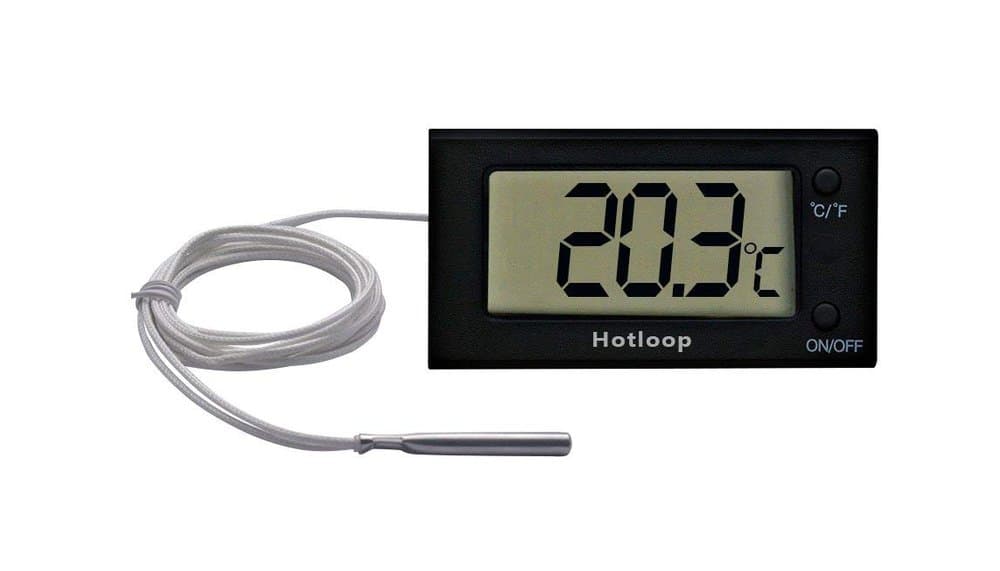
In the world of precision cooking, blind trust in a oven's display is often the primary source of error. A difference of 10°C can turn a perfectly pink roast into a dry piece of meat or compromise the center of a chocolate cake. The Hotloop Digital Oven Thermometer presents itself as the solution to regain control. This article analyzes this tool from the demanding perspective of precision cooking. We break down its promises of accuracy, its relevance for long cooking sessions, and confront its specifications with concrete feedback from the user community and available technical analyses.
Strong Points
On paper and based on positive feedback, the Hotloop stands out with several strengths.
- High announced precision: Specifications indicate a tolerance of ±1°C between 0 and 150°C, and ±2°C between 150 and 300°C. This theoretical margin of error is entirely acceptable for the majority of culinary applications, from monitoring a traditional oven to checking a smoker.
- Practical and discreet design: Users point out that the probe wire is thin enough to pass through the oven door without jamming, allowing real-time reading without disturbing the seal or the cooking. The device also features a built-in magnet, a highly appreciated feature for securely attaching it to the door.
- Displayed robustness: The probe is announced as being made of food-grade stainless steel, a material resistant to heat and corrosion, compatible with prolonged use in a hot environment.
- Ease of use: It's a plug-and-play tool. It requires no Bluetooth connection or app, making it immediately operational with a simple battery.
Weak Points
Analysis of user feedback reveals recurring weaknesses that temper the enthusiasm.
- Variable quality control: The main issue raised by a portion of buyers concerns calibration. Several reviews report significant deviations (up to 20°C or more) compared to a reference temperature, even at low temperatures. This suggests quality control issues or component drift.
- Basic construction: Although the probe is considered adequate, the main unit is described by some testers as resembling a standard industrial electronic component ("panel meter") simply repackaged. This doesn't necessarily impact the function, but raises questions about long-term durability and finish.
- Limited functionality: In a world where connected thermometers are common, the Hotloop is strictly a local and instantaneous tool. No connectivity, no temperature logging over time, no programmable alarms. This is a choice that limits its usefulness for very advanced cooking protocols.
- Cable length sometimes debated: Although the 1-meter cable is judged sufficient by most, some users with deep ovens or wishing to use it for other applications (like monitoring an engine temperature) find it too short.
Detailed Analysis for Precision Cooking
Accuracy and Stability: The Contested Keystone
For us, enthusiasts of sous-vide cooking and thermal control, precision is not an option, it's a requirement. On paper, the Hotloop's specs are good (±1°C). Expert testers confirm that, when the unit is well calibrated, it offers very satisfactory accuracy for checking the temperature of an oven or barbecue, with a fast reading. However, the community signals a consistency problem: while many users report excellent agreement with their other thermometers, a significant proportion received units showing significant deviations. This forces us to recommend an imperative calibration check upon receipt, with a test in boiling water (approximately 100°C at the user's altitude) or with a reliable reference thermometer. Its stability over long periods is not massively documented, but its simple design suggests good reliability if the initial calibration is correct.
Usefulness in a Precision Workflow
The Hotloop is not a direct competitor to immersion circulator probes. Its role is complementary.
- For sous-vide: It is useless for the water bath cooking phase. On the other hand, it becomes valuable for the finishing phase. Checking the actual temperature of your oven in broil mode, or that of a cast iron skillet for a perfect sear, is a major asset to avoid overcooking a piece already cooked to the core.
- For traditional cooking and barbecue: This is its natural playground. It allows you to map the hot/cold spots of your oven and ensure the thermostat displays the correct temperature. For charcoal barbecues or smokers, it allows monitoring the ambient temperature of the cooking chamber without opening the lid.
- For precision baking: Demanding pastry chefs will find an ally here to ensure their oven reaches and maintains the exact temperature required for macarons, bread, or sponge cakes.
Construction and Ergonomics
The stainless steel probe seems to be the most robust element. The cable is described as sufficiently heat-resistant for oven use. The display unit, with its clear LCD screen, is judged readable. The magnet on the back is unanimously praised as an excellent idea, allowing the device to be attached to the oven door or any metal surface. The fact that the device is neither waterproof nor washable (only wipeable with a damp cloth) is a normal limitation for this type of product, but requires attention to cleaning the probe after each use.
Technical Specifications
| Characteristic | Detail |
|---|---|
| Product Name | Hotloop Digital Oven Thermometer |
| Temperature Range | 0°C to 300°C (32°F to 572°F) |
| Announced Accuracy | ±1°C (0°C - 150°C) / ±2°C (150°C - 300°C) |
| Display | Digital LCD screen |
| Probe Cable Length | Approximately 100 cm |
| Probe Material | Food-grade stainless steel |
| Power Supply | 2 LR44 batteries (included) |
| Special Features | Built-in magnet, °C/°F toggle |
| Maintenance | Manual probe cleaning. Main unit wipe only. |
What Users Say
Analysis of nearly 2,000 reviews (overall rating 3.8/5) paints a contrasting and instructive landscape.
The praise (54% 5-star reviews) focuses on several points. Satisfied users describe it as "accurate", "reliable", and "indispensable", especially for old or gas ovens with inaccurate thermostats. They praise its ease of use ("it changed the way I cook"), the clarity of the display, and the convenience of the magnet. Several testimonials confirm its usefulness for specific applications like pastry-making or cooking medium-rare foie gras.
The criticisms (16% 1-star reviews) focus overwhelmingly on a single problem: inaccuracy. The terms "unreliable", "junk", or "poorly calibrated" come up systematically. The concerned users report deviations of 10°C, 20°C, or more from the first uses, some even receiving units displaying an error ("HHH") at moderate temperatures. This clearly indicates a serious quality assurance or factory calibration problem for a portion of the products.
The intermediate reviews (3 and 4 stars) often acknowledge the usefulness of the concept but note minor flaws: cable length a bit short, impression of average quality of the main unit, or accuracy that is adequate but not exceptional.
Conclusion
The Hotloop Digital Oven Thermometer is a two-faced product. On one hand, it embodies a simple and effective solution for anyone wishing to verify the actual temperature of their oven, smoker, or barbecue. When lucky enough to receive a correctly calibrated unit, it fulfills its mission accurately and offers excellent value thanks to practical features like its magnet.
On the other hand, the significant rate of defective or poorly calibrated units reported by users casts a shadow on its overall reliability. This makes it a somewhat risky purchase.
Our verdict for the precision cooking community is therefore nuanced. For a beginner simply wanting to check the truthfulness of their oven thermostat, it is a potentially very useful tool, provided it is tested imperatively upon receipt. For the enthusiast or professional demanding absolute confidence in their measuring instruments, this variability in quality is a deal-breaker. It could be considered as a troubleshooting or secondary verification tool, but not as a 100% reliable reference instrument without thorough prior verification. In principle, the concept is good, but its implementation suffers from inconsistencies that force a cautious recommendation.
100% free and independent — All our articles are written independently, without any sponsorship. We may earn a commission on purchases made through our links, at no extra cost to you.
Articles you might like
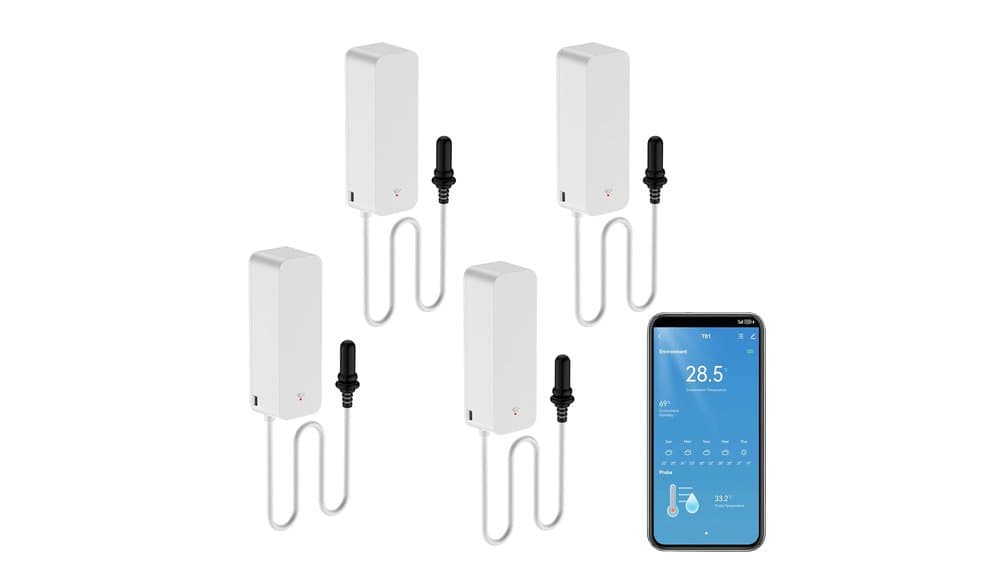
PHOVOLT WiFi Thermometer with Probe Test
For precise sous-vide & charcuterie, a calibrated core temperature probe is essential to ensure perfect results where it matters most.
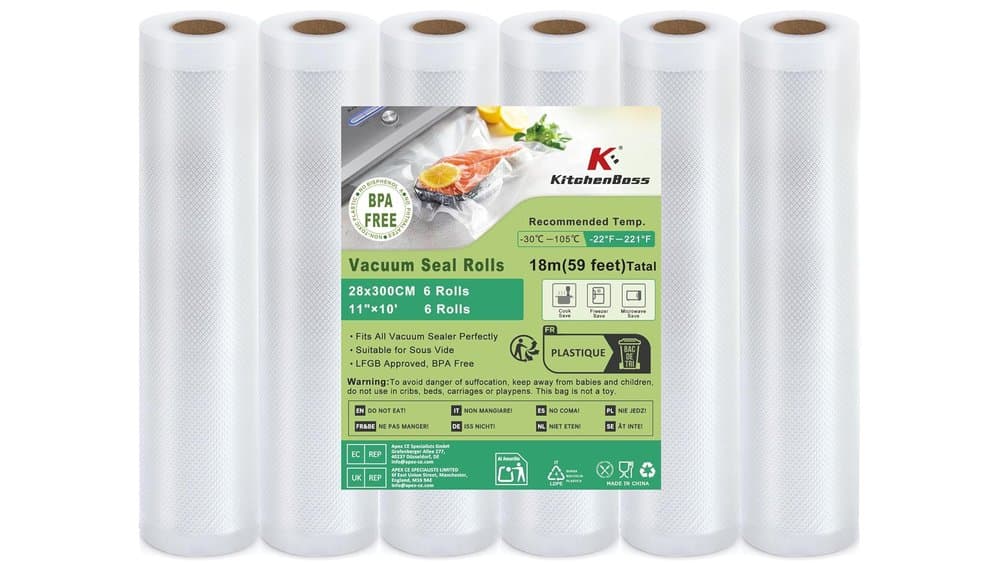
KitchenBoss Food Vacuum Bag Roll Review & Test
KitchenBoss vacuum sealing bags for sous-vide: analyze specs, compare performance, and determine value for precision cooking storage and preparation.
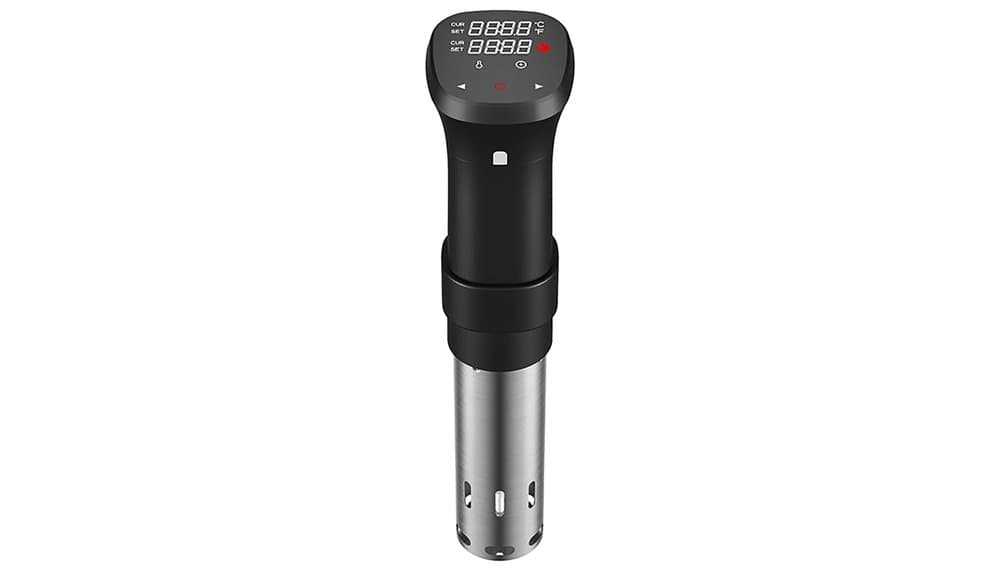
Fityou HU-XI-53 Immersion Circulator Sous Vide Cooker Review
Fityou HU-XI-53 Immersion Circulator review: A high-performing, accessible sous vide cooker with 1100W power, precise 0.1°C accuracy, and a 25-95°C range.
Guides you might like
Bell Jar Vacuum Sealer Buying Guide
Upgrade to a chamber vacuum sealer for professional sous-vide results at home. Perfect for liquids and flawless, long-lasting seals.
Best Beginner Sous Vide Kit
Find the perfect sous-vide starter kit on a budget. Learn the three essential features to look for to cook your first perfect steak without the headache.
Best Vacuum Bags
Choose the right vacuum sealer bags for perfect results. Learn key specs like heat resistance, thickness, and barriers to avoid culinary disasters.