IMIKEYA I4500W823W Vacuum Sealer Hose Review
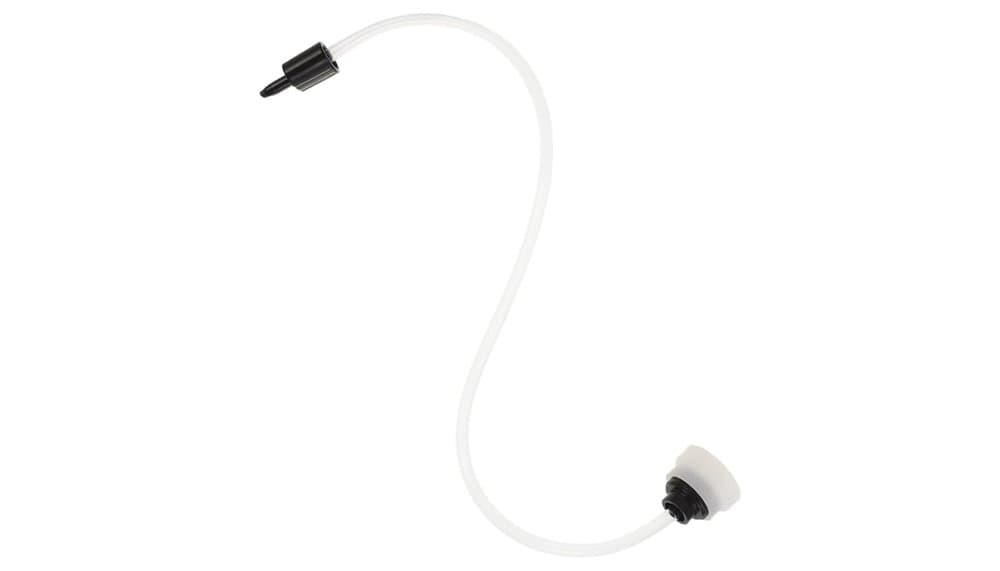
Evaluation of the IMIKEYA I4500W823W Vacuum Sealer Accessory Hose: A Bridge to Vacuum Sealing in Containers
In the world of sous vide cooking, the ability to evacuate air effectively is as crucial as the thermal precision of your immersion circulator. The vacuum sealing process defines the integrity of the bag or container, and thus the success of long cooking. While most enthusiasts start with an external machine and dedicated bags, the desire to use reusable containers – glass jars, vacuum containers, or even wine bottles – quickly becomes a need. This is precisely the niche that the IMIKEYA I4500W823W Vacuum Sealer Accessory Hose claims to fill.
This product is not a standalone vacuum sealer, but an accessory, a connection hose. It aims to connect your external vacuum sealer (FoodSaver type or similar) to a myriad of other compatible containers, thereby promising to significantly extend the capabilities of your existing equipment. In this comprehensive analysis, we will dissect its interest for the sous vide cook, evaluate its theoretical performance, and determine if it is a valuable asset or simply a gadget. We will base this on the provided technical specifications and the limited but instructive feedback from the user community.
Strengths
- Increased Versatility for Vacuum Sealing: Its main argument is to transform a standard vacuum sealer into a multifunctional tool, capable of handling jars (for confits, pickled vegetables, or jar desserts), wine stoppers, and even some reusable zip bags.
- Simple and Universal Design: The transparent hose seems designed to fit the "accessory" port of the majority of external sealers on the market, a compatibility often highlighted by manufacturers.
- Cost-Effective Solution for a New Feature: Compared to purchasing a dedicated vacuum machine for jars (a chamber vacuum sealer or a specific manual pump system), this accessory represents a minimal investment to explore new preservation and sous vide cooking techniques.
Weaknesses
- Total Dependence on Your Machine's Performance: Suction power, vacuum speed, and final seal depend entirely on your main sealer. If it is low-end or worn out, the hose will not change that.
- Seal Reliability to Be Proven: The critical point with this type of accessory is the quality of the connection between the hose and the target container (jar lid, container valve). A minor leak ruins the entire process. Without massive user feedback, this reliability remains an unknown.
- Lack of Precise Technical Data: No airflow rate, final vacuum level (in kPa or mBar), or suction pressure is communicated by the manufacturer. We operate in the realm of empiricism rather than measured precision.
Detailed Analysis: The Accessory Under the Sous Vide Microscope
Compatibility and Versatility: Promise Kept?
The central argument of the IMIKEYA I4500W823W is its claimed compatibility with jars, wine stoppers, and zip bags. On paper, this opens exciting prospects for the sous vide practitioner:
- Sous Vide Cooking in Jars: A prized technique for eggs, creams, terrines, or preserving fermented vegetables in a sterile environment. It requires an effective vacuum in a jar with a sealing lid. This hose could allow the use of standard jars with screw lids and seals, provided the right adapter is found.
- Preservation of Liquids and Marinades: Vacuum sealing a liquid marinade in a bag is often problematic. A glass jar then becomes the ideal container.
- Wine Preservation: The "wine stopper" function aims to extend the life of an opened bottle, an application more related to sommelier skills than strict sous vide, but which demonstrates versatility.
However, the community points out that success depends less on the hose itself than on the quality and suitability of the lids or adapters used on the containers. The hose is merely the conduit; the seal is made at the point of contact with the container.
Vacuum Sealing Performance: The Limiting Factor
Let's evaluate its implications on the key parameters of our field:
- Suction Power and Final Vacuum Level: These parameters are entirely dictated by your main sealer. If you own a high-end machine with a powerful pump, you can achieve satisfactory vacuum levels in a jar. With an entry-level machine, the results will be mediocre. The hose, due to its length (46 cm according to specs), may even cause a slight pressure drop, slightly reducing the machine's efficiency. It is not a magic tool that improves performance.
- Resistance to Long Cooks: The accessory itself is not subjected to constraints during a 24h+ cook. However, the integrity of the complete system is. A jar poorly sealed due to a faulty gasket will lose its vacuum during cooking, compromising the food. The responsibility does not lie with the hose, but with the container/hose interface.
- Moisture Handling: This is THE weak point of classic external sealers. When vacuum sealing moist or liquid foods, the risk is that droplets are sucked up into the machine's pump, damaging it. The IMIKEYA hose does not incorporate any liquid protection system (like a filter or a collection jar). Its use with liquid containers must be extremely cautious and often requires manually stopping the machine before liquid reaches the hose.
Construction and User Experience
- Build Quality: Described as being made of transparent plastic and green, the product seems to correspond to an entry-level accessory. Its durability under repeated use (bending, insertion/removal from connectors) is not documented by long-term feedback. Its featherweight (25g) confirms a lightweight construction.
- Noise and Connectivity: The noise level is that of your sealer; the accessory does not change that. There is obviously no WiFi connectivity or associated app for this simple hose.
- Design and Ergonomics: Its length (approx. 46 cm) is an asset for reaching jars placed slightly away from the machine. Its flexibility and the ease of connection/disconnection will be determining criteria for the daily experience.
Summary Technical Specifications
| Characteristic | Detail for the IMIKEYA I4500W823W |
|---|---|
| Product Type | Accessory hose for external vacuum sealer |
| Main Compatibility | External vacuum machines (FoodSaver type), jars, wine stoppers, zip bags |
| Main Material | Plastic |
| Dimensions (L x Ø) | Approximately 46 cm long x 2.3 cm diameter |
| Weight | 25 grams |
| Power Supply | None (passive accessory) |
| Special Features | None (no liquid filter, no valve) |
| Announced Vacuum Level | Not specified (depends on host machine) |
| Manufacturer Warranty | Information not provided |
What Users and the Community Say
Direct feedback on this specific product is very scarce at the time of this analysis, which is common for a niche accessory. However, the collective experience with this type of accessory is rich in lessons.
The recurring positive points (for equivalent products) revolve around the satisfaction of extending the possibilities of an existing machine without a heavy investment. Users who manage to make the system work with their jars often express great satisfaction, finding the solution practical and economical for preservation and certain sous vide preparations.
The points of vigilance and criticism are more instructive for our evaluation:
- Compatibility is not universal: Many users emphasize that success depends on having exactly the right type of lid or adapter for your jar. The hose alone is not enough; you often need to separately purchase lids equipped with a specific valve.
- Leaks are the number one enemy: The main reason for disappointment comes from a lack of seal at the connection between the hose and the container, or at the container's own gasket. This makes vacuum sealing ineffective.
- No performance improvement: The community is unanimous on this point: this accessory will not make a bad machine good. It simply transfers the suction capability to another point. If your machine struggles to seal normal bags, it will struggle just as much with a jar via this hose.
- Beware of Liquids: The warning concerning liquids and moisture is systematic. Using this accessory to vacuum seal soups, sauces, or liquid marinades without extreme precautions is the surest way to damage the pump of your main sealer.
Conclusion: For Whom is This a Relevant Purchase?
The IMIKEYA I4500W823W Vacuum Sealer Accessory Hose is not a revolutionary product, but a tool for specialization for the sous vide enthusiast who wants to explore beyond the plastic bag.
For the beginner just starting out with a basic sealer, this accessory is probably an unnecessary distraction. They should first master the basics of bag vacuum sealing, understand the issues of sealing and moisture management. Investing in quality bags and a reliable machine will be much more rewarding.
For the experienced user who already owns a good quality external sealer (with a robust pump) and is frustrated by the limits of bags for certain applications, this hose can be an interesting and inexpensive gateway. Its purchase makes sense if you are ready to conduct your own sealing tests with your jars and lids, and if you accept the risk of failure due to incompatibility. It represents an entry point into jar sous vide cooking without having to invest in a dedicated and expensive system.
In summary, the IMIKEYA I4500W823W is a conditional possibility multiplier. Its usefulness and effectiveness are entirely conditioned by two factors: the performance of your main sealer and your ability to assemble a leak-proof system (hose + adapter + container). For those with the curiosity and rigor to conduct these experiments, it is an accessory that can prove very useful. For those seeking a turnkey and infallible solution, it is better to look towards more integrated and specific jar vacuum sealing systems.
100% free and independent — All our articles are written independently, without any sponsorship. We may earn a commission on purchases made through our links, at no extra cost to you.
Articles you might like
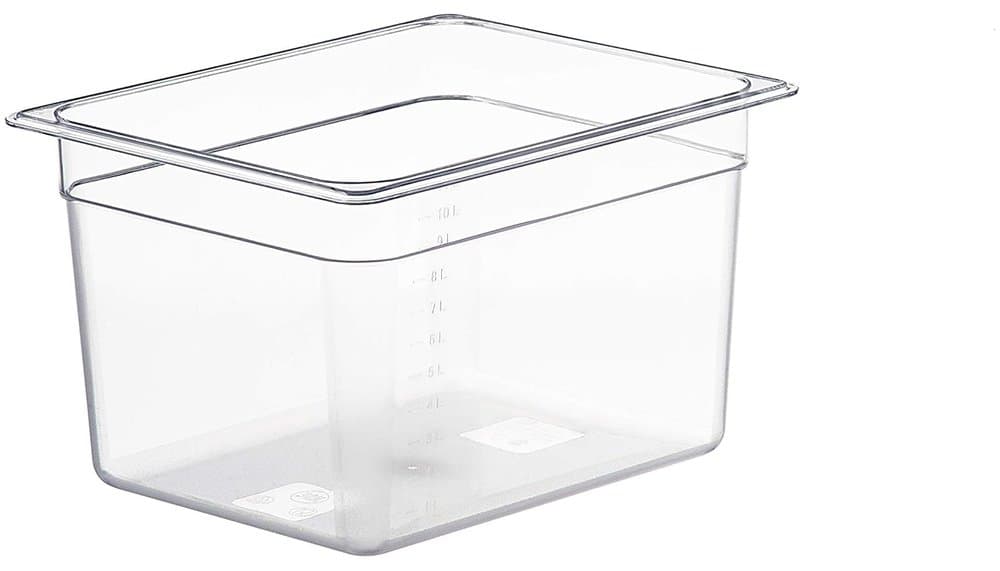
Lipavi C10 11.3 Liter Vacuum Container Review & Test
LIPAVI C10 sous-vide container review: analyzing its energy efficiency, thermal stability & ease of use for precision cooking.
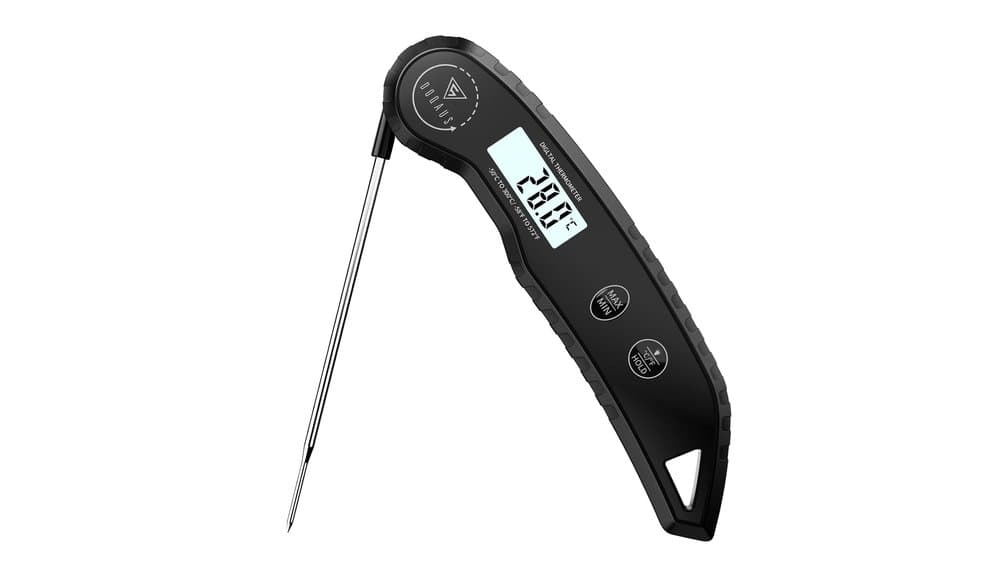
DOQAUS Instant Read Dial Thermometer Review
Master temperature for perfect cooking. Dial thermometer for instant, reliable readings on steak, syrup, ovens. Essential precision tool.
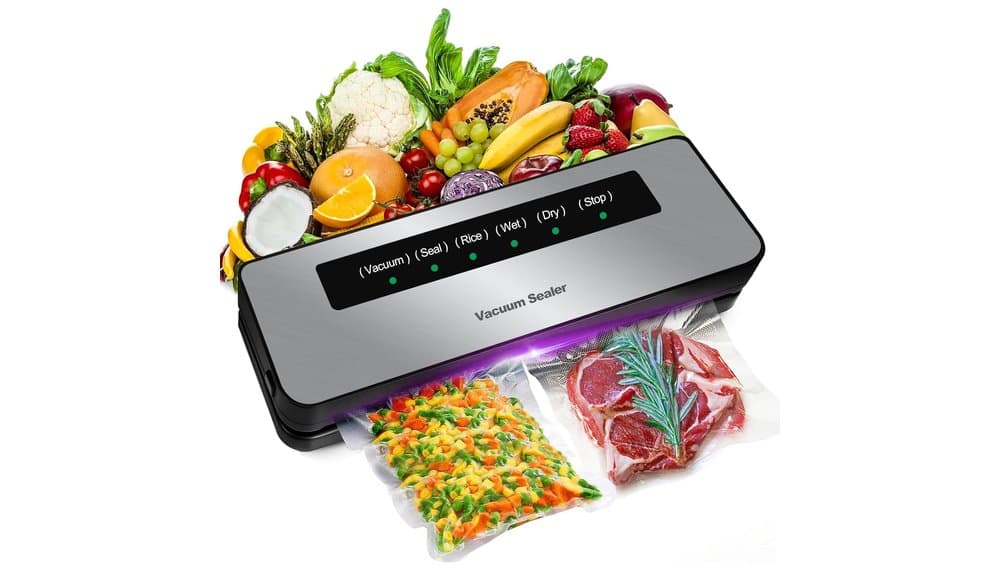
Dictien CF-001A 6-in-1 Sous Vide Machine Review
Ensure perfect sous-vide with the versatile Dictien CF-001A 6-in-1 vacuum sealer for both dry and moist foods. A comprehensive review.
Guides you might like
Bell Jar Vacuum Sealer Buying Guide
Upgrade to a chamber vacuum sealer for professional sous-vide results at home. Perfect for liquids and flawless, long-lasting seals.
Best Beginner Sous Vide Kit
Find the perfect sous-vide starter kit on a budget. Learn the three essential features to look for to cook your first perfect steak without the headache.

Best Vacuum Bags
Choose the right vacuum sealer bags for perfect results. Learn key specs like heat resistance, thickness, and barriers to avoid culinary disasters.