MLZTINGR Wifi Thermometer Hygrometer Review & Test
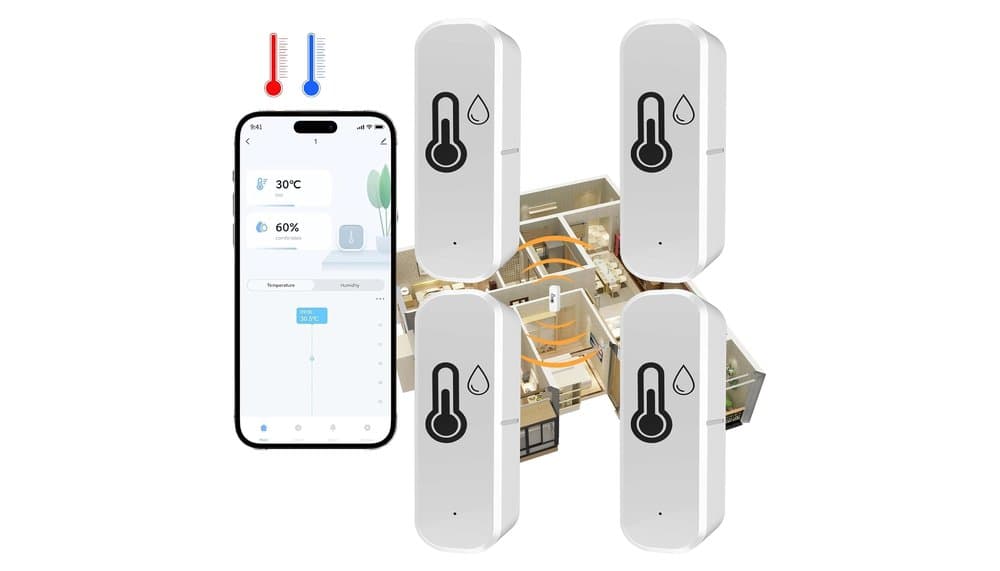
Introduction: A Connected Sensor for Precision Cooking?
In the world of precision cooking, whether it's sous-vide, controlled fermentation, or curing charcuterie, environmental monitoring is an often underestimated parameter. Ambient temperature and relative humidity can influence cooking times, texture, and food safety. The MLZTINGR Wifi Thermometer Hygrometer presents itself as an economical solution for remotely monitoring these variables. But in a field where the devil is in the details – one degree too many, one percent less humidity – can we trust a pack of four low-cost connected sensors? We analyze this product from the demanding perspective of precision cooking, decoding its specifications, ecosystem, and user feedback to determine if it can find its place between a high-fidelity immersion circulator and a perfect vacuum.
Strengths and Weaknesses: The Quick Assessment
Strengths
- Expanded Monitoring Network: The inclusion of four sensors in the pack allows for monitoring multiple zones simultaneously (e.g., wine cellar, pantry, fermentation chamber, refrigeration cell).
- Connectivity and Automation: Integration with the Smart Life/Tuya apps and assistants like Google Home and Alexa enables the creation of scenarios (e.g., turning on a dehumidifier if the level exceeds a threshold).
- Data History and Export: The app promises trend tracking and one-year data export, useful for auditing a drying or fermentation process over several weeks.
- Very low entry price per sensor.
Weaknesses
- Limited Precision for Professional Use: A tolerance of ±1°C and ±5% RH is acceptable for general domestic use, but becomes borderline for precision applications like cheese aging or charcuterie drying.
- Problematic Network Reliability: User feedback overwhelmingly points to random WiFi disconnections and significant latency in data updates, making "real-time" monitoring illusory.
- Uncertain Build Quality and Durability: Reports mention sensors ceasing to function after a few days or weeks, and plastic deformation due to heat.
- Erratic App Compatibility: The promise of compatibility with Tuya/Smart Life is not always kept, forcing some users towards less stable third-party apps (Cozylife).
Detailed Analysis: Performance Under the Magnifying Glass of Precision
Accuracy and Stability: Specs on Paper vs. Reality
On paper, the MLZTINGR claims an accuracy of ±1°C and ±5% relative humidity. For a sous-vide circulator whose stability is often ±0.1°C, this margin of error is huge. This does not disqualify the sensor, but clearly defines its role: it is a tool for overall environmental monitoring, not a measuring instrument to calibrate your equipment.
Based on user feedback, this theoretical accuracy is also questionable. One tester noted a significant discrepancy (nearly 20% RH) between the sensor's reading and that of a quality dehumidifier. For sous-vide cooking, such variance in ambient temperature is not critical for the cooking itself (confined to the water bath), but it can be if you use the sensor to monitor the temperature of a room where you cool food before vacuum sealing it, for example.
The question of long-term stability is crucial for long cooks (24h+). Reviews are alarming: several users report that units disconnect from WiFi after 10 to 24 hours, requiring a manual reset (battery removal). This connection instability makes it unsuitable for reliable long-duration monitoring without human intervention, a deal-breaking point for fermentation or drying projects spanning days or weeks.
WiFi Connectivity and Application Ecosystem: A Major Pain Point
This is the product's Achilles' heel. While WiFi connectivity is its main selling point, it turns out to be its greatest weakness. The sensor only works on 2.4GHz, which is standard but requires a stable network.
Testers and customers highlight three recurring problems:
- Frequent disconnections even near the router.
- Update latency potentially reaching several hours, as noted by a user who sees data "10 hours delayed." The promise of "real-time tracking" is therefore not kept.
- App compatibility issues. Although sold as compatible with Smart Life/Tuya, many buyers must use the "Cozylife" app, perceived as less reliable and less intuitive.
Integration with voice assistants and the creation of automations (turning on a fan if T>X) are theoretically possible, but their reliability is undermined by the intermittent connection of the sensors themselves.
Build, Design, and Battery Life
The sensor is described as very compact and lightweight (40g). Its minimalist design is an asset for maximum discretion. However, the perceived quality is judged as basic. The price-to-quality ratio is reflected in the plastic materials, whose heat resistance is questioned (one user reports deformation).
Battery life depends on standard AAA batteries (not included). No feedback indicates excessive consumption, suggesting the electronics are likely quite efficient, but frequent disconnections and resets can, conversely, drain batteries prematurely.
Usefulness in a Precision Cooking Workflow
For a beginner looking to roughly monitor their kitchen environment or a small cellar, the pack of four sensors offers interesting functionality at a low cost. It can give an idea of variations.
For the experienced enthusiast or professional, the limitations are too significant. The uncertain accuracy, disastrous network reliability, and inability to rely on the device for multi-day monitoring relegate it to gadget status. It cannot in any way replace dedicated probes and data loggers that are calibrated and offer true connection stability (often via protocols like long-range Bluetooth or dedicated antennas).
Technical Specifications
| Feature | MLZTINGR Specification |
|---|---|
| Product Name | MLZTINGR Wifi Thermometer Hygrometer |
| Number of Sensors | 4 |
| Temperature Range | -10°C to 60°C |
| Temperature Accuracy | ±1°C |
| Humidity Range | 10% to 100% RH |
| Humidity Accuracy | ±5% RH |
| Connectivity | WiFi 2.4GHz only |
| Compatible Apps | Smart Life, Tuya (variable experience), Cozylife |
| Voice Assistants | Google Home, Amazon Alexa |
| Power Supply | 2x AAA batteries per sensor (not included) |
| Data Storage | History with export (app promise) |
| Alerts | Push notifications via the app |
| Dimensions (HxWxD) | 27 x 2.5 x 2.5 cm (per sensor) |
What Users Say: A Synthesis of Feedback
Analysis of customer reviews (especially on marketplaces) reveals a clear polarization and clear trends that corroborate the technical analysis.
Recurring positive points revolve around the simplicity of initial setup (once the correct method is found) and the attractive price for the number of sensors. Satisfied users appreciate the basic functionality for simple, non-critical use.
Negative points are much more frequent and specific:
- Faulty Network Reliability: This is the number one complaint. "Signal loss after 10 or 20h," "data 10 hours delayed," "disconnects very often" are recurring phrases. The connection is not stable.
- App Compatibility Problems: Many buyers are forced to use the "Cozylife" app instead of Smart Life/Tuya, creating confusion and a degraded user experience.
- Durability and Quality: Reports of early failures ("3 probes are useless," "stops working properly after 24h") and physical deformation suggest minimal quality control and low-end components.
- Contested Accuracy: At least one user noted a significant discrepancy in humidity measurement compared to another device, casting doubt on the units' metrological reliability.
The overall mixed score (3.2/5) perfectly reflects this divide: a good idea on paper, marred by insufficient software execution and hardware reliability.
Conclusion: A Connected Gadget, Not a Precision Tool
The MLZTINGR Wifi Thermometer Hygrometer embodies the promises and pitfalls of low-cost connected devices. Its offering – four sensors for connected environmental monitoring – is enticing on paper, especially for the curious cook wanting an overview of their cellar or pantry conditions.
However, when applying the strict criteria of precision cooking and preservation, it fails on fundamental points. The advertised accuracy is just at the limit of acceptability, and most importantly, its network reliability is catastrophic according to a majority of feedback. A device that randomly disconnects and displays data several hours late has no place in a process where continuous monitoring is essential.
Our verdict is clear: this product can be considered a tech toy for non-critical domestic monitoring. For a beginner who simply wants to visualize general temperature trends at home, with no specific culinary stakes, it will do. On the other hand, for any enthusiast of precision cooking, fermentation, or home charcuterie, investing in a single but quality environmental probe that is reliable and precisely calibrated will be a much wiser and likely more economical choice in the long run. The MLZTINGR, in its current state, does not deserve the necessary trust for these applications.
100% free and independent — All our articles are written independently, without any sponsorship. We may earn a commission on purchases made through our links, at no extra cost to you.
Articles you might like
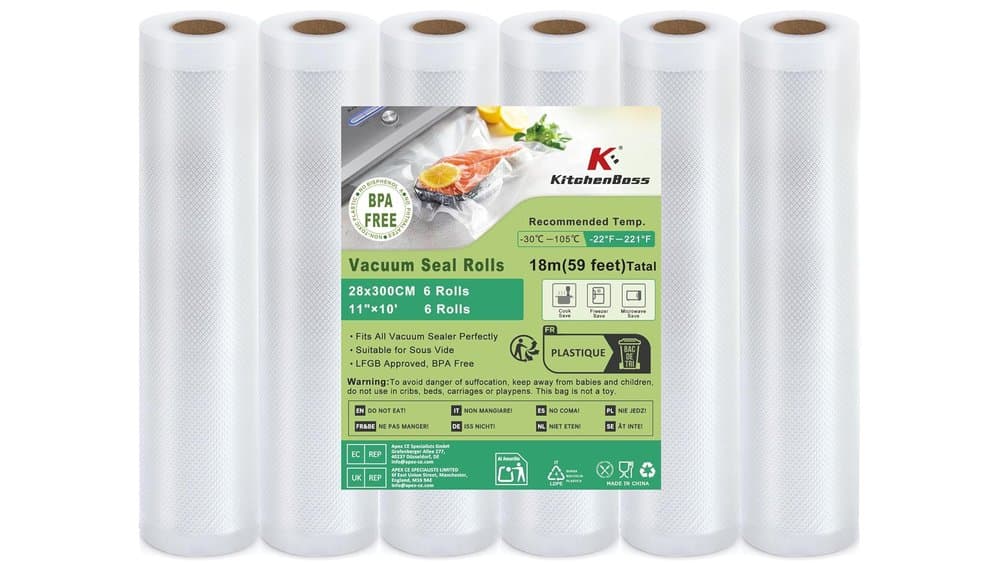
KitchenBoss Food Vacuum Bag Roll Review & Test
KitchenBoss vacuum sealing bags for sous-vide: analyze specs, compare performance, and determine value for precision cooking storage and preparation.
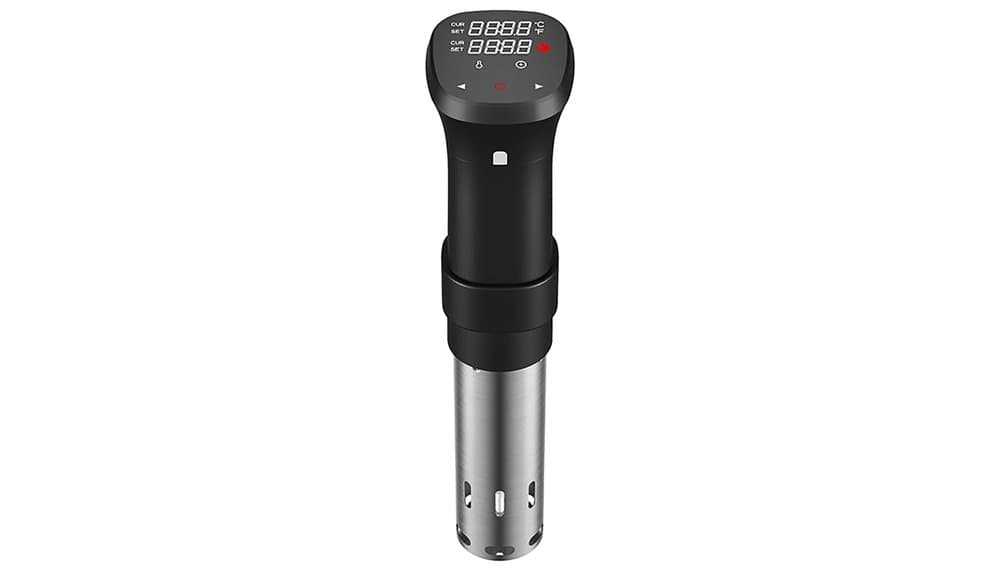
Fityou HU-XI-53 Immersion Circulator Sous Vide Cooker Review
Fityou HU-XI-53 Immersion Circulator review: A high-performing, accessible sous vide cooker with 1100W power, precise 0.1°C accuracy, and a 25-95°C range.
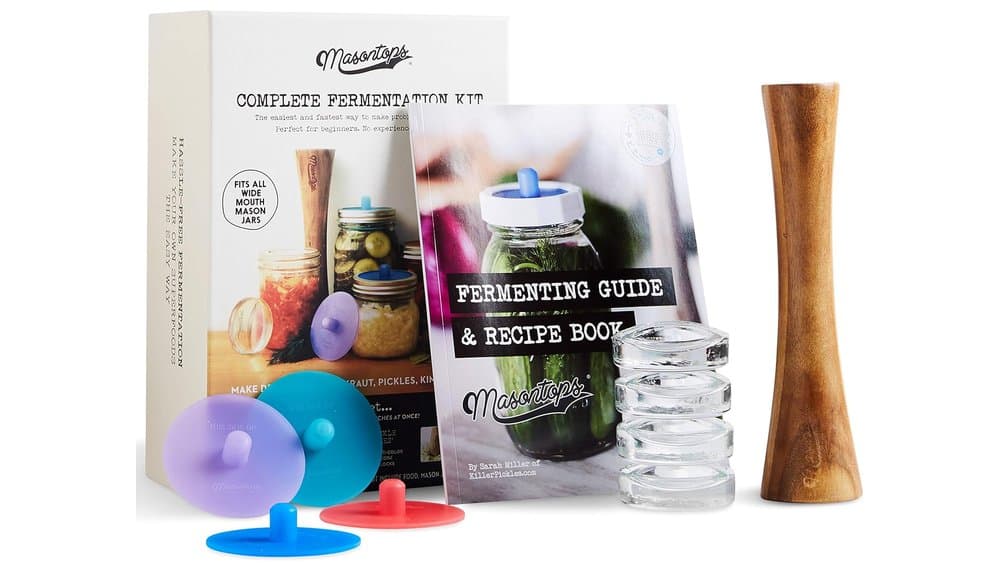
Masontops Complete Fermentation Jar Kit Review & Test
Review: Masontops Kit transforms Mason jars into precise fermentation tools for mastering the microbial environment.
Guides you might like
Bell Jar Vacuum Sealer Buying Guide
Upgrade to a chamber vacuum sealer for professional sous-vide results at home. Perfect for liquids and flawless, long-lasting seals.
Best Beginner Sous Vide Kit
Find the perfect sous-vide starter kit on a budget. Learn the three essential features to look for to cook your first perfect steak without the headache.
Best Vacuum Bags
Choose the right vacuum sealer bags for perfect results. Learn key specs like heat resistance, thickness, and barriers to avoid culinary disasters.