Tilswall Non-Contact Digital Laser Thermometer Review & Test

Introduction: An Infrared Thermometer in a Precision Kitchen
In the universe of precision cooking, where a single degree can mean the difference between a perfect steak and a failed one, temperature measurement is not a minor detail. It is the foundation. While our sous vide circulators manage the water bath temperature with remarkable fidelity, a question often remains: what is the actual temperature of my cast iron skillet's surface before searing my beef tenderloin? How hot is my pizza oven really? It is in this gap – the instant, non-contact measurement of hot surfaces – that the Tilswall Non-Contact Digital Laser Infrared Thermometer seeks to establish itself.
This article analyzes this tool not as a general-purpose gadget, but through the demanding lens of precision cooking. We will dissect its specifications, confront its promises with feedback from the user and expert community, and determine whether it deserves a place next to your circulator and butane torch.
Strengths and Weaknesses: A Clear Summary
Strengths
- Versatility and extended measurement range: A range from -50°C to 600°C covers almost all culinary scenarios, from the freezer to a charcoal oven.
- Speed and ease of use: A reading in less than half a second and a point-and-shoot design make it immediately operational.
- Adjustable emissivity: A critical function for accurate measurements on different surfaces (steel, cast iron, oil, ceramic).
- Appreciable bonus: The inclusion of a traditional contact thermometer probe makes it a relevant two-in-one kit.
- Perceived excellent value for money: The community considers it a tool offering many features for a moderate investment.
Weaknesses
- Relative accuracy: An announced accuracy of ±1.5% can mean a margin of error of several degrees at high temperature, which is significant in pastry or for precise cooking temperatures.
- Fundamental limitation: It measures surface temperature, not the internal temperature of food. Its usefulness is therefore limited to specific applications.
- No connectivity: No Wi-Fi or Bluetooth option to log data or track temperature curves, unlike some modern probe thermometers.
- Long-term durability uncertain: Feedback lacks the perspective to assess its robustness over several years of intensive use in professional or regular home kitchens.
Detailed Analysis from the Perspective of Precision Cooking
Accuracy and Stability: What Are We Really Measuring?
On paper, the specs announce an accuracy of ±1.5%. This means that when measuring a plate at 200°C, the display may fluctuate between 197°C and 203°C. For checking frying oil temperature or a griddle surface, this tolerance is often acceptable. However, for a chocolatier monitoring precise tempering or a BBQ enthusiast trying to maintain an indirect cooking zone at exactly 110°C, this margin becomes more problematic. Unlike a sous vide circulator where stability is the watchword over 24 or 48 hours, here it is an instant, one-off measurement. Its "stability" depends on the constancy of your target and your ability to aim well.
The major asset, often overlooked by low-end models, is the adjustable emissivity (from 0.1 to 1.0). Emissivity is a surface's ability to emit infrared radiation. A black cast iron skillet (high emissivity, ~0.95) will be measured much more accurately than a polished stainless steel plate (low emissivity, ~0.1). Being able to adjust this parameter is what distinguishes a serious tool from an approximate gadget for varied uses in the kitchen.
Practical Use Cases in Precision Cooking
For the sous vide and precision cooking enthusiast, the Tilswall finds its relevance in very specific scenarios:
- Preheating searing surfaces: Checking that your cast iron skillet, steel plate, or BBQ grill really reaches the 250-300°C required for a perfect, quick sear.
- Finishing equipment control: Ensuring your culinary torch head (butane or propane) heats to the optimal temperature, or checking the surface temperature of a heating element.
- Quick calibration: Providing an (uncertified) indication of the temperature displayed by your domestic oven, smoker, or pizza oven.
- Safety and control: Checking the temperature of a container, a work surface, or ensuring equipment (like a circulator motor) does not overheat during a long cook.
It is crucial to understand what it does not do: it does not in any way replace a contact temperature probe for measuring the core temperature of a piece of meat. It is a complementary tool, not a substitute.
Build Quality and Ergonomics
Based on user feedback, the device gives an impression of adequate solidity for home use. It is described as lightweight and ergonomic, feeling good in the hand. The backlit LCD screen is unanimously praised for its readability, even in a dark garage or outdoors in the evening. The design is simple: one button to aim and measure, and navigation buttons to adjust settings. The community notes that the aiming laser effectively helps target the precise area to measure, an important point knowing that the thermometer measures not a point, but the average temperature of an area (defined by the 12:1 distance-to-spot ratio – at 1.2 meters, it measures an area of about 10 cm in diameter).
Advanced Features (or their Absence)
Here, the analysis is clear-cut against the standards of connected cooking. The Tilswall is a completely autonomous and local tool. No Wi-Fi, no dedicated application, no measurement history, no smartphone alerts. It's a return to the basics. For some, this is a major flaw in a world of connected objects. For others, especially professionals in noisy kitchens or purists who want a simple, reliable tool without depending on an app, it's a strength. The integrated temperature alarm function (visual and audible) nonetheless allows setting low and high thresholds, useful for monitoring the cooling of a preparation or the preheating of an oven.
Technical Specifications
| Characteristic | Tilswall Specification |
|---|---|
| Measurement Range | -50°C to 600°C (-58°F to 1112°F) |
| Announced Accuracy | ±1.5% of reading |
| Response Time | < 0.5 seconds |
| Distance-to-Spot Ratio | 12:1 |
| Emissivity | Adjustable from 0.1 to 1.00 |
| Display | Digital LCD screen with backlight |
| Power Supply | 2 AAA batteries (included) |
| Main Functions | Aiming laser, high/low alarm, °C/°F switch, auto-off |
| Included Accessory | Contact thermometer probe (-50°C to 300°C) |
| Connectivity | None (measurement infrared only) |
What Users and Experts Say: A Synthesis
The synthesis of over 5,700 global reviews (average rating 4.4/5) and expert web analyses paints a clear consensus.
The recurring praise revolves around ease of use ("easy to use", "practical", "instant reading"), good value for money ("works perfectly for the price", "good tool"), and the appreciated versatility for cooking and DIY. The inclusion of the probe is often cited as a plus. Testers emphasize that the device seems "solid" and "accurate" for common household uses, like checking oven, pan, or smoker temperature.
The reservations and criticisms also follow identifiable trends. Some users note, as the web context indicates, that its accuracy is "acceptable for basic use" but can vary, placing it in the serious entry-level tool category, but not professional. The most important limitation, emphasized by both the manual and experts, is its total inadequacy for measuring body temperature. It should not be purchased for this purpose. Finally, a few isolated reports mention laser alignment defects or accuracy variations, but often note that the brand's customer service was responsive in replacing the device.
The general opinion positions it as an "excellent infrared thermometer, reliable and practical for many" domestic applications, a tool that "gets the job done" very satisfactorily for its price, without claiming metrological excellence.
Conclusion: A Useful Companion, But with an Awareness of its Limits
The Tilswall Non-Contact Digital Laser Infrared Thermometer emerges from this analysis as a very valuable and recommendable tool to complement a precision cooking arsenal, provided one clearly understands its role.
For the beginner stepping out of the world of basic thermometers, it's a significant upgrade. It opens the door to a better understanding of surface temperatures, makes post-sous vide searing more controlled, and allows exploring techniques like pizza oven cooking with more confidence. The kit with the probe is a real plus to get started.
For the experienced enthusiast or professional, it is a tool for quick diagnostics and practical control. It will not replace a high-end contact probe surface thermometer for absolute accuracy, nor a connected monitoring system for long cooks. However, its speed, emissivity adjustment, and versatility make it a very useful "heat detective" on the deck, capable of providing an instant answer when you need to check a hot spot, the status of equipment, or the temperature of a surface before placing food on it.
Its lack of connectivity can be seen as a weakness or a liberation. Its accuracy, while non-clinical, is sufficient for the vast majority of culinary applications. Ultimately, it is a smart investment that fills a specific need in the modern cook's arsenal: measuring, without touching, and in an instant, the invisible energy of heat.
100% free and independent — All our articles are written independently, without any sponsorship. We may earn a commission on purchases made through our links, at no extra cost to you.
Articles you might like
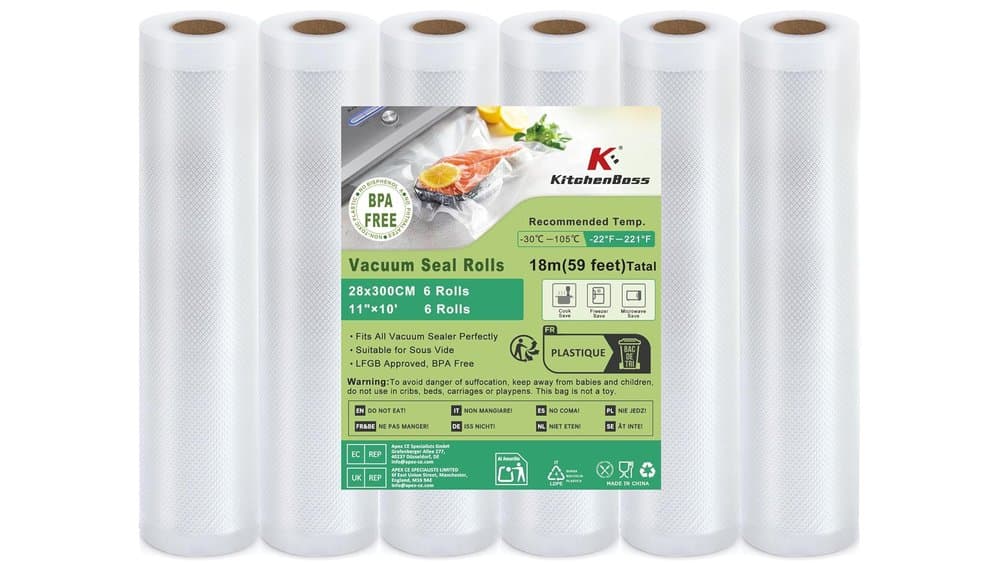
KitchenBoss Food Vacuum Bag Roll Review & Test
KitchenBoss vacuum sealing bags for sous-vide: analyze specs, compare performance, and determine value for precision cooking storage and preparation.
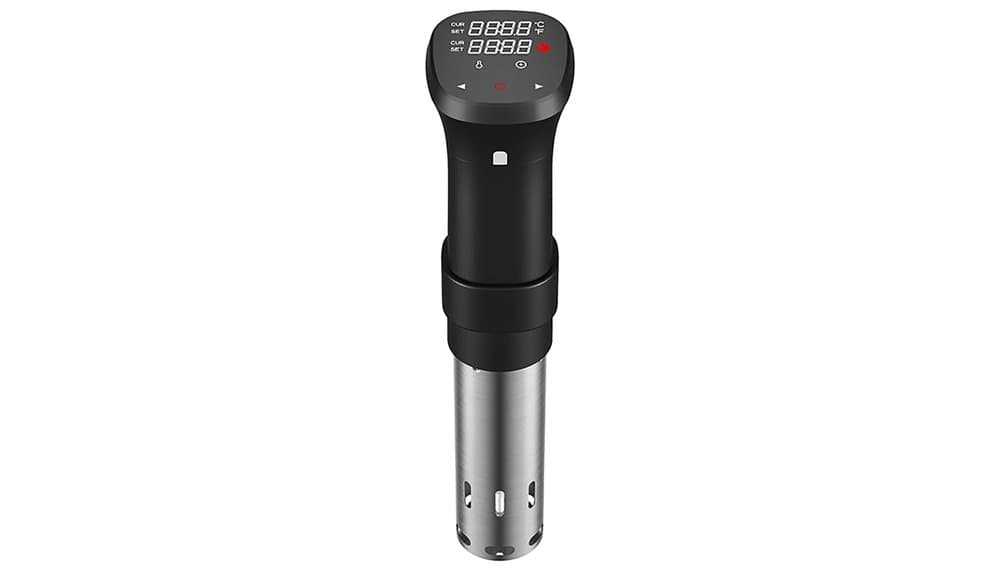
Fityou HU-XI-53 Immersion Circulator Sous Vide Cooker Review
Fityou HU-XI-53 Immersion Circulator review: A high-performing, accessible sous vide cooker with 1100W power, precise 0.1°C accuracy, and a 25-95°C range.
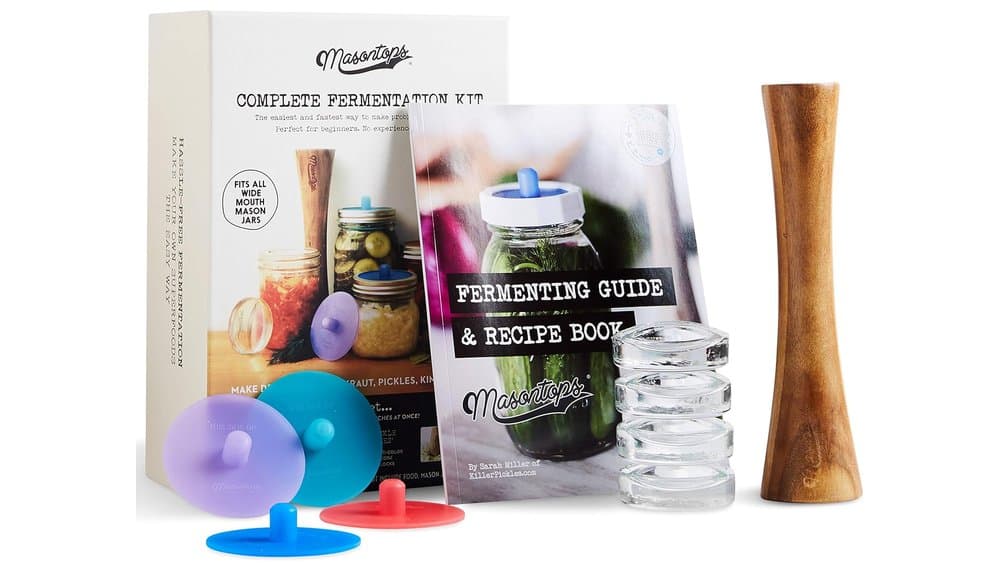
Masontops Complete Fermentation Jar Kit Review & Test
Review: Masontops Kit transforms Mason jars into precise fermentation tools for mastering the microbial environment.
Guides you might like
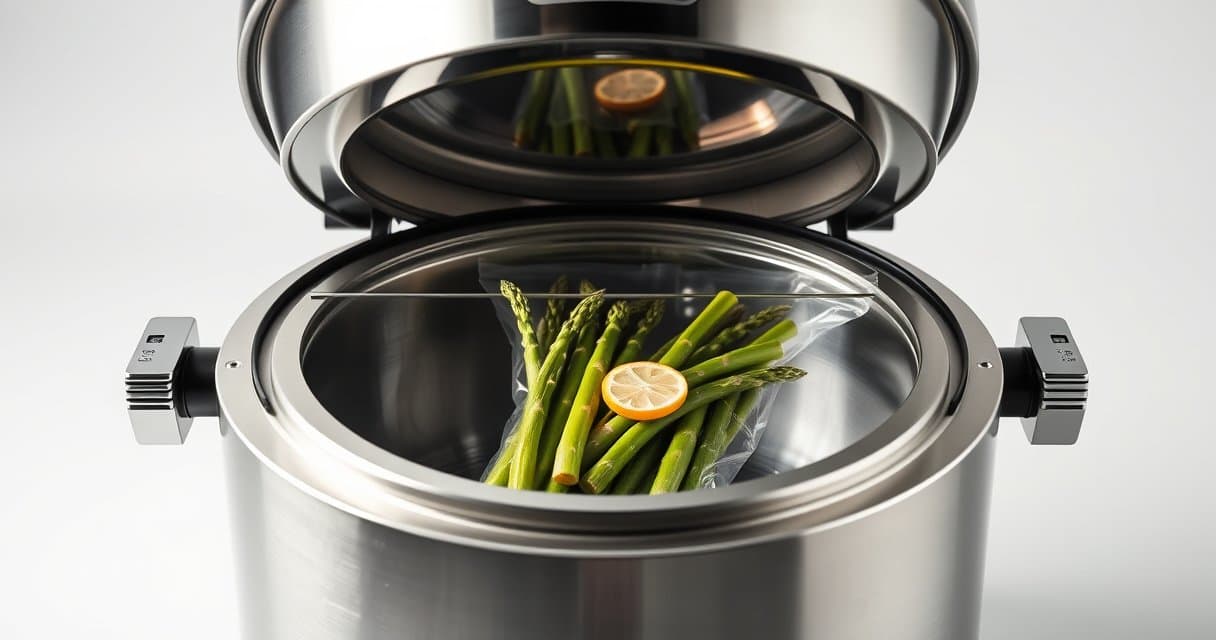
Bell Jar Vacuum Sealer Buying Guide
Upgrade to a chamber vacuum sealer for professional sous-vide results at home. Perfect for liquids and flawless, long-lasting seals.
Best Beginner Sous Vide Kit
Find the perfect sous-vide starter kit on a budget. Learn the three essential features to look for to cook your first perfect steak without the headache.
Best Vacuum Bags
Choose the right vacuum sealer bags for perfect results. Learn key specs like heat resistance, thickness, and barriers to avoid culinary disasters.