Vihoom Food Vacuum Rolls Review & Test
Introduction: The Key Point of Your Vacuum-Sealing Chain
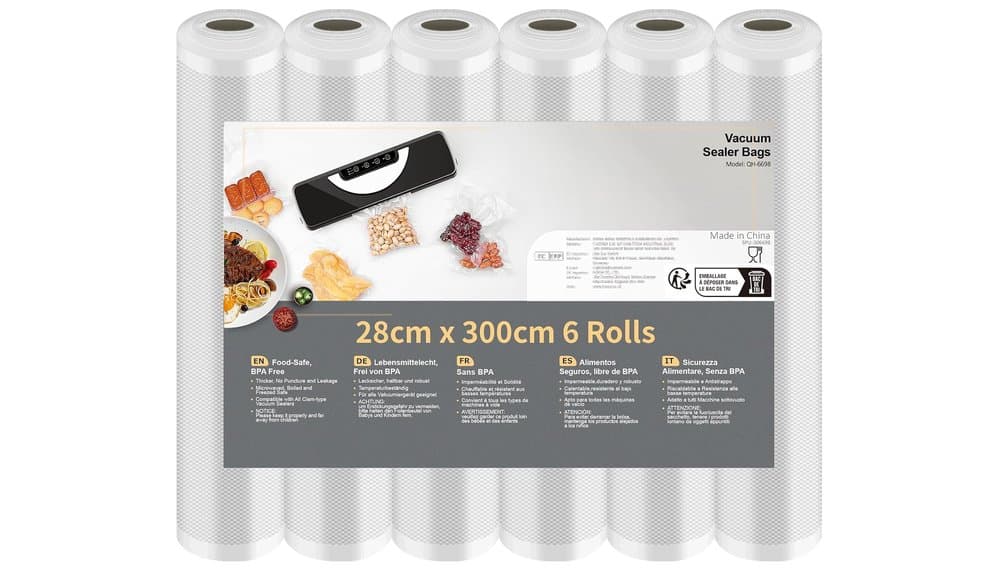
In the world of sous-vide cooking, the focus often lands on the precision of the circulator, thermal stability, and finishing tools. Yet, a fundamental element, frequently underestimated, links all this equipment together: the vacuum bag itself. Poor-quality film can ruin a long cook, compromise food safety, or make the simple vacuum-sealing process frustrating. Today, we take a detailed look at the Vihoom Food Vacuum Rolls, a product presented as an economical and versatile solution for both amateurs and experts. Are these rolls of film the weak link or the robust partner in your sous-vide setup? That is what we will determine by cross-referencing technical specifications and feedback from a broad user community.
Key Strengths and Weaknesses to Remember
Before diving into the details, here is an overview of the main strengths and limitations of the Vihoom Food Vacuum Rolls, based on the analysis of available data.
Strengths
- High Versatility and Compatibility: Compatible with most vacuum-sealing machines on the market, from entry-level to more professional models.
- Broad Temperature Range: The PA+PE composition and advertised resistance of -20°C to 110°C cover all needs, from freezer to sous-vide water bath.
- Economy and No Waste: The roll format allows cutting custom-sized bags, perfectly adapted to portion sizes.
- BPA-Free Material: An essential point for food use, especially during long cooks where contact with heat is prolonged.
- Perceived Excellent Value for Money: A majority of user reviews praise this point, considering them a very competitive alternative to premium brands.
Weaknesses
- Inconsistency in Manufacturing Quality: Some batches seem to have defects, notably excessive embossing or glue residue, impacting performance.
- Recurring Sealing Issues: Several users report seals failing or difficulty achieving a perfect vacuum, especially with moist foods.
- Fragility upon Reuse: While the film is presented as reusable, feedback indicates it does not withstand repeated handling well.
- Dependence on Machine Quality: Optimal performance seems conditional on using a good-quality vacuum-sealing machine, capable of compensating for potential film defects.
Detailed Product Analysis
Technical Specifications and Compatibility
The first element of interest is the technical datasheet. Here is a summary of the key data:
| Characteristic | Vihoom Specification |
|---|---|
| Format | 6 rolls of 28 cm x 300 cm (18 linear meters total) |
| Material | PA (Nylon) + PE (Polyethylene) - Food Grade |
| Thickness | 430-470 μm (microns) |
| Temperature Range | -20°C to 110°C |
| BPA-Free | Yes |
| Machine Compatibility | All external seal machines (not designed for chamber sealers) |
| Special Features | Embossed surface on one side for air evacuation, reusable, microwave-safe |
On paper, the specifications are solid. The PA+PE combination is classic and effective: nylon provides puncture resistance and heat stability, while polyethylene enables effective sealing. The range of -20°C to 110°C broadly covers all sous-vide cooking, even the longest and hottest (like confits at 85-90°C). The thickness of over 400 μm is suitable for domestic and semi-professional use, offering good mechanical resistance.
Performance in Sous-Vide Cooking: Between Theory and Practice
This is where analyzing user feedback becomes crucial. Theory meets the reality of the kitchen.
Durability and Reliability in Long Cooks: The advertised heat resistance is generally confirmed by users for standard cooks. However, for cooks of 24 hours or more, the community highlights the critical importance of a perfect seal and flawless film. The few negative reviews pointing to leaks or failing seals make these rolls less recommendable for extremely long projects or for foods with sharp bones without additional protection. The thickness, while adequate, is not exceptional and can be vulnerable to friction in a full water bath over very long durations.
Sealing and Moisture Management: This is the major point of divergence. The embossed side is designed to facilitate air evacuation. When it works well, it is effective. But several independent testers and customer reviews report that this embossing can be too deep or irregular, creating micro-channels that prevent a perfect vacuum. This is particularly problematic with moist or liquid foods. A vacuum sealer equipped with a "moist" or "liquid" mode (with a pause before sealing) then becomes almost essential to get good results with these rolls. Seal strength therefore depends on a performing duo: a powerful machine and a good-quality roll.
Compatibility with Machines: They are indeed compatible with the vast majority of external seal machines (FoodSaver and others). However, experience shows that entry-level machines, which are less powerful or less precise in controlling the sealing cycle, may have more difficulty achieving consistent results with this film, especially if the batch has irregularities.
Manufacturing Quality and User Experience
The perceived quality is erratic, which is common for affordable consumer products.
Consistency in Production: Reviews are polarized. A majority of users, like "ChristinePOLLET" or "Vlad", find them "perfect" and "effective", with excellent value for money. Others, like "Emanuel", describe severe quality control issues: glue residue on the film, poorly wound and folded rolls, and excessive embossing rendering the product "unusable". This suggests possible inconsistency between different manufacturing batches.
Ease of Use: The roll format and the ability for free cutting are unanimously praised as a major advantage for reducing waste and adapting to all food sizes. Reuse is possible, but the community notes that the film becomes more fragile after several uses, which is normal for this type of material. One should not expect infinite durability.
What Users Say: A Summary of Feedback
The analysis of nearly 1500 global reviews (average rating of 4.2/5) and in-depth reading of detailed comments reveal clear trends.
Recurring Positive Points:
- Value for Money: This is the leitmotif. Many buyers find them "very reasonable", "economical", and "great for the price".
- Versatility: They are used successfully for freezing, preservation, and sous-vide cooking of meats, vegetables, cheeses, and various preparations.
- Compatibility: They work with many machine brands, a point often emphasized.
- Seal Perceived as Strong: When the process works, users like "PIERRE MERIEUX" note a "strong and resistant seal over time and in the cold".
Negative Points and Warnings:
- Batch Quality Problems: Several reviews report concrete defects: poorly wound film, presence of glue, problematic embossing. This lack of consistency is the main criticism.
- Sealing Difficulties: Phrases like "Not always top" ("terneve") or descriptions of machines unable to create a vacuum due to the embossing recur. It is not systemic, but it is an identifiable risk.
- Poor Performance with Liquids: Unsurprisingly for non-dedicated bags, they are not optimal for very moist foods without a suitable machine.
- Manufacturing Defects on Smaller Sizes: One user ("lecompte") notes that in a multi-width pack, the smaller bags had defects unlike the larger ones.
Conclusion: An Economical Choice, but with a Caveat
The Vihoom Food Vacuum Rolls represent an attractive proposition in the vacuum-sealing consumables market. Their technical specifications, on paper, meet the requirements of sous-vide cooking, notably their broad temperature range and BPA-Free composition.
For the beginner looking to get equipped without breaking the bank, these rolls can be an excellent entry point. They allow experimenting with preservation and sous-vide cooking at lower cost and with flexibility. However, one must be aware that their performance will be closely tied to the quality of the vacuum sealer used and may vary from batch to batch.
For the experienced enthusiast or regular practitioner of long cooks (24h+), the assessment is more nuanced. While the value for money is undeniable, the perceived lack of consistency in quality and potential risks of imperfect sealing make them a choice requiring increased vigilance. It becomes prudent to systematically test the seal with a water test (filling the bag with water and pressing) before entrusting an expensive piece of meat to a two-day cook.
In summary, the Vihoom Food Vacuum Rolls are a valid product for regular but non-critical use, offering very good versatility for those who can occasionally deal with an imperfection. For the most ambitious projects or for those seeking absolute reliability with every use, investing in films from established brands renowned for their quality control may still be the path to peace of mind.
100% free and independent — All our articles are written independently, without any sponsorship. We may earn a commission on purchases made through our links, at no extra cost to you.
Articles you might like
PHOVOLT WiFi Thermometer with Probe Test
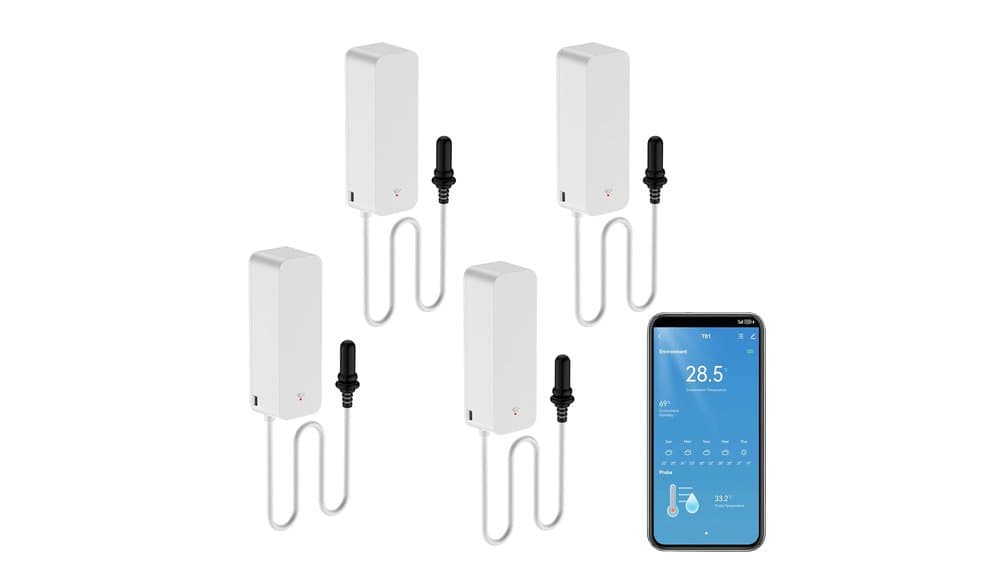
For precise sous-vide & charcuterie, a calibrated core temperature probe is essential to ensure perfect results where it matters most.
KitchenBoss Food Vacuum Bag Roll Review & Test
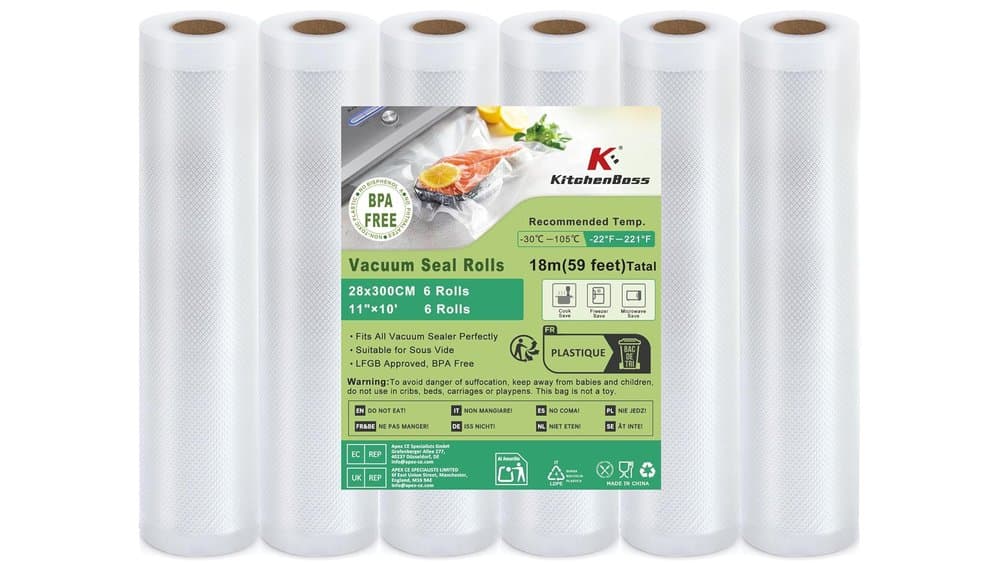
KitchenBoss vacuum sealing bags for sous-vide: analyze specs, compare performance, and determine value for precision cooking storage and preparation.
Fityou HU-XI-53 Immersion Circulator Sous Vide Cooker Review
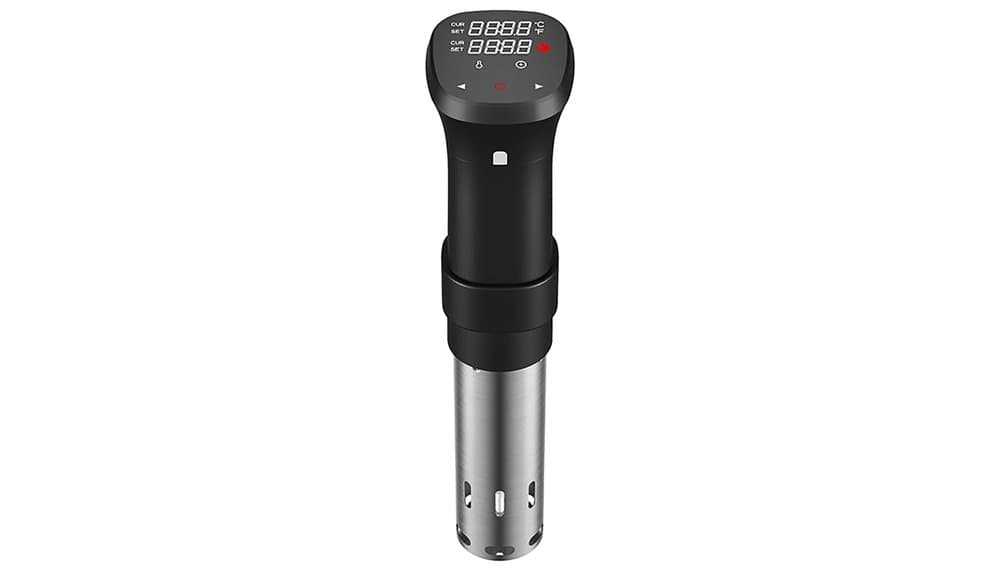
Fityou HU-XI-53 Immersion Circulator review: A high-performing, accessible sous vide cooker with 1100W power, precise 0.1°C accuracy, and a 25-95°C range.
Guides you might like
Bell Jar Vacuum Sealer Buying Guide
Upgrade to a chamber vacuum sealer for professional sous-vide results at home. Perfect for liquids and flawless, long-lasting seals.
Best Beginner Sous Vide Kit
Find the perfect sous-vide starter kit on a budget. Learn the three essential features to look for to cook your first perfect steak without the headache.
Best Vacuum Bags
Choose the right vacuum sealer bags for perfect results. Learn key specs like heat resistance, thickness, and barriers to avoid culinary disasters.