Amazon Basics Vacuum Sealer Bags Test & Review
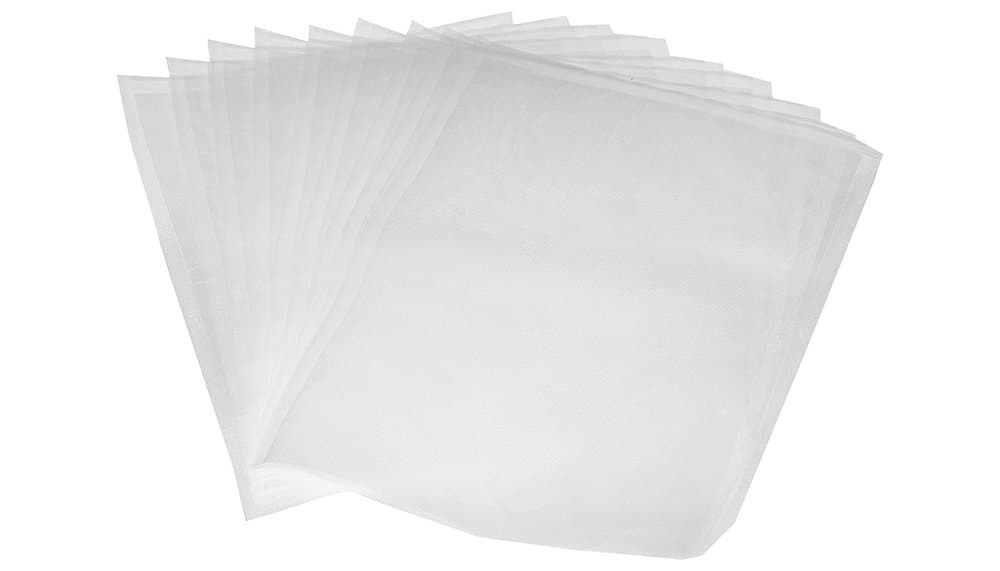
Analysis of Amazon Basics Vacuum Sealer Bags: The Universal Sous Vide Partner?
In precision cooking equipment, the vacuum sealer is only half of the equation. The choice of bags is equally critical for the success of long cooking, food safety, and flavor preservation. The Amazon Basics Vacuum Sealer Bags present themselves as a generic solution, compatible with a wide range of appliances. But how do they perform against the rigorous demands of sous vide cooking? We analyze these bags from the angles of precision, reliability, and user experience, synthesizing community feedback and technical characteristics.
Strengths
- Asserted universal compatibility: The bags are presented as working with an extensive list of brands, from big names like FoodSaver to entry-level models. This makes them a reassuring backup or primary option.
- Versatility and reusability: The BPA-free material is certified for microwave and stovetop boiling, covering the full spectrum of reheating and cooking. The promise of reusability makes them a potentially economical product.
- Perceived value for money: With an overall rating of 4.6/5 from nearly 30,000 reviews, the community overwhelmingly validates the performance/cost ratio, often describing them as "perfect" or "getting the job done."
Weaknesses
- Thickness and long-term resistance unspecified: The specs do not indicate the film thickness (often expressed in "mils"), a key indicator of resistance to tearing and pressure during prolonged cooks (24h+).
- Absence of specific textures: Unlike some high-end bags, they do not seem to offer a textured surface ("channeled") to facilitate air evacuation around moist foods, a plus for marinated meats.
- Guarantee limited to airtightness: Durability through multiple reuse cycles under temperature is not quantified by the manufacturer, leaving this test to user experience.
Detailed Analysis from the Precision Cooking Angle
Construction and Compatibility: The Promise of Universality
The main selling point of these bags is their broad compatibility. According to user feedback, this promise is kept: they work correctly with external suction sealers from various brands, from FoodSaver to economical models like Vexloria. One user even notes that "vacuum sealing works perfectly despite my cheap machine." For a beginner who doesn't want to worry about brands or for a cook owning several machines, this universality is a major asset. The BPA-free plastic construction meets the minimum expected standard for food safety.
Cooking Performance: Study of Airtightness and Heat Resistance
This is the core of our analysis. For sous vide cooking, a bag must above all ensure perfect and durable airtightness. Reviews converge on this point: "Sucks well and stays airtight," "Works perfectly." This airtightness is the foundation for keeping the food in contact with the water and ensuring uniform heat transfer.
The question of heat resistance during long cooks (48 to 72 hours for pulled pork or short ribs) is more nuanced. The manufacturer indicates resistance to boiling water, which widely covers sous vide temperatures (generally between 50°C and 85°C). However, the mechanical resistance of the seal and the plastic at these temperatures for days is not explicitly guaranteed. The community does not report catastrophic failures during long cooks, suggesting correct reliability for standard domestic use. For truly extreme projects (several days), some experts might turn to bags with more detailed mechanical specs.
Moisture Management and Ease of Use
The bags are described as suitable for moist foods. Without a dedicated air evacuation texture, the sealing efficiency will depend greatly on the machine's suction power and the user's technique (like the "suspense method"). This is a point where they show themselves as basic but functional.
The pre-cut size (22x30 cm) is appreciated for its practicality: "We just have to seal the open end, much more practical than cutting it ourselves." This avoids cutting errors and speeds up the process. The possibility of reuse is confirmed by users, with one planning at least 3 uses per bag. This is a non-negligible economic and ecological advantage.
Noise and Design: Secondary but Relevant Criteria
Unlike a machine, a bag is not noisy. However, its flexibility and "drapability" (ability to conform to shapes) influence the experience. Bags that are too stiff can be difficult to handle or store once sealed. The feedback does not mention any problems in this regard, indicating suitable flexibility.
Synthetic Technical Sheet
| Characteristic | Detail for Amazon Basics Vacuum Sealer Bags |
|---|---|
| Format | Pre-cut bags |
| Dimensions | 22 cm (width) x 30 cm (length) |
| Quantity | Pack of 50 bags |
| Material | BPA-free plastic |
| Special Features | Reusable, suitable for microwave and boiling |
| Stated Compatibility | External suction (FoodSaver, Krups, etc.) and chamber machines (broad list provided) |
| Temperature Resistance | Validated for boiling water (implies >100°C) |
What Users Say: A Solid Validation
The synthesis of thousands of reviews paints a very consistent and positive picture of this product.
The recurring praises revolve around three axes:
- Reliability of the seal and airtightness: This is the most frequently cited point. Users note that the seal holds well, even after freezing and thawing.
- Compatibility without issues: Whether with recognized brands or low-budget models, the bags work, eliminating the stress of incompatibility.
- Perceived value for money as excellent: The words "perfect," "as described," "very good" come back in a loop to describe a product that meets expectations without disappointment.
The points of vigilance or criticism are marginal but instructive:
- Some beginners would have appreciated clearer instructions, although this often concerns the kit with the machine, not the bags alone.
- No major negative comments emerge about rupturing during cooking. The few 1-2 star reviews are often related to delivery problems or poorly calibrated expectations, not a technical failure of the product.
Notably, their use extends beyond the kitchen: one detailed review praises their effectiveness for vacuum storage of 3D printer filament, an indirect testimony to their perceived robust airtightness.
Conclusion: A Reliable Companion for Most Scenarios
The Amazon Basics Vacuum Sealer Bags do not claim to be the ultimate, high-tech product for professionals. Their strength lies in their basic and universal reliability.
For the sous vide beginner moving on from water baths and ziplock bags, these bags represent a simple and risk-free upgrade. They offer real airtightness, broad compatibility, and allow familiarization with the technique with confidence. Their pre-cut format is ideal for this learning phase.
For the experienced enthusiast, they constitute an excellent stock or backup option. Their performance in standard and even long cooking (up to 24-48h) is validated by the community. If you regularly undertake multi-day cooks on bony cuts or seek optimal air evacuation textures, you might turn to specialized bags. But for 90% of domestic uses – from coffee preservation to a 12-hour medium-rare steak or canning garden vegetables – these bags fulfill their contract with remarkably consistent efficiency.
In summary, it's a product that does exactly what is asked of it, without frills or notable failure. In a domain where an airtightness failure can ruin a dish and a long cook, this predictability is in itself a professional quality.
100% free and independent — All our articles are written independently, without any sponsorship. We may earn a commission on purchases made through our links, at no extra cost to you.
Articles you might like
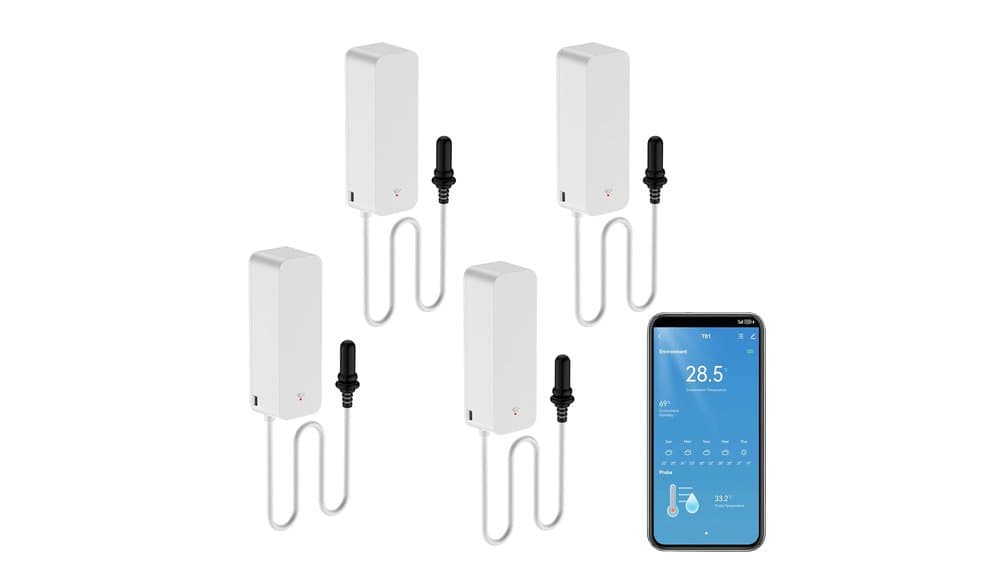
PHOVOLT WiFi Thermometer with Probe Test
For precise sous-vide & charcuterie, a calibrated core temperature probe is essential to ensure perfect results where it matters most.
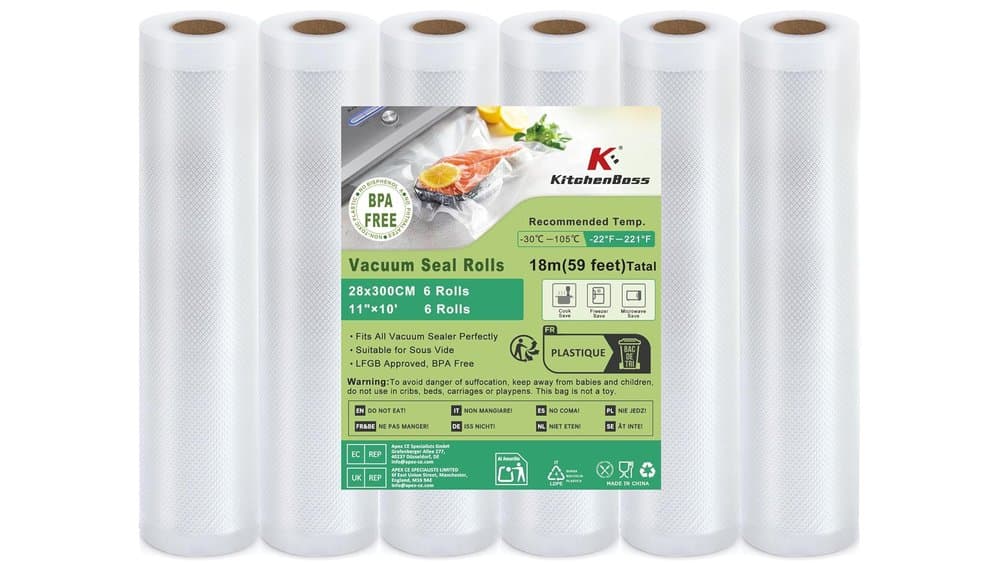
KitchenBoss Food Vacuum Bag Roll Review & Test
KitchenBoss vacuum sealing bags for sous-vide: analyze specs, compare performance, and determine value for precision cooking storage and preparation.
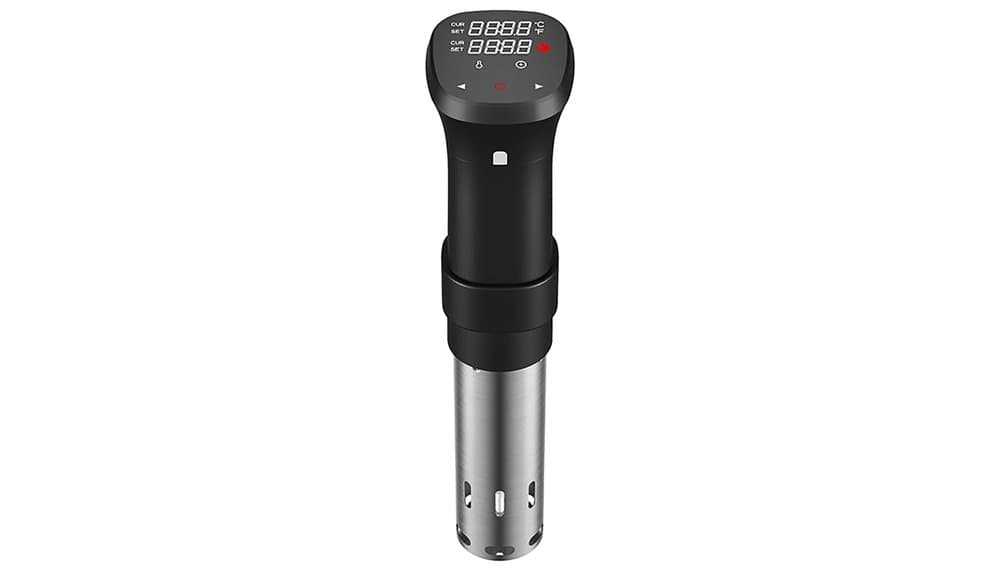
Fityou HU-XI-53 Immersion Circulator Sous Vide Cooker Review
Fityou HU-XI-53 Immersion Circulator review: A high-performing, accessible sous vide cooker with 1100W power, precise 0.1°C accuracy, and a 25-95°C range.
Guides you might like
Bell Jar Vacuum Sealer Buying Guide
Upgrade to a chamber vacuum sealer for professional sous-vide results at home. Perfect for liquids and flawless, long-lasting seals.
Best Beginner Sous Vide Kit
Find the perfect sous-vide starter kit on a budget. Learn the three essential features to look for to cook your first perfect steak without the headache.
Best Vacuum Bags
Choose the right vacuum sealer bags for perfect results. Learn key specs like heat resistance, thickness, and barriers to avoid culinary disasters.