Dongker 73210 Rechargeable Food Vacuum Sealer Test
Introduction
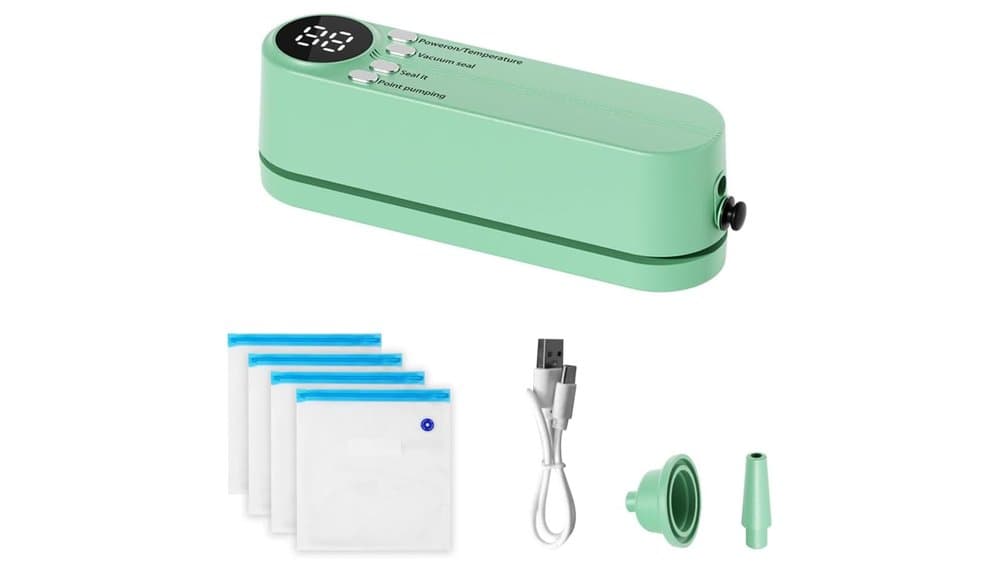
In the world of sous-vide cooking, mastering the food's environment begins with perfect packaging. The vacuum sealer is not a mere accessory, but the first line of defense against oxidation and contamination, ensuring that flavors, textures, and food safety are preserved throughout the long cooking process. The Dongker 73210 Rechargeable Food Vacuum Sealer Machine positions itself as a portable and cordless solution, promising to free the cook from the power outlet. But within the rigorous framework of precision cooking, a question arises: is this autonomy achieved at the expense of the necessary performance and reliability? We analyze this machine from a technical and user perspective to determine its real place in a sous-vide oriented kitchen.
Strengths and Weaknesses: A Clear Summary
Strengths
- Real portability and autonomy: The cordless design with a 1200mAh battery allows, according to specifications, about forty seals per charge, a major asset for camping or a clutter-free kitchen.
- Versatility of suction modes: The presence of High Pressure (dry) and Low Pressure (moist) modes is an appreciable feature for adapting to different types of food, from grains to marinated meats.
- Ease of use: The one-button interface and control via 3 sealing temperatures (P1 to P3) make it theoretically accessible for beginners.
- Compact design: Its reduced dimensions (16.4 x 4.3 x 5.6 cm) make it an easy-to-store appliance.
Weaknesses
- Contested reliability and suction power: User feedback reports repeated failures and sometimes ineffective suction, calling into question the advertised durability.
- Entirely plastic construction: The single material, lightweight (100g), raises questions about its long-term robustness, especially in the face of regular use.
- Limited bag compatibility: As an external system sealer (suction by the edge), it heavily depends on the quality and texture of the provided or separately purchased smooth bags. Any defect can compromise airtightness.
- Absence of connectivity: No Wi-Fi or app option to track or control sessions, a feature that has become common in connected kitchen appliances.
Detailed Analysis: Put to the Test in Sous-Vide Cooking
Suction Power and Sealing Performance
The technical sheet highlights a 60 kPa suction. On paper, this power is sufficient for common household needs. The process is described as fast: 10 to 20 seconds of suction and 2.5 to 5 seconds of sealing.
However, this is where the gap between theory and user practice widens. Several reviews converge on a major problem: the device "does not suck" or exhibits "limited functionality" from the first uses. For sous-vide cooking, inconsistent suction is a deal-breaker. An imperfect vacuum leaves air in the bag, which can cause the food to float in the water bath, isolating part of it from heat and creating pockets of uneven cooking. Worse, it compromises preservation by promoting bacterial growth. The reliability of the seal is therefore the cornerstone, and on this point, feedback on the Dongker 73210 is alarming.
Moisture and Liquid Management
The presence of a "Low Pressure (moist)" mode is an intelligent recognition of sous-vide challenges. When packaging marinades, washed vegetables, or juicy meats, it is crucial to prevent liquid from being sucked into the machine, which would damage the motor and negate the vacuum. This mode is designed to stop suction before liquids reach the sealing barrier. It is an essential function, but its real effectiveness depends on the sensitivity of the internal sensor and the device's responsiveness, parameters that the available feedback does not allow for concrete verification.
Construction, Design, and Daily Use
The construction is entirely made of plastic and weighs only 100 grams. While this lightness serves the portability argument, it also sends a signal about its potential durability under intensive use. Mid-range or high-end vacuum sealers often incorporate metal elements on the sealing bars or structure to dissipate heat and withstand mechanical pressure.
The compact design is an undeniable spatial advantage. The opening clamp, which allows it to be fixed to the edge of a bag, seems standard. No user comment mentions it as being particularly robust or, conversely, fragile. Its operation is presumed basic.
Charging via USB Mini (not the more modern USB-C) offers some flexibility, but the promised autonomy of 40 to 60 seals should be viewed with caution. In practice, preparing several sous-vide meals for a family may require about twenty bags in a single session. A lower real autonomy could force recharging mid-way, breaking the workflow.
Target Audience: Beginner or Enthusiast?
The Dongker 73210 clearly targets the occasional or nomadic user. For a beginner wanting to experiment with sous-vide without investing in an expensive fixed station, the idea is appealing. However, the frustration generated by an unreliable device risks being discouraging.
For the sous-vide enthusiast or cook seeking professional precision, this device involves too many compromises. The lack of consistency in suction, the lightweight construction, and the inability to handle large, repeated sealing sessions disqualify it for serious and regular use. A chamber vacuum machine, although bulkier and more expensive, offers a perfect vacuum, handles liquids without a dedicated mode, and has much more robust sealing bars, guaranteeing the integrity of 24-hour or longer cooks.
Technical Specifications
| Characteristic | Detail |
|---|---|
| Model | Dongker 73210 |
| Type | External vacuum sealer (suction by the edge) |
| Power | Rechargeable 1200mAh battery (USB Mini) |
| Announced Autonomy | 40 to 60 seals per charge |
| Suction Power | 60 kPa |
| Modes | Vacuum sealing, High Pressure (dry), Low Pressure (moist), Simple sealing, Dot detection |
| Sealing Temperature Control | 3 levels (P1 low, P2 medium, P3 high) |
| Cycle Time | Suction: 10-20s / Sealing: 2.5-5s |
| Construction Material | Plastic |
| Weight | 100 g |
| Dimensions (L x W x H) | 16.4 x 4.3 x 5.6 cm |
| Connectivity | None (no Wi-Fi, no Bluetooth) |
| Box Contents | Machine, 4 bags, 3 sealing/inflating accessories |
What Users Say: A Disconnected Reality
The analysis of available customer reviews reveals a striking divergence from the marketing message, marked by a polarization of ratings.
The positive points, less detailed, highlight the convenience of the miniature size and autonomy, particularly appreciated for specific contexts like "on a boat" or "camping". Fast delivery is also mentioned.
The negative points are, themselves, recurrent and serious. They point to a failing reliability. Expressions like "no way to suck the bag", "No aspiraba. Una decepción" (It did not suck. A disappointment) or "Fehlkauf... ab in die Tonne" (Bad purchase... straight to the bin) come up. One French user summarizes the central problem: he is seeking help because the device simply does not work. These reports suggest quality control or design issues affecting the device's primary function.
The overall rating of 3.8/5, although average, hides this dichotomy between users satisfied with the concept and others faced with a non-functional product. For our community concerned with precision, these reports of failure on the fundamental suction function are an extremely strong warning signal.
Conclusion
The Dongker 73210 Rechargeable Food Vacuum Sealer Machine presents an interesting conceptual proposition: the freedom of cordless for sous-vide cooking. Its technical specifications list relevant features, such as differentiated suction modes and weld temperature control.
However, our analysis, based on community feedback, leads to an unequivocal conclusion: this device is not recommended for serious sous-vide cooking. The reason is simple and fundamental: a worrying proportion of users report early and complete failures of the suction function. In a field where perfect airtightness and reliability are non-negotiable to ensure food safety and the success of long cooks, such a risk is unacceptable.
For the curious beginner and ultra-nomadic user, willing to take a risk on durability for very occasional use, it could represent a low-cost experiment. But for anyone considering integrating sous-vide into their culinary routine, preserving food, or executing long cooks, the investment should be directed towards external sealers from established brands or, ideally, towards a chamber vacuum machine. The latter guarantee the power, reliability, and consistency that are integral to the pursuit of precision in cooking.
100% free and independent — All our articles are written independently, without any sponsorship. We may earn a commission on purchases made through our links, at no extra cost to you.
Articles you might like
PHOVOLT WiFi Thermometer with Probe Test
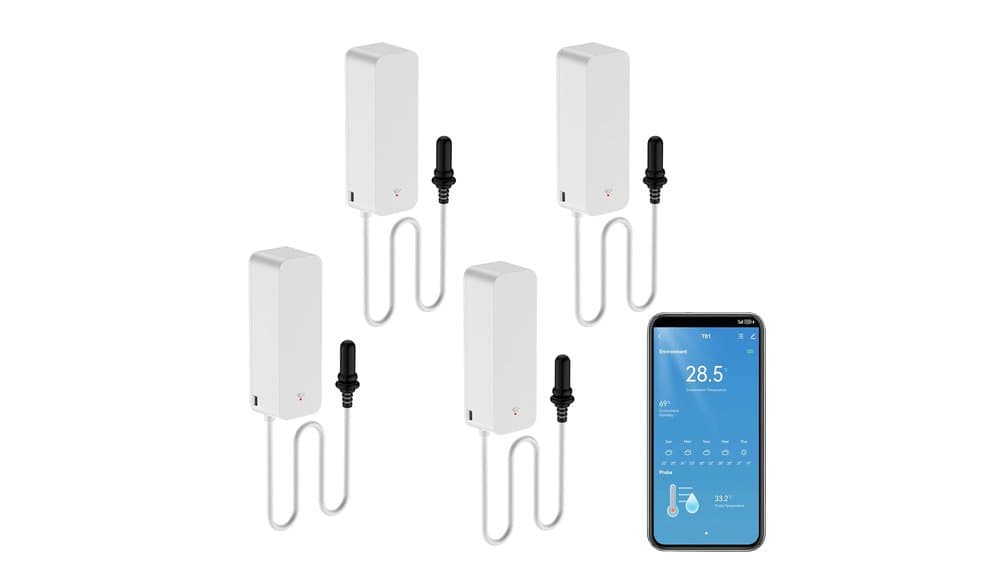
For precise sous-vide & charcuterie, a calibrated core temperature probe is essential to ensure perfect results where it matters most.
KitchenBoss Food Vacuum Bag Roll Review & Test
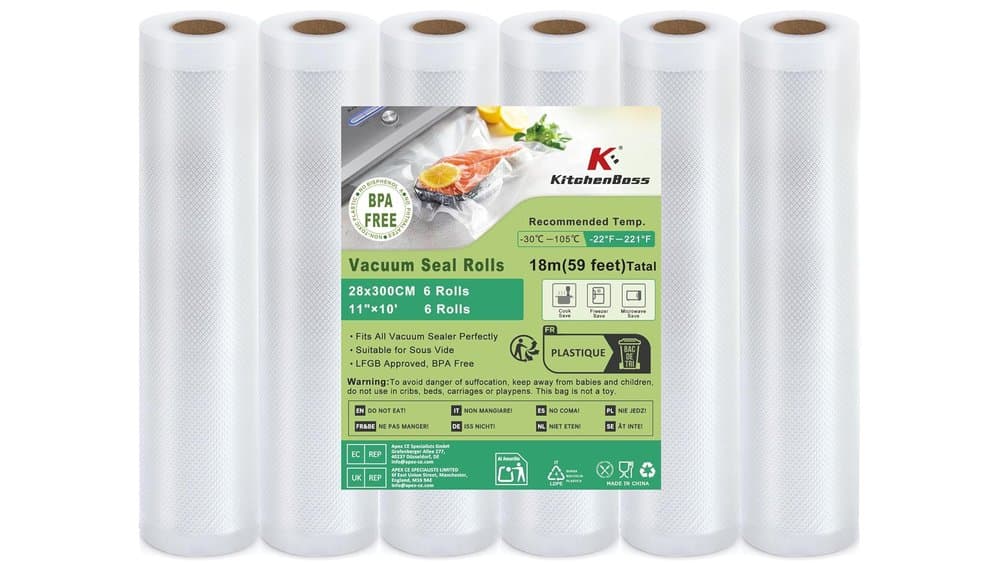
KitchenBoss vacuum sealing bags for sous-vide: analyze specs, compare performance, and determine value for precision cooking storage and preparation.
Fityou HU-XI-53 Immersion Circulator Sous Vide Cooker Review
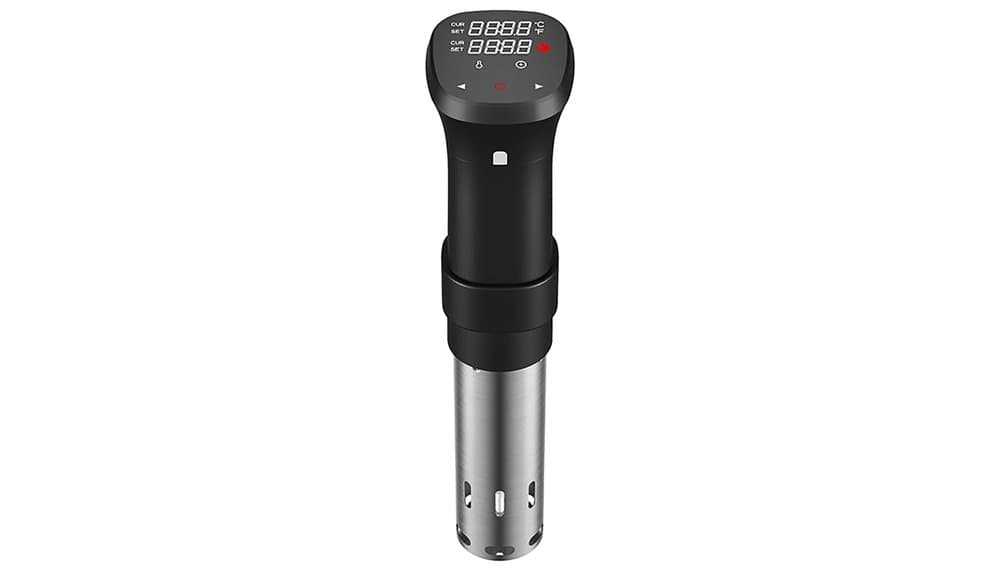
Fityou HU-XI-53 Immersion Circulator review: A high-performing, accessible sous vide cooker with 1100W power, precise 0.1°C accuracy, and a 25-95°C range.
Guides you might like
Bell Jar Vacuum Sealer Buying Guide
Upgrade to a chamber vacuum sealer for professional sous-vide results at home. Perfect for liquids and flawless, long-lasting seals.
Best Beginner Sous Vide Kit
Find the perfect sous-vide starter kit on a budget. Learn the three essential features to look for to cook your first perfect steak without the headache.
Best Vacuum Bags
Choose the right vacuum sealer bags for perfect results. Learn key specs like heat resistance, thickness, and barriers to avoid culinary disasters.