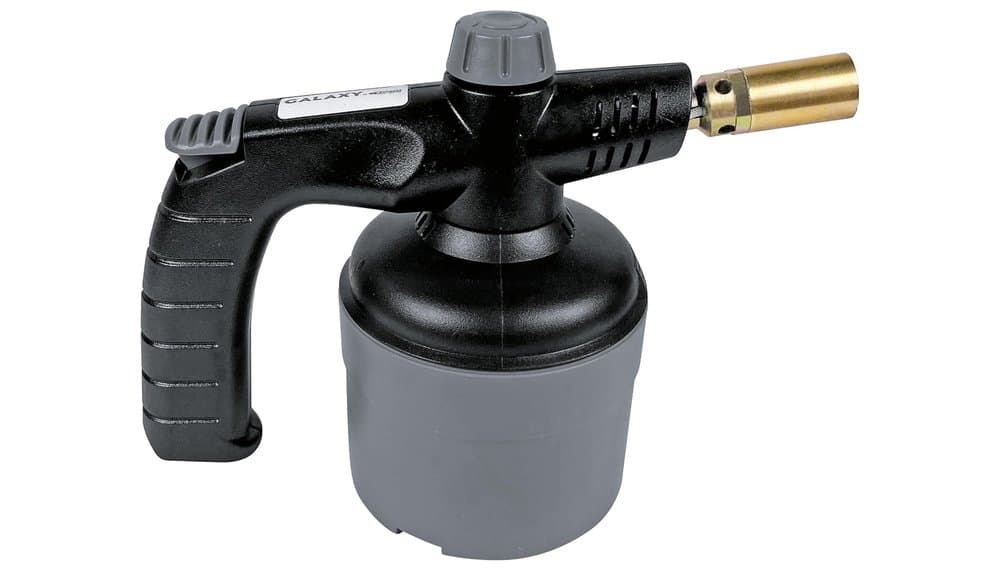
EXPRESS 8200 Soldering Lamp Test & Review
Introduction
In the world of precision cooking, after perfect slow sous-vide cooking comes the finishing stage: the moment where color, crispiness, and character are given to meat or fish. For this step, the culinary blowtorch is an essential tool, a modern alternative to a blazing hot oven or a frying pan. The EXPRESS 8200 Soldering Lamp is not strictly speaking a kitchen tool, but an industrial soldering lamp that many enthusiasts adopt for their finishing. In this analysis, we will examine it from the perspective of precision cooking, dissecting its specifications against our culinary needs, and confronting its promises with the feedback from users who have repurposed it for brûléeing creams, caramelizing sugars, or searing steaks.
Strong Points
- Impressive thermal power: A flame temperature of 1850°C is a key feature. In cooking, this translates to an ability to generate a fast and intense sear, limiting heat penetration into the meat and preserving the perfect texture achieved sous-vide.
- Practical autonomy: A theoretical autonomy of 1h30 of continuous operation is a major asset. For culinary use, this means being able to finish several pieces of meat during a dinner, or even multiple meals, without having to change the cartridge.
- Integrated piezoelectric ignition: The push-button ignition, without need for an external lighter, represents a significant gain in comfort and safety, especially when one's hands are occupied or wet.
- Versatility and value for money: Although designed for brazing, its multi-use design (paint stripping, loosening) finds an echo in the kitchen. Feedback highlights that it is often significantly cheaper than "consumer-grade" blowtorches from well-known brands, offering an economical entry into professional finishing.
Weak Points
- Limited flame precision for cooking: The lamp is designed for brazing, not for sugar or crème brûlée. According to feedback, the flame can be wide and difficult to control with extreme finesse compared to models specifically designed for pastry work.
- Mandatory preheating: Several users in cooking point this out: you must let the device heat up for about a minute after ignition. Without this, the flame becomes unstable and "produces large flames" when tilted, which can be dangerous and impractical during quick service.
- Ergonomics and industrial finish: Its light weight (116g) is an asset, but the plastic materials can give an impression of flimsiness. It is a technical tool, not a kitchen utensil with ergonomic design meant for prolonged handling.
- Sold without gas: This is standard practice in this sector, but it requires an additional purchase. Some international users note that finding the specific cartridges (8191) can be difficult outside of France.
Detailed Analysis from the Precision Cooking Perspective
For a home cook or a sous-vide enthusiast, a blowtorch is not just a giant lighter. It is a finishing instrument that must offer control and reproducibility. Let's analyze the EXPRESS 8200 through this lens.
Temperature and flame control: On paper, the advertised 1850°C is far above culinary needs (a good culinary blowtorch operates around 1300-1500°C), which guarantees significant firepower. However, stability and precision are just as important. User reviews give us a crucial clue: the flame requires a warm-up period to stabilize and become a controlled blue flame. For delicate tasks like caramelizing sugar on a fruit without cooking the flesh, this delay and the potential width of the flame ("imprecise flame" according to one review) can pose a challenge. It is not the most suitable tool for miniature work.
Long-term performance: No user feedback mentions reliability issues over multiple culinary uses. The Express brand, with its industrial history, inspires confidence in mechanical durability. The real long-term performance question concerns autonomy. 1h30 is more than sufficient for all culinary needs, even for restaurant service. The gas consumption of 116 g/h at 1.5 bar is a technical indicator that allows estimating the lifespan of a standard cartridge.
Build quality and safety: The body in plastic and stainless steel is typical for this type of tool. Testers note that the plastic "feels a bit light," but this is the compromise for an economical and lightweight tool. The point of caution, raised by the community, is the preheating phase. Not respecting this minute can make the flame unstable and potentially dangerous. For use in the kitchen, often indoors, this safety step is crucial to integrate into one's usage ritual.
Connectivity and design: Obviously, there is no WiFi or app here. The design is purely functional and industrial. A "clamp" or mounting system is absent; it is a manual tool. Noise is not mentioned in feedback, but it is comparable to that of a standard blowtorch: a powerful hiss but acceptable in a domestic environment.
Synthetic Technical Sheet
| Characteristic | EXPRESS 8200 Specification | Impact for Precision Cooking |
|---|---|---|
| Max temperature | 1850 °C | Very high power. Allows for fast and intense searing, ideal for searing meats without loss of internal temperature. |
| Autonomy | ~1h30 (continuous) | Very good autonomy. Sufficient for multiple finishing sessions without refilling. |
| Power source | Butane gas cartridge (model 8191, not included) | Requires an additional purchase. Industry standard. |
| Working pressure | 1.5 bar | Ensures stable combustion once the device is preheated. |
| Gas flow rate | 116 g/h | Allows calculation of autonomy with different cartridge sizes. |
| Ignition | Integrated piezoelectric | Great ease of use. Eliminates the need for an external lighter. |
| Weight | 116 g | Very light. Facilitates handling for several minutes. |
| Intended uses | Brazing, paint stripping, loosening, burning | Technical versatility. The "burning" function corresponds perfectly to culinary use. |
What Users Say (Review Synthesis)
Feedback from users, whether DIYers or amateur cooks, paints a clear consensus around several points.
The positive trends are striking:
- The vast majority of users (overall rating of 4.4/5) find it functional, practical, and reliable.
- The value for money is widely praised, many finding it "nearly two and a half times cheaper" than mainstream alternatives.
- The piezoelectric ignition is a major appreciated asset, especially by those coming from older models requiring a lighter.
- Its use in cooking is validated by several testimonials ("I use it for cooking. It works very well").
- Its compatibility with common brand cartridges is a practical plus.
The recurring points of caution are:
- The imperative necessity of preheating is the most frequently and clearly mentioned point. Not waiting leads to an unstable flame.
- A minority of users point out flame imprecision, even judging it "dangerous" if poorly mastered. This confirms that fine control is not its strong point.
- The perceived quality of the plastic materials is sometimes described as "lightweight," although this does not affect functionality according to the feedback.
- One international user reports difficulties finding the appropriate gas refills locally, a point to check depending on one's location.
Conclusion: Should You Adopt It for Your Kitchen?
The EXPRESS 8200 Soldering Lamp is a robust, powerful, and economical option for anyone wanting to equip themselves with a serious finishing tool without investing in a high-end culinary blowtorch. Its main advantage is providing professional power (1850°C) at a very accessible price, with the practical benefit of integrated ignition.
However, this tool was not designed for pastry. Its lack of finesse and the need for systematic preheating make it an instrument better suited for "muscular" finishes: searing a thick steak, browning a meringue, flambéing vegetables, or cleaning a work surface. For delicate brûlée work on fragile desserts or for millimeter-precise flame control, specific models with finer nozzles will likely be more satisfying.
In summary, if you are a sous-vide enthusiast looking for an effective, reliable, and versatile blowtorch for meat finishes and general uses, and you accept taking 60 seconds to let it heat up, the EXPRESS 8200 represents excellent performance for the price. For demanding pastry chefs or those primarily seeking the utmost absolute precision from ignition, you may need to look towards more specialized alternatives, often at a much higher cost.
100% free and independent — All our articles are written independently, without any sponsorship. We may earn a commission on purchases made through our links, at no extra cost to you.
Articles you might like
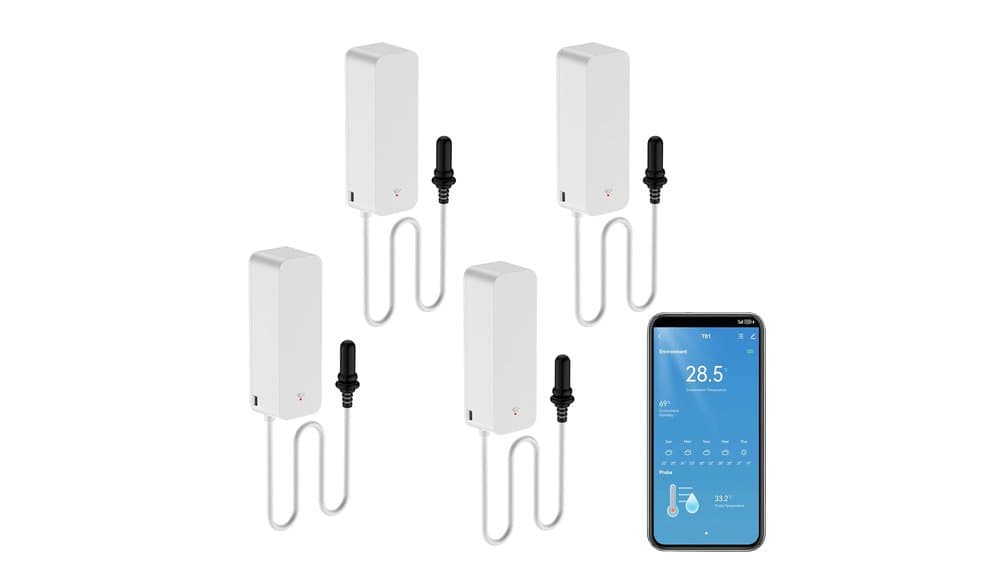
PHOVOLT WiFi Thermometer with Probe Test
For precise sous-vide & charcuterie, a calibrated core temperature probe is essential to ensure perfect results where it matters most.
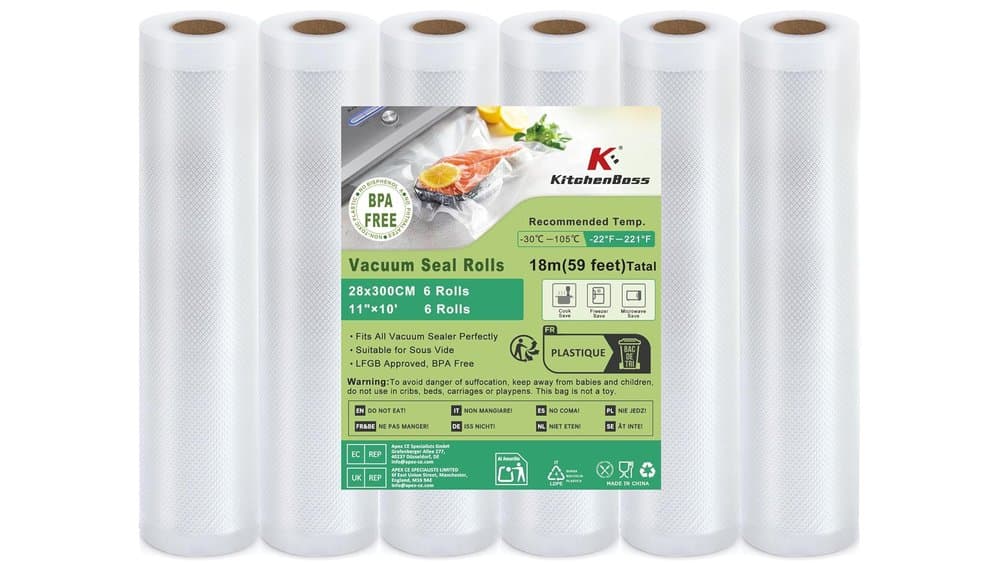
KitchenBoss Food Vacuum Bag Roll Review & Test
KitchenBoss vacuum sealing bags for sous-vide: analyze specs, compare performance, and determine value for precision cooking storage and preparation.
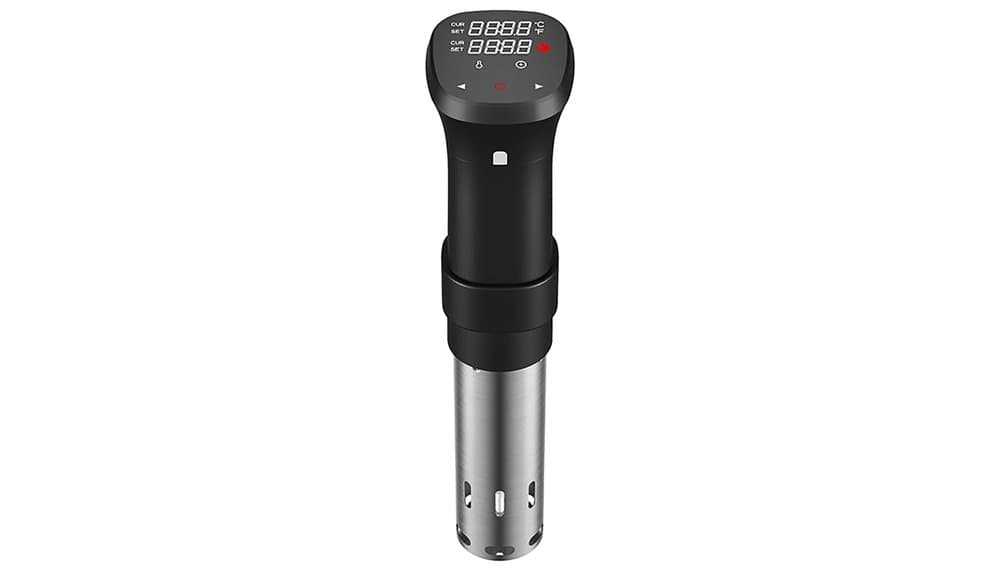
Fityou HU-XI-53 Immersion Circulator Sous Vide Cooker Review
Fityou HU-XI-53 Immersion Circulator review: A high-performing, accessible sous vide cooker with 1100W power, precise 0.1°C accuracy, and a 25-95°C range.
Guides you might like
Bell Jar Vacuum Sealer Buying Guide
Upgrade to a chamber vacuum sealer for professional sous-vide results at home. Perfect for liquids and flawless, long-lasting seals.
Best Beginner Sous Vide Kit
Find the perfect sous-vide starter kit on a budget. Learn the three essential features to look for to cook your first perfect steak without the headache.
Best Vacuum Bags
Choose the right vacuum sealer bags for perfect results. Learn key specs like heat resistance, thickness, and barriers to avoid culinary disasters.