Mapouji Compact Vacuum Sealer Test and Review
Introduction
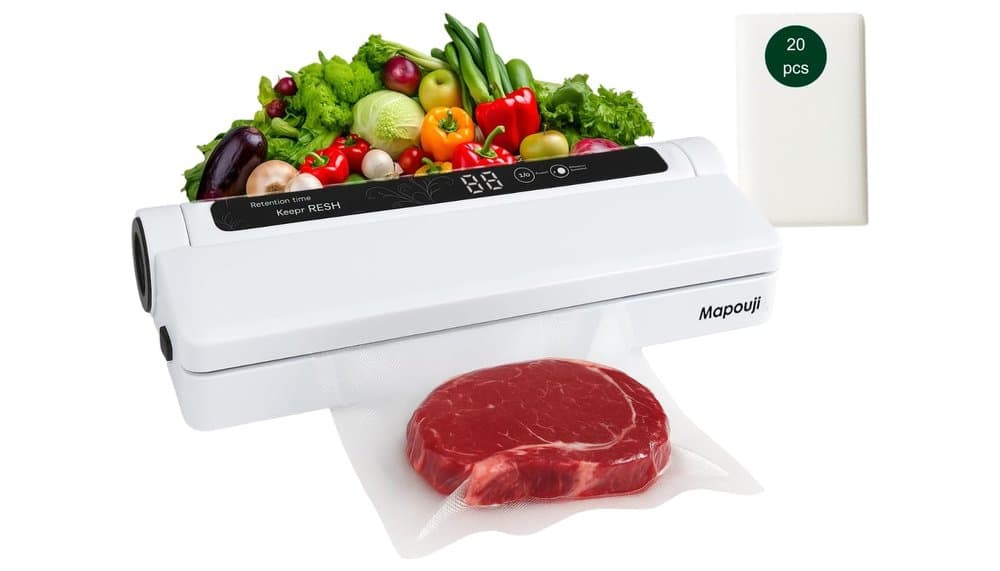
In the world of precision cooking and optimal preservation, a vacuum sealer is not an accessory, it is a linchpin. It guarantees the airtight seal that allows precision circulators to deploy all their science. Today, we analyze the Mapouji Compact Food Vacuum Sealer in detail. Facing chamber machines, often bulky and expensive, and simple edge sealers, this model positions itself as a compact external solution. The stakes are high: its performance in terms of suction, sealing reliability, and moisture management directly determines the success of our long cooks (24 hours and more) and the perfect preservation of our ingredients. Let's dive into its specifications and real-world feedback to assess its place in a kitchen dedicated to precision.
Strong Points
According to available data, the Mapouji Compact Food Vacuum Sealer presents several convincing assets for fans of organized cooking.
Its compactness is its main argument. With dimensions of 29 x 10 x 5 cm, it can be stored in a drawer, a decisive advantage for small kitchens or those who refuse permanent clutter on the countertop. This portability is also cited as a plus for occasional uses like camping.
The included accessory kit is regularly praised. The presence of bags, labels, and a pen offers a turnkey solution right out of the box, facilitating organization and "meal prep." Users appreciate being able to immediately label and date their preparations.
On paper, its simplicity of use via its two buttons (Vacuum/Seal) makes it accessible to beginners who want to get started with vacuum sealing without the complexity of a chamber machine. Its external suction makes it theoretically compatible with a wide range of containers (bags, jars, boxes), increasing its versatility for preserving liquids or prepared dishes.
Weak Points
The analysis of feedback reveals significant limitations, particularly for demanding precision cooking use.
The main pitfall lies in its limited suction power and sensitivity to moisture. As an external suction machine, its efficiency is inherently lower than that of a chamber machine in creating a deep vacuum. Several users report difficulties with liquid or moist products, the device risking sucking in juices before it can seal, which seriously compromises preservation and makes sous-vide cooking dangerous (risk of bacterial development).
The robustness and reliability of the seal in the long term are points of concern. One specific user report mentions a malfunction where the device seals before creating a vacuum, rendering it unusable. This type of failure is critical. Furthermore, reviews note a constraint on bag size: bags that are too wide can prevent proper suction, limiting the volume of preparations.
Finally, the user manual is described as insufficient by some, leaving the user to guess the best practices to optimize results or troubleshoot basic problems.
Detailed Analysis for Precision Cooking
Let's now evaluate the Mapouji Compact Food Vacuum Sealer through the demanding prism of sous-vide cooking and professional preservation.
Suction Power and Vacuum Quality: This is the heart of the matter. The specs announce a 130W motor, a typical power for an entry-level external suction model. For dry meats, vegetables, or dry products, this power may be enough to create a correct vacuum for cold storage. However, for sous-vide cooking, and especially for long cooks, the vacuum must be near-perfect to guarantee intimate contact between the food and the bag, essential for heat transfer, and to avoid any air pocket that would float during cooking. Chamber machines are far superior on this point. Here, the community notes that success heavily depends on technique: properly positioning the bag, using appropriately sized bags, and avoiding any excess liquid. This lack of consistency is a hindrance for demanding cooks.
Seal Resistance on Long Cooks (24h+): The strength of the seal is paramount. A seal that would fail in a 65°C water bath over 20 hours would be catastrophic. The construction materials, mainly plastic, and the lack of feedback on the quality of the heating system for the sealing bars raise questions about durability. No expert or user feedback explicitly confirms its performance on prolonged cooks, which, in our field, is a significant silence. It is advisable to be extremely vigilant and test the machine progressively.
Management of Liquids and Marinades: This is the admitted weakness of the majority of external suction machines. The Mapouji Compact is no exception. For marinating meat or packing saucy preparations, the so-called "suspension" technique (keeping the part to be sealed perfectly dry and above the liquid level) is imperative. This adds complexity and a risk of error. For this type of use, a chamber machine, which removes air from the entire chamber and not from the bag, is infinitely more suitable.
Bag Compatibility: The device is presented as compatible with all vacuum sealer bags. This is an advantage in terms of cost and flexibility. However, users emphasize that bags that are too wide hinder efficiency. It will be necessary to prioritize bags with a width suited to the device's mouth. The possibility of making multiple seals (to create one's own bags from a roll) is not explicitly confirmed, which would be an advantage for economy.
Technical Specifications
| Characteristic | Mapouji Compact Specification |
|---|---|
| Type | External suction machine (chamberless) |
| Power | 130 Watts |
| Voltage | 220 Volts |
| Power Supply | Corded |
| Dimensions (L x W x H) | 29 x 10 x 5 cm |
| Weight | 580 grams |
| Construction Material | Plastic |
| Functions | "Vacuum" Button, "Seal" Button |
| Auto Shut-off | Yes |
| Kit Contents | Device, vacuum bags, labels, pen |
What Users and Testers Say
The synthesis of 49 customer reviews (average rating of 4.0/5) and expert context gives us a nuanced but revealing picture.
The praise focuses on three points: the compactness and space saving, the completeness of the kit ("pen, labels, pouches... we really have everything we need"), and its perceived effectiveness for basic preservation. Satisfied users use it to extend the freshness of cheeses, cured meats, or to organize their freezer, noting a reduction in waste. They find it intuitive and aesthetically pleasing.
Recurring criticisms point to clear functional limits. Several note the absolute necessity of using appropriately sized bags on pain of suction failure. The liquid management problem is underlying. The most problematic report signals a sequence malfunction (sealing before vacuuming), calling into question the reliability of the electronic circuit. Finally, the user manual is judged too succinct, leaving the user without a solution to simple problems.
Available expert reviews present it as a practical gateway to vacuum sealing, ideal for "meal prep" and organization, but do not explicitly recommend it for demanding sous-vide cooking. They note the lack of information on noise, ease of cleaning, and robustness of the seals, details that are nonetheless crucial for regular use.
Conclusion
The Mapouji Compact Food Vacuum Sealer finds its place as an introductory and culinary organization tool. Its compactness, complete kit, and apparent simplicity make it a serious candidate for someone who wants to discover vacuum sealing, better manage bulk purchases, extend the preservation of dry or low-moisture foods, and optimize space in their fridge and freezer.
However, from the point of view of precision sous-vide cooking, its analysis reveals structural limitations. Its 130W external suction, sensitivity to moisture, and questions about the long-term reliability of its seal make it a tool to use with caution for low-temperature cooking. It may be suitable for short and simple cooks on dry ingredients, but it cannot be considered a professional or reliable piece of equipment for 24-hour cooks or for packing liquid marinades without special technique.
For the beginner in sous-vide cooking who wants to test the principle without a heavy investment, it can be a first step, provided its constraints are accepted and skills in sealing techniques are developed. For the experienced enthusiast seeking absolute precision, perfect vacuum, and infallible seals for their 48-hour beef cooks, investing in a chamber machine remains, based on all the data analyzed, the unavoidable path. The Mapouji Compact is a good kitchen organizer, but not the silent and robust guarantor that every thermal precision aficionado dreams of.
100% free and independent — All our articles are written independently, without any sponsorship. We may earn a commission on purchases made through our links, at no extra cost to you.
Articles you might like
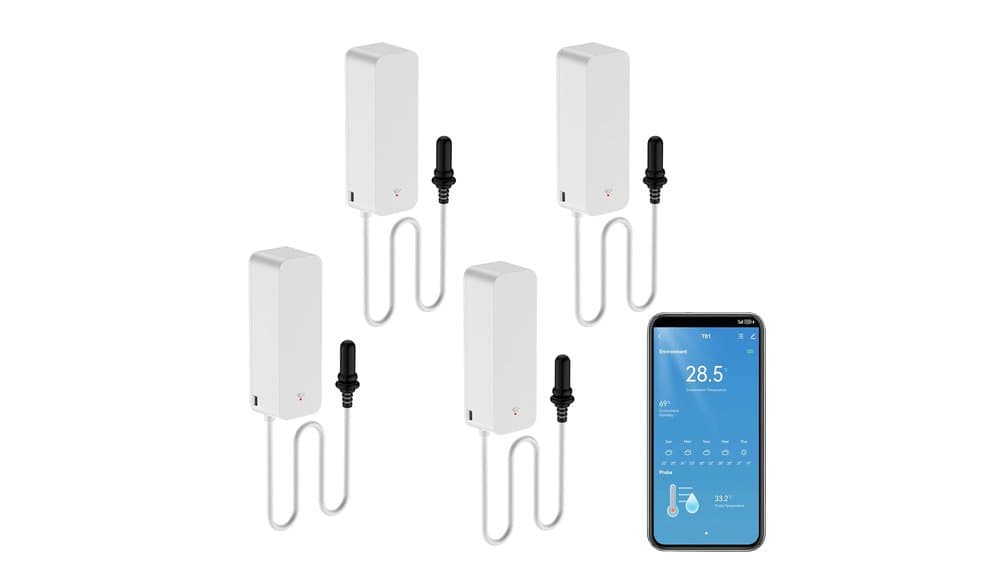
PHOVOLT WiFi Thermometer with Probe Test
For precise sous-vide & charcuterie, a calibrated core temperature probe is essential to ensure perfect results where it matters most.
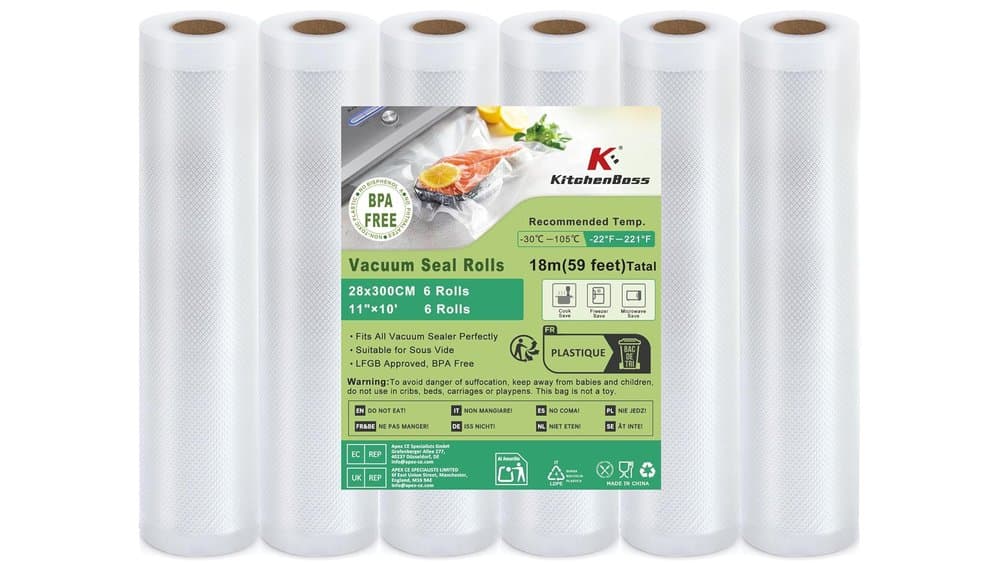
KitchenBoss Food Vacuum Bag Roll Review & Test
KitchenBoss vacuum sealing bags for sous-vide: analyze specs, compare performance, and determine value for precision cooking storage and preparation.
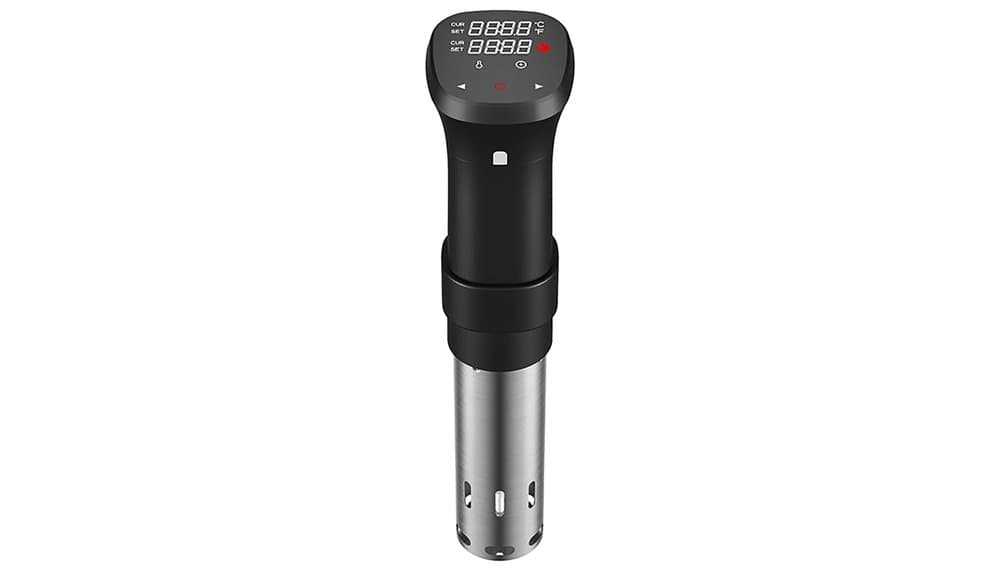
Fityou HU-XI-53 Immersion Circulator Sous Vide Cooker Review
Fityou HU-XI-53 Immersion Circulator review: A high-performing, accessible sous vide cooker with 1100W power, precise 0.1°C accuracy, and a 25-95°C range.
Guides you might like
Bell Jar Vacuum Sealer Buying Guide
Upgrade to a chamber vacuum sealer for professional sous-vide results at home. Perfect for liquids and flawless, long-lasting seals.
Best Beginner Sous Vide Kit
Find the perfect sous-vide starter kit on a budget. Learn the three essential features to look for to cook your first perfect steak without the headache.
Best Vacuum Bags
Choose the right vacuum sealer bags for perfect results. Learn key specs like heat resistance, thickness, and barriers to avoid culinary disasters.