Nutrichef PKFD06 5-Tier Food Dehydrator Review & Test
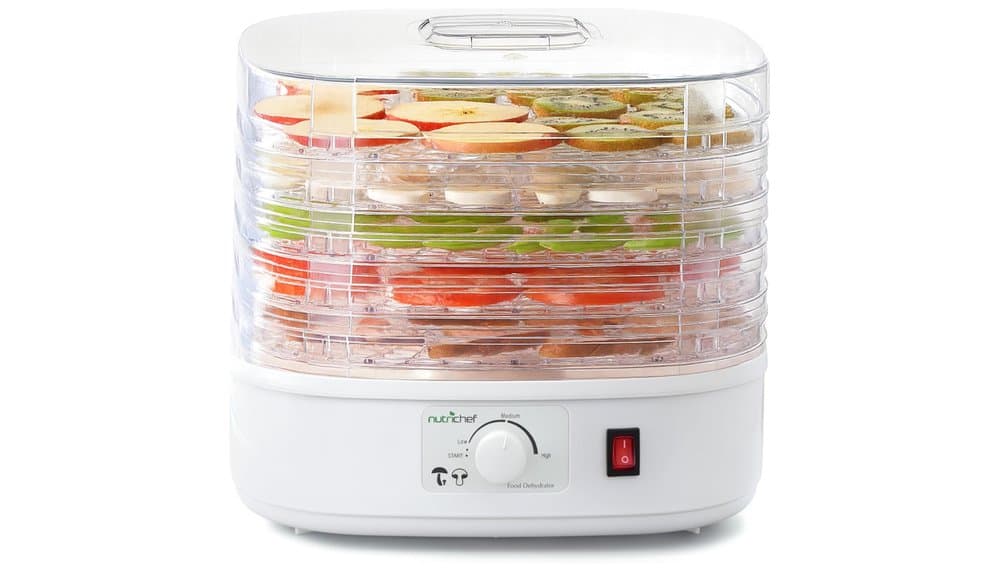
Introduction: A Dehydrator in a Precision-Oriented Kitchen
In a culinary universe dedicated to precision, where control to the degree and stability over long durations are dogmas, the arrival of a dehydrator like the Nutrichef PKFD06 5 Tier Food Dehydrator is thought-provoking. On a site where we dissect the PID regulation of immersion circulators and the suction power of vacuum sealers, how do we evaluate an appliance whose primary function is the evaporation of moisture? The answer lies in a rigorous analysis of its ability to provide reliable thermal control, uniformity of treatment, and robustness suited for long processes – criteria dear to practitioners of precision cooking, whether beginners or seasoned. We will therefore dissect this popular model not as a simple gadget, but as a tool for food preservation and transformation, measured against the technical requirements we know well.
Strengths and Weaknesses
Strengths
- Immediate ease of use with a one-button control and a basic temperature adjustment dial.
- Compact and easy to store, with a square design that optimizes space.
- Good value for money for an entry-level model, allowing testing of dehydration without a heavy investment.
- Reported uniform drying across all five trays thanks to vertical airflow.
- Easy maintenance with fully washable trays.
Weaknesses
- Lack of advanced control features: no built-in timer, no digital temperature display, no programming.
- Unverifiable temperature precision and stability by the user, relying on the reliability of a simple mechanical thermostat.
- Construction entirely in plastic, lightweight, which raises questions about longevity during intensive use.
- Mandatory manual monitoring due to the lack of a timer, which is a drawback for drying cycles of 12 hours or more.
Detailed Analysis of the Nutrichef PKFD06
Thermal Precision and Stability: The Technical Achilles' Heel
This is the major point of divergence with precision sous-vide cooking equipment. The Nutrichef PKFD06 advertises a temperature range up to 82°C (180°F), adjusted via a mechanical rotary dial. On paper, this is sufficient for most tasks: fruits at low temperature (40-55°C), vegetables (50-60°C), meats for jerky (65-70°C). However, no specification indicates the accuracy or stability of this temperature. Unlike an immersion circulator with a probe and PID algorithm, we have here a classic bimetallic thermostat. According to community feedback, it heats up and maintains warmth, but potential fluctuations are neither measured nor communicated. For a process where overheating can cook (rather than dry) delicate herbs or harden the outside of a fruit while keeping the inside moist, this lack of transparency is a significant limitation for the demanding enthusiast. On the other hand, for a beginner, the "Low/Med/High" system or approximate graduation is often perceived as sufficiently intuitive.
Performance on Long Cycles and Construction
Dehydration is by nature a long process, often 8 to 24 hours. Here, long-term reliability becomes paramount. The ventilation motor and 250-watt heating element are described as quiet by most users, an asset for an appliance meant to run for long hours in the kitchen. The all-plastic construction, although light (1.41 kg) and practical for cleaning, raises questions about continuous heat resistance and deformation resistance after many cycles. Expert testers note that the square design promotes good heat retention inside, a positive point for energy efficiency and uniformity. However, the total lack of a built-in timer – a feature common on slightly more advanced models – imposes manual monitoring and physical unplugging to stop the appliance. This point is particularly incongruous from our perspective of controllable and automatable processes.
Versatility and User Experience
The Nutrichef excels here on its home ground. The five stackable trays offer honest capacity for family use. Vertical airflow (air blown from bottom to top) is generally effective for uniform drying, even if food on the bottom trays may dry a tiny bit faster according to some feedback. The community confirms it handles a wide variety of foods well: fruits, vegetables, meats for jerky, and even preparations like fruit leathers or dog treats. The inclusion of a recipe book is appreciated by novices to get started with reference times and temperatures. Regarding finish, the appliance is compact and easy to store, but its smooth plastic bottom can make it prone to moving on a work surface, a detail some users circumvent by placing it on a non-slip mat.
Summary Technical Sheet
| Specification | Nutrichef PKFD06 Detail |
|---|---|
| Brand / Model | Nutrichef PKFD06 |
| Number of Trays | 5 (stackable) |
| Power | 250 Watts |
| Temperature Range | Up to 82°C (180°F) |
| Temperature Adjustment | Mechanical rotary dial (no digital display) |
| Built-in Timer | No |
| Digital Display | No |
| Airflow Type | Vertical (base to top) |
| Construction Material | Plastic |
| Dimensions (L x W x H) | Approximately 30 x 22.5 x 31.5 cm |
| Weight | 1.41 kg |
| Special Functions | Recipe booklet included. Safety auto shut-off (per specs). |
What Users and Testers Say: A Synthesis
The feedback, with a very high overall rating, paints a consistent picture that confirms and nuances our technical analysis.
The praise is unanimous on a few points: users are satisfied with the results for a product at this price level. They note uniform drying across all trays, food that retains its flavor and color well, and great ease of use ("you turn it on and that's it"). The low noise level is very frequently mentioned as a major asset. Many appreciate the ability to create healthy, additive-free snacks for their family.
The criticisms and limitations noted echo the technical points of vigilance:
- Lack of precise control: The absence of a timer is the most common grievance. Users must use an external timer and go to turn off the appliance, which is perceived as an inconvenience.
- Necessary learning curve: Some note an adaptation period to find the right setting and duration for each food (e.g., bananas not looking like commercial ones).
- Perceived solidity: While most have no problems, a few isolated comments mention fragile plastic parts or longevity concerns after intensive use. The white version can stain with very colorful fruits (e.g., cranberries).
- Basic features: For people wanting more automation, the appliance is clearly identified as an entry-level model, lacking the refinements of higher-end models (digital thermostat, pre-set programs).
Web experts summarize the PKFD06 as an economical, effective, and simple option, ideal for starting out or for occasional use, but lacking the control features that would satisfy a user craving precision and automation.
Conclusion: Who Is This Dehydration Tool For?
The Nutrichef PKFD06 5 Tier Food Dehydrator is not the equivalent of a PID-regulated sous-vide immersion circulator. It does not claim laboratory-grade thermal precision or advanced connectivity. Its evaluation from the "precision cooking" angle therefore reveals its inherent limitations: approximate temperature control, total absence of a timer, and a lightweight construction prioritizing price and compactness.
Conversely, this analysis allows it to be positioned with great clarity:
- For the beginner who wants to explore dehydration without breaking the bank, it is an excellent entry point. It is simple, does the basic job well, and the results on simple fruits, vegetables, and jerky are largely satisfactory. Its compactness is an asset in an already well-equipped kitchen.
- For the precision cooking and food preservation enthusiast seeking a reliable, simple, and no-frills tool for occasional projects, it can be suitable, provided they accept manually monitoring drying times and dealing with an unverifiable temperature setting. It is seen as a practical complementary tool, but not as an instrument of precision.
- For the demanding or professional user considering long and frequent dehydration cycles, requiring perfect reproducibility, digital control, or dehydration of delicate products (yogurt, sourdough), the model will quickly show its limits. They will then need to look towards dehydrators with horizontal airflow, precise digital control, and more robust construction.
In summary, the Nutrichef PKFD06 honorably fulfills its promise of a basic and effective domestic dehydrator. Its commercial success is based on its simplicity and concrete results that please the majority. For our community attached to fine control of parameters, it represents a practical and economical supplementary solution, but not the tool of choice for ambitious and perfectly mastered preservation projects.
100% free and independent — All our articles are written independently, without any sponsorship. We may earn a commission on purchases made through our links, at no extra cost to you.
Articles you might like
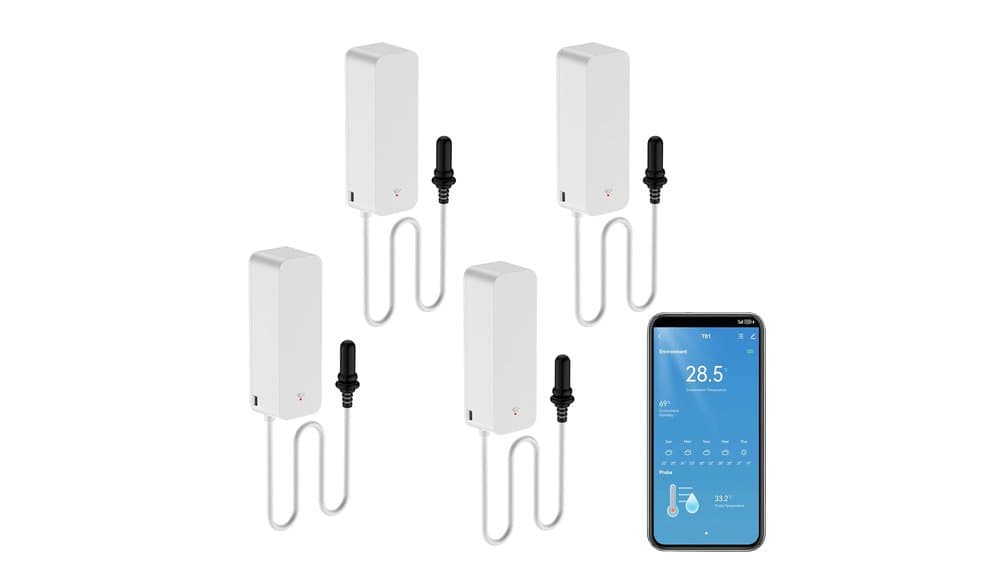
PHOVOLT WiFi Thermometer with Probe Test
For precise sous-vide & charcuterie, a calibrated core temperature probe is essential to ensure perfect results where it matters most.
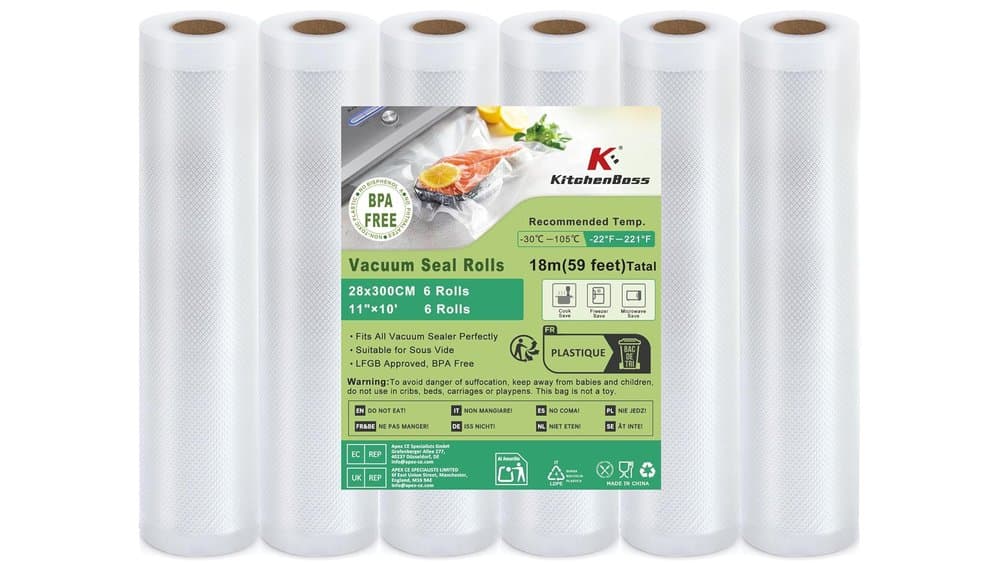
KitchenBoss Food Vacuum Bag Roll Review & Test
KitchenBoss vacuum sealing bags for sous-vide: analyze specs, compare performance, and determine value for precision cooking storage and preparation.
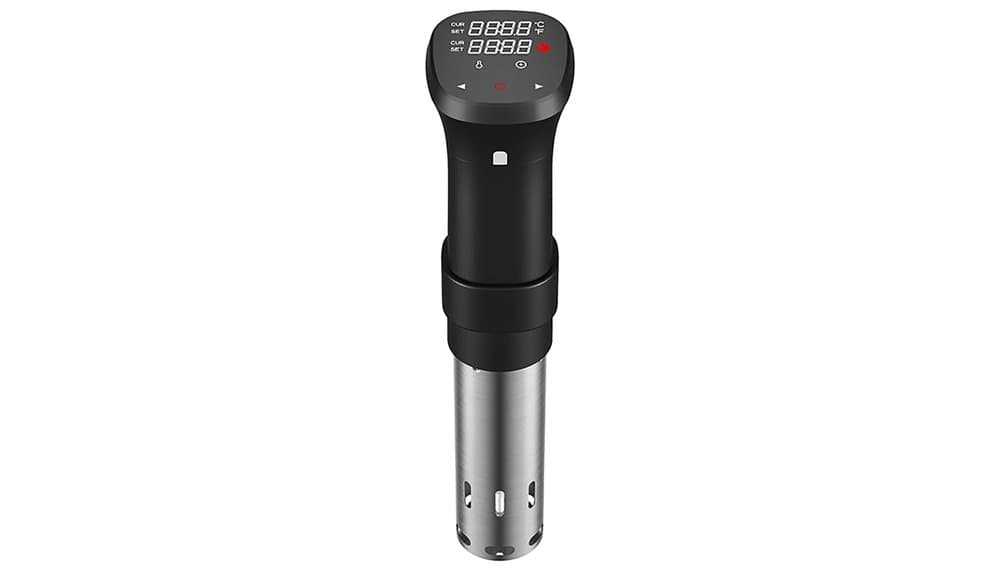
Fityou HU-XI-53 Immersion Circulator Sous Vide Cooker Review
Fityou HU-XI-53 Immersion Circulator review: A high-performing, accessible sous vide cooker with 1100W power, precise 0.1°C accuracy, and a 25-95°C range.
Guides you might like
Bell Jar Vacuum Sealer Buying Guide
Upgrade to a chamber vacuum sealer for professional sous-vide results at home. Perfect for liquids and flawless, long-lasting seals.
Best Beginner Sous Vide Kit
Find the perfect sous-vide starter kit on a budget. Learn the three essential features to look for to cook your first perfect steak without the headache.
Best Vacuum Bags
Choose the right vacuum sealer bags for perfect results. Learn key specs like heat resistance, thickness, and barriers to avoid culinary disasters.