Serebrant DWPTRQ Sous Vide Container Review
Introduction
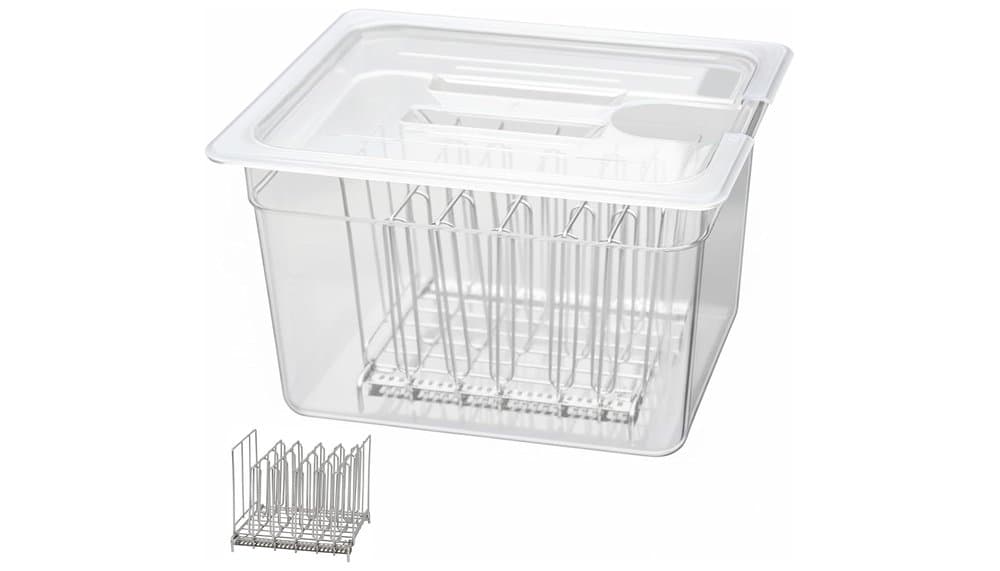
In the world of precision cooking, auxiliary equipment is often the forgotten stepchild, until it becomes a bottleneck. We invest in a powerful circulator, only to realize that our old stainless steel stockpot loses too much heat or that an ill-fitting lid causes problematic evaporation during long cooks. This is precisely the niche where the Serebrant DWPTRQ Low Temperature Vacuum Cooking Container positions itself. It is not a heating device, but a dedicated container designed to serve as the optimal water bath for sous vide circulators. Here we will analyze it from the perspective of precision cooking: is it a gimmicky accessory or a real performance multiplier for your Anova, Joule, and other circulators?
Key Strengths
- Thermal Insulation and Evaporation Reduction: Its main selling point. According to the technical description, the grooved lid is designed to minimize water loss through evaporation, a major advantage for 24-hour or longer cooks.
- Extended Compatibility: The 62mm opening in the lid is sized to accommodate the majority of sous vide circulators on the market, from consumer models (Anova, Joule) to more professional ones.
- Design Focused on Stability: The non-slip base and the adjustable stainless steel rack with a wide crossbar are direct features that address common problems (food floating, container sliding).
- Transparency and Food-Grade Materials: The transparent polycarbonate plastic construction (BPA-Free) allows for easy visual monitoring of the bath and the food, a significant advantage.
Weak Points
- Limited Capacity for Large Cuts: At 11 liters, it sits at the lower end of dedicated containers. It will work perfectly for individual or family portions but will be limited for large cuts of meat or very high-volume preparations.
- Lack of Storage Accessories or Supplementary Insulation: The product presents itself as a container, a lid, and a rack. The absence of additional insulating lids (like neoprene) or an integrated storage system for the circulator is noted; these are options often appreciated by advanced users.
- Uncertain Long-Term Durability: Although the plastic is advertised as durable, its robustness against repeated thermal shocks and handling over several years remains an open question, especially compared to thicker polycarbonate bins or stainless steel ones.
Detailed Analysis for the Precision Cooking Enthusiast
This analysis is not about heating or circulation performance, but about how this container optimizes the working environment of your sous vide circulator.
Stability and Thermal Precision: The Role of the Accessory
A circulator is only as precise as the environment it works in allows. The Serebrant DWPTRQ acts on two levers. First, evaporation reduction. By limiting water loss, the circulator does not have to constantly compensate for cooling caused by evaporation, which, on paper, contributes to superior temperature stability, especially in dry or ventilated kitchens. Second, insulation. Polycarbonate offers better insulation than a thin metal pot, reducing lateral heat loss. This translates into reduced energy consumption for the circulator, which cycles less frequently to maintain the temperature.
Design and Compatibility: Designed for Integration
The main point of attention is the opening diameter (62mm). This dimension is critical. It is sufficient for almost all circulators with integrated pumps (like Anova Nano, Anova Precision, Joule). However, compatibility with some "pro" or older models with wide bodies or particular mounts should be verified. The adjustable, anti-float rack is a real added value. It solves the classic problem of poorly weighted bags floating to the surface, ensuring total immersion and thus uniform cooking.
Longevity and Intensive Use
For long cooks (48-72 hours), two factors are essential: evaporation and structural integrity. Feedback highlights the performance of the grooved lid on the first point. On the second, the BPA-Free plastic and the announced resistance from -40°C to 100°C are reassuring for thermal shocks related to filling (hot water into a cold container). However, for truly intensive use (restaurant service, daily use), some might prefer the wearproof robustness of a stainless steel bin, despite its higher weight and price.
Technical Specifications
| Characteristic | Detail |
|---|---|
| Model | Serebrant DWPTRQ Low Temperature Vacuum Cooking Container |
| Capacity | 11 liters |
| Main Material | Polycarbonate Plastic (BPA-Free) |
| Color | Transparent / Green edges |
| Dimensions (L x W x H) | 32.5 x 26.5 x 20 cm |
| Weight | 1.8 kg |
| Included Accessories | Grooved lid, adjustable stainless steel rack |
| Opening Diameter | 62 mm |
| Supported Temperature Range | -40°C to 100°C |
| Key Features | Non-slip base, anti-evaporation lid, anti-float rack |
What Users Say
The synthesis of available feedback (including customer reviews and the general context of discussions on this type of product) paints a clear consensus.
Praise centers on its fundamental effectiveness. Users who switched from a standard stockpot to this dedicated container immediately notice the difference in evaporation. Comments like "no need to add water" for 12 to 24 hour cooks are recurring. The transparency is also highly appreciated, allowing users to check the water level and the cook without opening the lid. Compatibility with common circulators is confirmed, and the rack is considered useful and well-designed. The fact that it is BPA-Free and odorless is an essential prerequisite that is reportedly met here.
Reservations or expectations relate to more peripheral points. The 11-liter capacity is perceived as suitable for standard family use, but some experienced cooks, used to preparing large cuts or multiple portions simultaneously, would have preferred a larger option (16L or 22L). There is not, at this stage, widespread feedback on the product's extreme longevity after hundreds of cooking hours, which is normal for a relatively new product. This remains a point to observe. Finally, for purely domestic use, its bulk when not in use can be a minor storage inconvenience compared to a more versatile stockpot.
Conclusion
The Serebrant DWPTRQ Low Temperature Vacuum Cooking Container is not a revolutionary product, but it is the perfect example of an optimized accessory that solves concrete problems. It does not make your circulator more precise, but it provides it with a working environment where its precision can be fully expressed, without energy waste or water loss.
For the beginner who wants to move beyond makeshift pots, it is a sensible investment that formalizes their practice, improves cooking stability, and reduces the necessary monitoring. For the enlightened amateur or enthusiast, it represents a practical and well-thought-out storage and energy efficiency solution, even if the most demanding users might turn to models with greater capacity or "pro" materials. Its major asset remains its ability to fade into the background behind the technique: once set up, you no longer talk about it, but about the perfect, stress-free cooking it enables.
100% free and independent — All our articles are written independently, without any sponsorship. We may earn a commission on purchases made through our links, at no extra cost to you.
Articles you might like
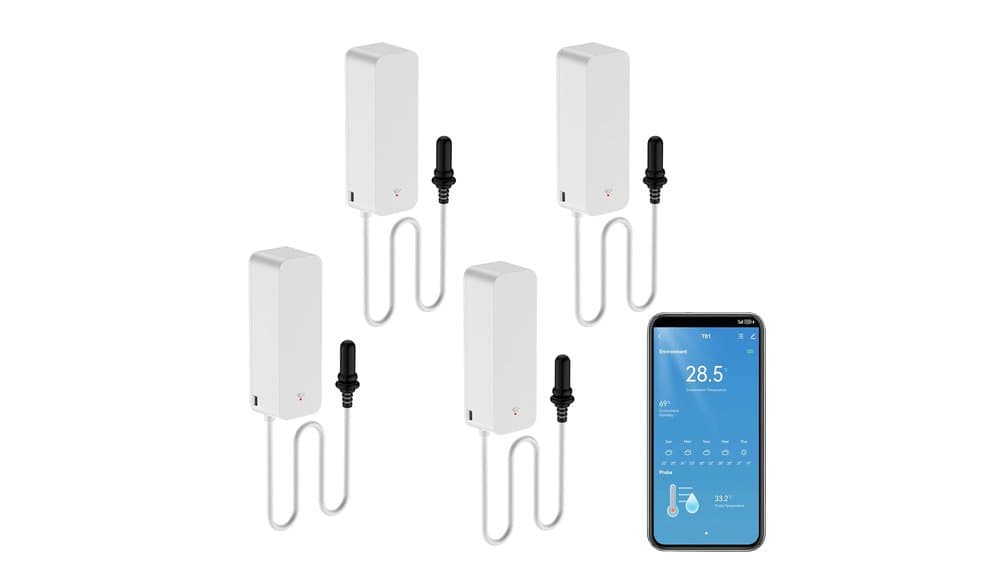
PHOVOLT WiFi Thermometer with Probe Test
For precise sous-vide & charcuterie, a calibrated core temperature probe is essential to ensure perfect results where it matters most.
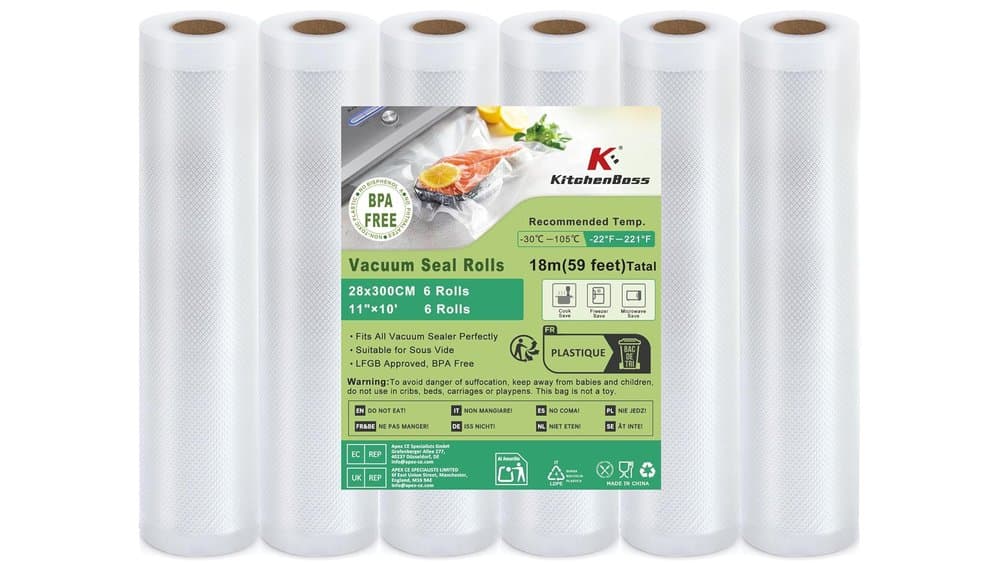
KitchenBoss Food Vacuum Bag Roll Review & Test
KitchenBoss vacuum sealing bags for sous-vide: analyze specs, compare performance, and determine value for precision cooking storage and preparation.
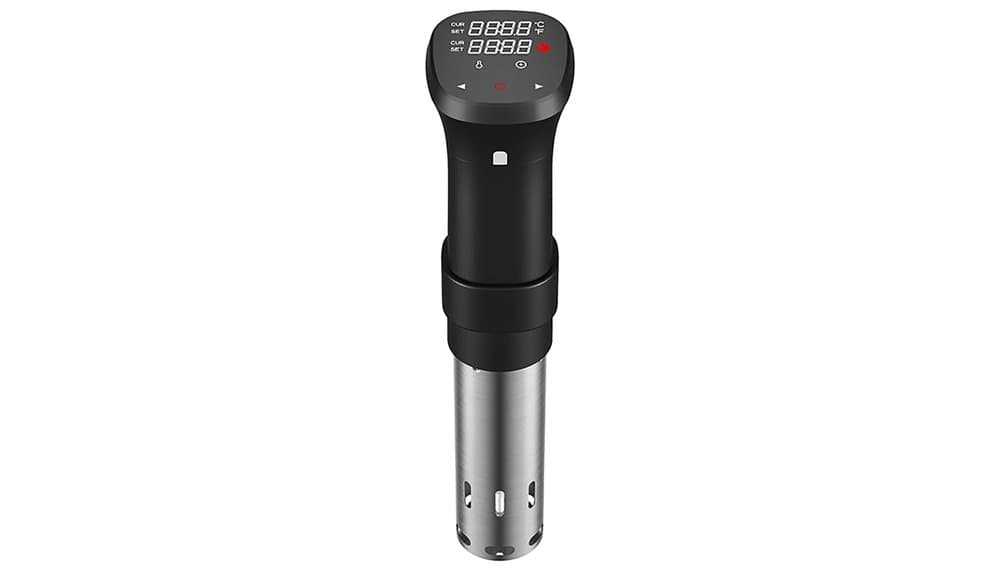
Fityou HU-XI-53 Immersion Circulator Sous Vide Cooker Review
Fityou HU-XI-53 Immersion Circulator review: A high-performing, accessible sous vide cooker with 1100W power, precise 0.1°C accuracy, and a 25-95°C range.
Guides you might like
Bell Jar Vacuum Sealer Buying Guide
Upgrade to a chamber vacuum sealer for professional sous-vide results at home. Perfect for liquids and flawless, long-lasting seals.
Best Beginner Sous Vide Kit
Find the perfect sous-vide starter kit on a budget. Learn the three essential features to look for to cook your first perfect steak without the headache.
Best Vacuum Bags
Choose the right vacuum sealer bags for perfect results. Learn key specs like heat resistance, thickness, and barriers to avoid culinary disasters.