Tilswall Infrared Thermometer Gun Test & Review
Introduction: A Measurement Tool, But For What Target?
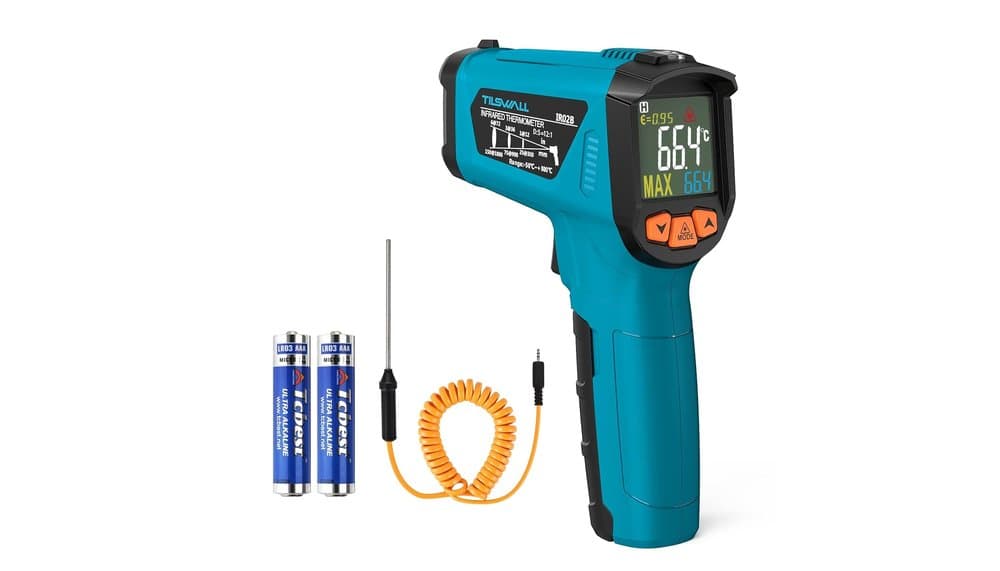
In the world of precision cooking, temperature is not a suggestion, it's law. Whether monitoring the surface of a cast iron skillet before searing a steak, checking the stability of a water bath for prolonged sous-vide cooking, or assessing the heat of a pizza oven, having a reliable and fast measurement tool is crucial. The Tilswall Infrared Thermometer Gun presents itself as a versatile and affordable solution for these needs. But in a field where the devil is in the details—or rather in the decimal points of degrees—how does this infrared gun perform? We will dissect its specifications, cross-reference feedback from the community and testers, and evaluate its real place in the arsenal of the meticulous cook, whether beginner or seasoned.
Strengths and Weaknesses: The Quick Summary
Before diving into the details, here is what immediately stands out from the analysis of specs and user feedback.
The main assets:
- Speed and ease of use: A reading in less than 0.5 seconds and a simple interface make it an almost instantaneous and accessible tool for everyone.
- Temperature versatility: A very wide measurement range, from -50°C to 800°C, covers every imaginable culinary scenario, from the freezer to a charcoal oven.
- Dual functionality: The presence of an input for a K-type thermocouple probe (on this specific model) allows switching between non-contact surface measurement and contact measurement, useful for liquids or spot checks.
- Backlight and design: The backlit LCD screen and ergonomic grip are consistently praised.
The limitations to consider:
- Relative precision for precision cooking: An announced accuracy of ±1.5% may seem low for sous-vide purists where a 0.5°C variance is significant. It is a measurement of surface, not core temperature.
- Dependence on emissivity: Infrared measurement is sensitive to the nature of the surface. Shiny, reflective, or wet surfaces can distort the reading without expert manual adjustment of the emissivity.
- Consumer-grade construction: Although considered decent, its plastic construction is not designed for intensive industrial use. Its long-term durability under daily professional use is a question.
- Not for humans (nor the core of foods): It is crucial to understand that this device measures the temperature of the surface of inanimate objects. It does not give the internal temperature of food.
Detailed Analysis: Under the Scrutiny of the Precision Cook
Accuracy and Stability: The Crux of the Matter
On paper, the specifications announce an accuracy of ±1.5%. In practice, for a skillet at 200°C, the potential margin of error is ±3°C. For the majority of common culinary applications (checking frying oil, oven temperature, a griddle), this accuracy is largely sufficient and matches user feedback finding it "accurate" or "reliable." However, in the highly demanding context of sous-vide cooking, where immersion circulators aim for stability within ±0.1°C or ±0.2°C, this gun cannot serve as a primary verification standard. It will be useful for a quick check of the water's surface temperature in addition to a dedicated probe thermometer, but not for calibrating it.
Its stability is not a critical parameter for an instant-read tool, but its long-term reliability is confirmed by reviews: users do not report drift over time. The measurement is stable and reproducible under normal use conditions.
Versatility and Concrete Culinary Applications
This is where the Tilswall finds its true value for the enthusiast of technical cooking.
- For Finishing (Searing, Torching, Melting): Ideal for checking the surface temperature of a cast iron skillet or pizza stone before placing food on it. You can ensure it is at the target temperature (often between 200°C and 300°C) for a perfect crust.
- For Barbecue/Smoker: Quick control of the cooking chamber temperature at different points, or checking the grill surface. Testers highlight its usefulness for outdoor pizza ovens.
- For Sous-Vide (Indirect Applications): Checking that the water bath has no surface hot or cold spots (in addition to an immersed probe). Control of container or environment temperature.
- For Pastry and Confectionery: Measuring the temperature of sugar or chocolate while melting, although the provided K-type probe (if included) may be better suited for mixtures.
The optional K-type thermocouple probe is a non-negligible bonus. It transforms the device into a classic contact thermometer, allowing measurement of liquid temperature (like a syrup) or more precise checking of a metal surface, thus mitigating some limitations of infrared measurement.
Build Quality and Handling
According to feedback, the plastic construction is judged solid and well-finished for domestic use. The device is described as light but not giving an impression of fragility. The trigger button is accessible and the display clear. The presence of a backlight is consistently cited as a major asset for use outdoors or in a poorly lit kitchen. The targeting laser facilitates aiming, although experts remind that the measured area is wider than the laser point (according to a 12:1 ratio).
Emissivity Management: The Key to a Good Measurement
This is the most technical concept, but also the most important to understand. Emissivity is a surface's ability to emit infrared radiation. The Tilswall offers an adjustable setting from 0.1 to 1.0 (preset to 0.95, suitable for most matte surfaces). For surfaces like polished steel (very reflective) or glass, a measurement without adjustment will be erroneous. Experienced users note that for optimal results, especially on metal surfaces of kitchen utensils, one must refer to an emissivity chart and adjust the parameter. For simple use (blackened skillet, griddle, stone), the preset is often sufficient.
Technical Specifications
| Characteristic | Detail |
|---|---|
| Temperature Range | -50°C to 800°C (-58°F to 1472°F) |
| Announced Accuracy | ±1.5% of reading |
| Response Time | < 0.5 seconds |
| Distance to Spot Ratio | 12:1 (E.g.: at 1.2m, it measures an area 10cm in diameter) |
| Emissivity | Adjustable from 0.10 to 1.00 |
| Display | Digital LCD screen with backlight |
| Functions | Hold function (HOLD), High/Low alarm, °C/°F selection |
| Power Supply | 2 AAA batteries (included) |
| Connection | Input for K-type thermocouple probe (IR02B model) |
| Main Construction | Plastic |
What Users Say: The Wisdom of the Community
The synthesis of over 5,700 global reviews (with a rating of 4.4/5) and expert web analyses paints a clear consensus.
The recurring praise revolves around simplicity ("just aim and press"), speed ("instantaneous"), and excellent value for money. Many find it "accurate" for their cooking, DIY, or pizza oven needs. The versatility due to the wide temperature range is also a key argument. The responsiveness of customer service is sometimes mentioned positively, with some receiving a quick replacement for minor issues.
The critiques and warnings are instructive:
- Contextual accuracy: Several note that accuracy depends on distance and surface. An experienced user advises to "stand about 36 cm away for optimal results" and to avoid shiny surfaces.
- Pro-use limit: The consensus among testers is that it is a perfect tool for domestic use and light craftwork, but it cannot replace high-end professional equipment for industrial applications demanding in precision and durability.
- Understanding its limits: The "Not for Humans" warning is taken seriously. Users understand it is not a medical thermometer and that it only measures surfaces.
- The "useful gadget" factor: Some reviews, like the one calling it "half utility, half gadget," sum up its positioning well: a very practical tool that also brings a fun and satisfying side to measurement.
Conclusion: A Valuable Ally for "Finishing," Not for "Core Cooking"
The Tilswall Infrared Thermometer Gun establishes itself as an extremely useful and cost-effective complement in a precision-oriented kitchen, but one should not mistake its role.
For the beginner looking to go beyond "by eye," it's a fantastic tool for learning. It makes the heat of a skillet, oven, or water bath tangible. It helps avoid common mistakes and develop good habits.
For the experienced enthusiast of sous-vide and precision cooking, this is not the tool that will set or calibrate their immersion circulator. On the other hand, it is the perfect accessory for the finishing phase. Checking skillet temperature before a sear, ensuring the grill surface is at the right heat, or quickly controlling the cooking environment are tasks where it excels due to its speed and convenience.
Its true talent is to answer the question "Is it hot enough?" on a surface, in a fraction of a second. In this exercise, according to the massive feedback from the community, it fulfills its mission brilliantly, provided one accepts its inherent limitations of infrared technology and does not demand the absolute precision of a laboratory instrument.
100% free and independent — All our articles are written independently, without any sponsorship. We may earn a commission on purchases made through our links, at no extra cost to you.
Articles you might like
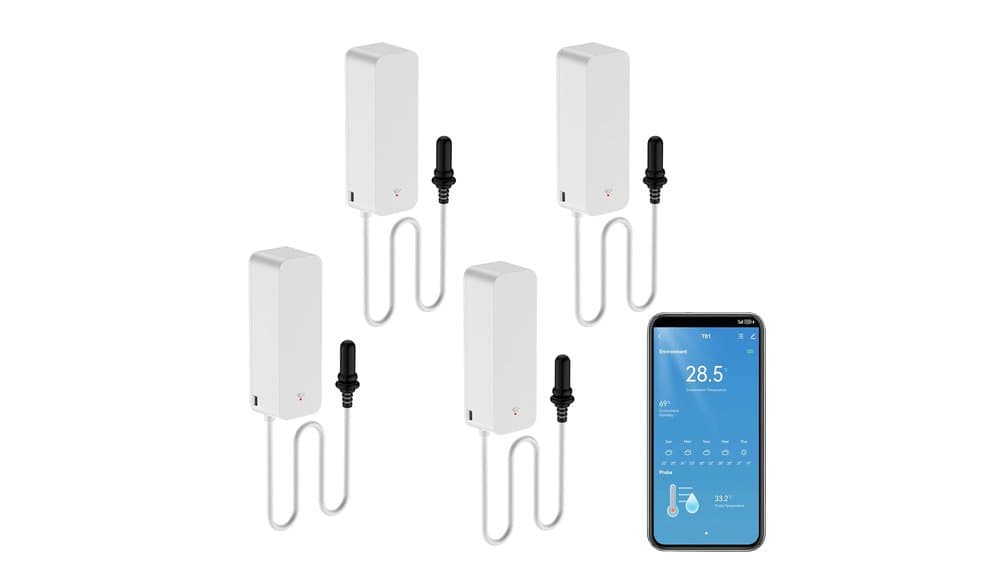
PHOVOLT WiFi Thermometer with Probe Test
For precise sous-vide & charcuterie, a calibrated core temperature probe is essential to ensure perfect results where it matters most.
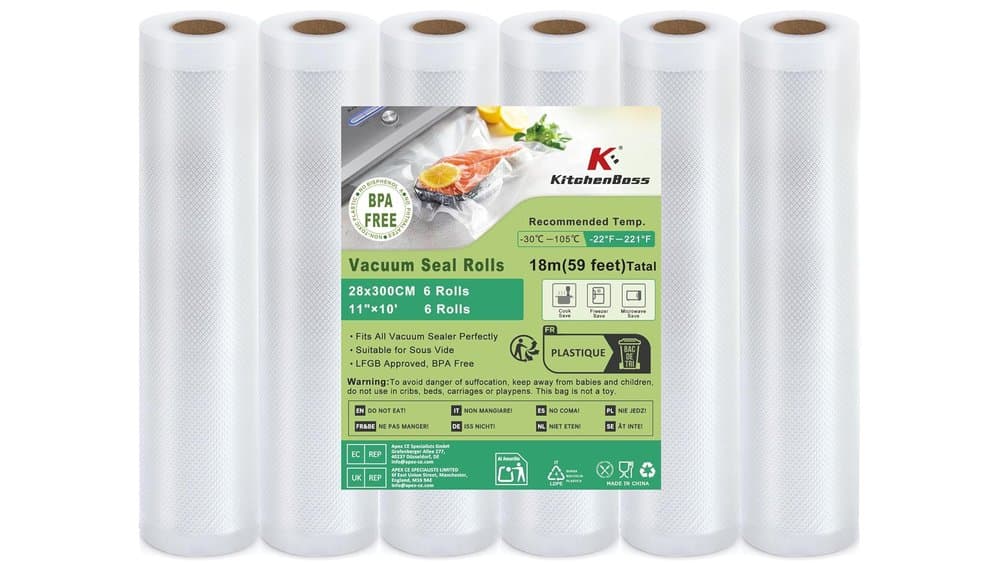
KitchenBoss Food Vacuum Bag Roll Review & Test
KitchenBoss vacuum sealing bags for sous-vide: analyze specs, compare performance, and determine value for precision cooking storage and preparation.
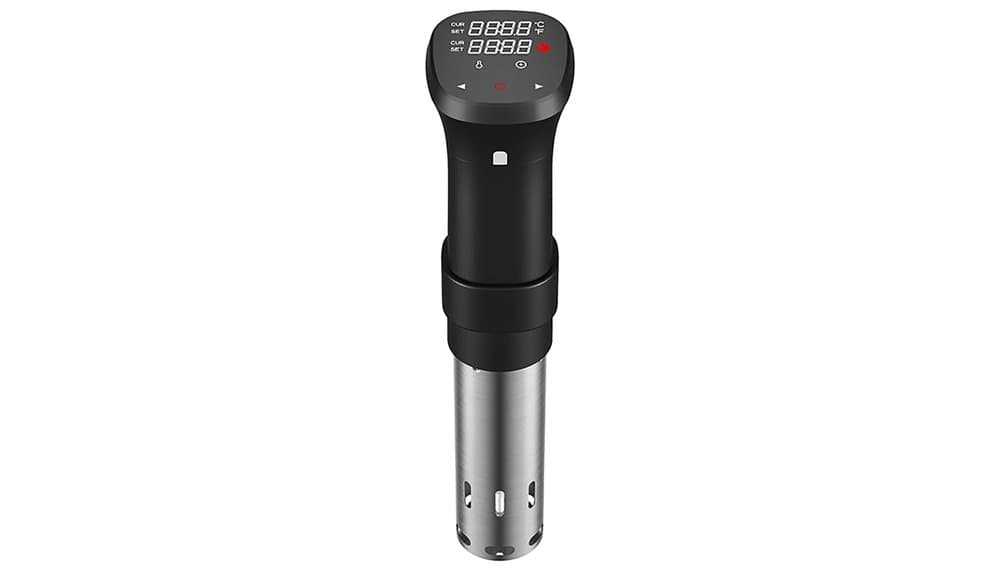
Fityou HU-XI-53 Immersion Circulator Sous Vide Cooker Review
Fityou HU-XI-53 Immersion Circulator review: A high-performing, accessible sous vide cooker with 1100W power, precise 0.1°C accuracy, and a 25-95°C range.
Guides you might like
Bell Jar Vacuum Sealer Buying Guide
Upgrade to a chamber vacuum sealer for professional sous-vide results at home. Perfect for liquids and flawless, long-lasting seals.
Best Beginner Sous Vide Kit
Find the perfect sous-vide starter kit on a budget. Learn the three essential features to look for to cook your first perfect steak without the headache.
Best Vacuum Bags
Choose the right vacuum sealer bags for perfect results. Learn key specs like heat resistance, thickness, and barriers to avoid culinary disasters.